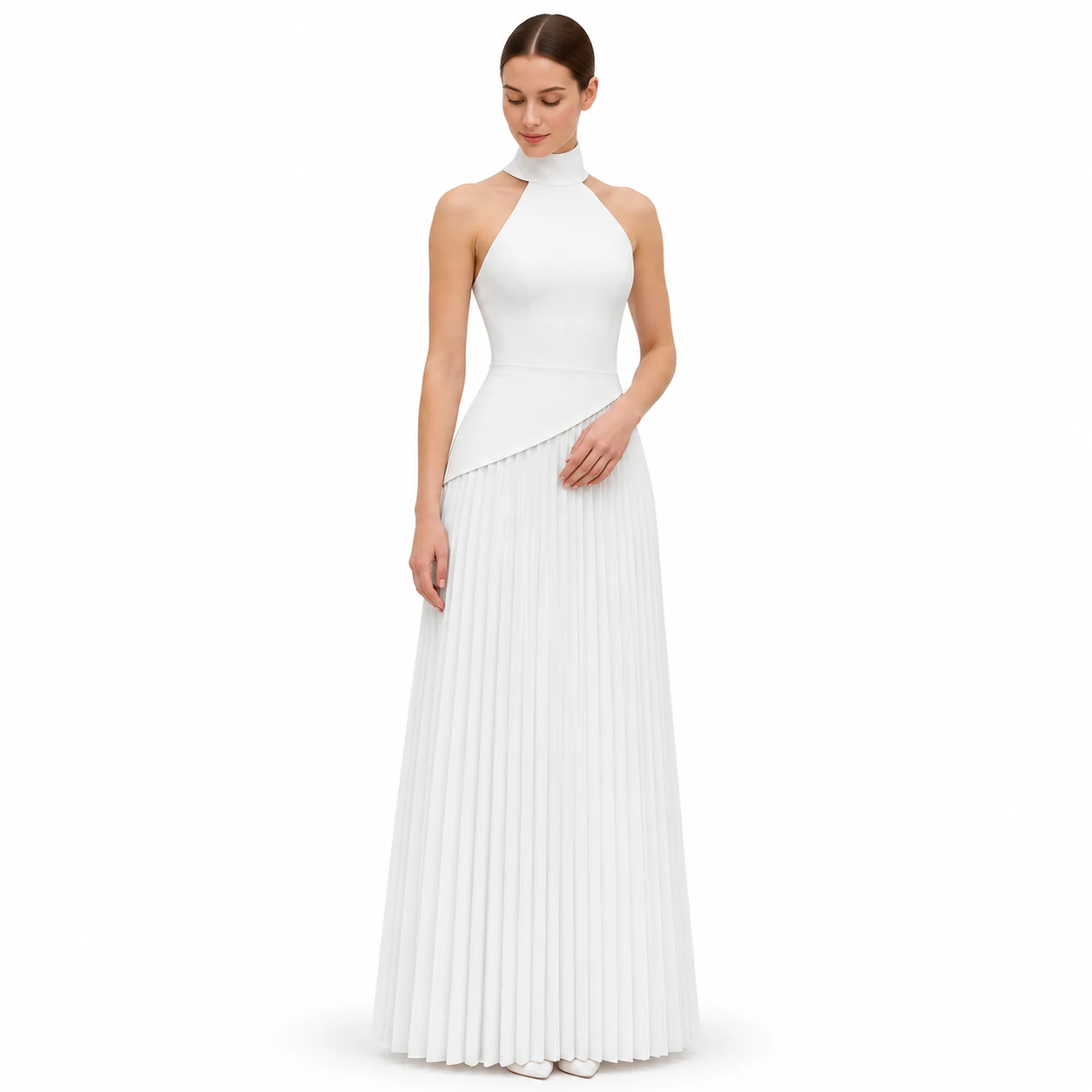


A smooth bodice above fine pleats
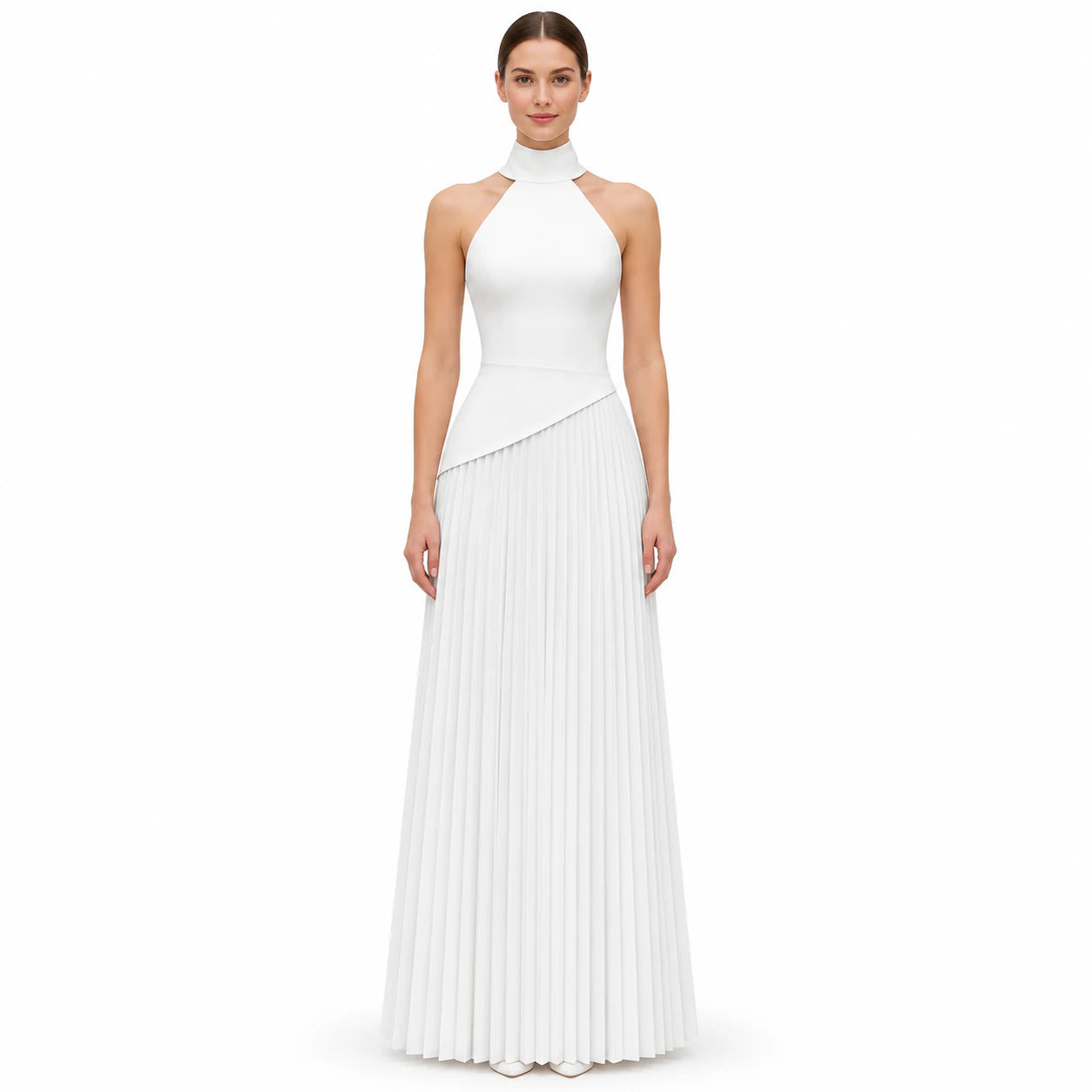
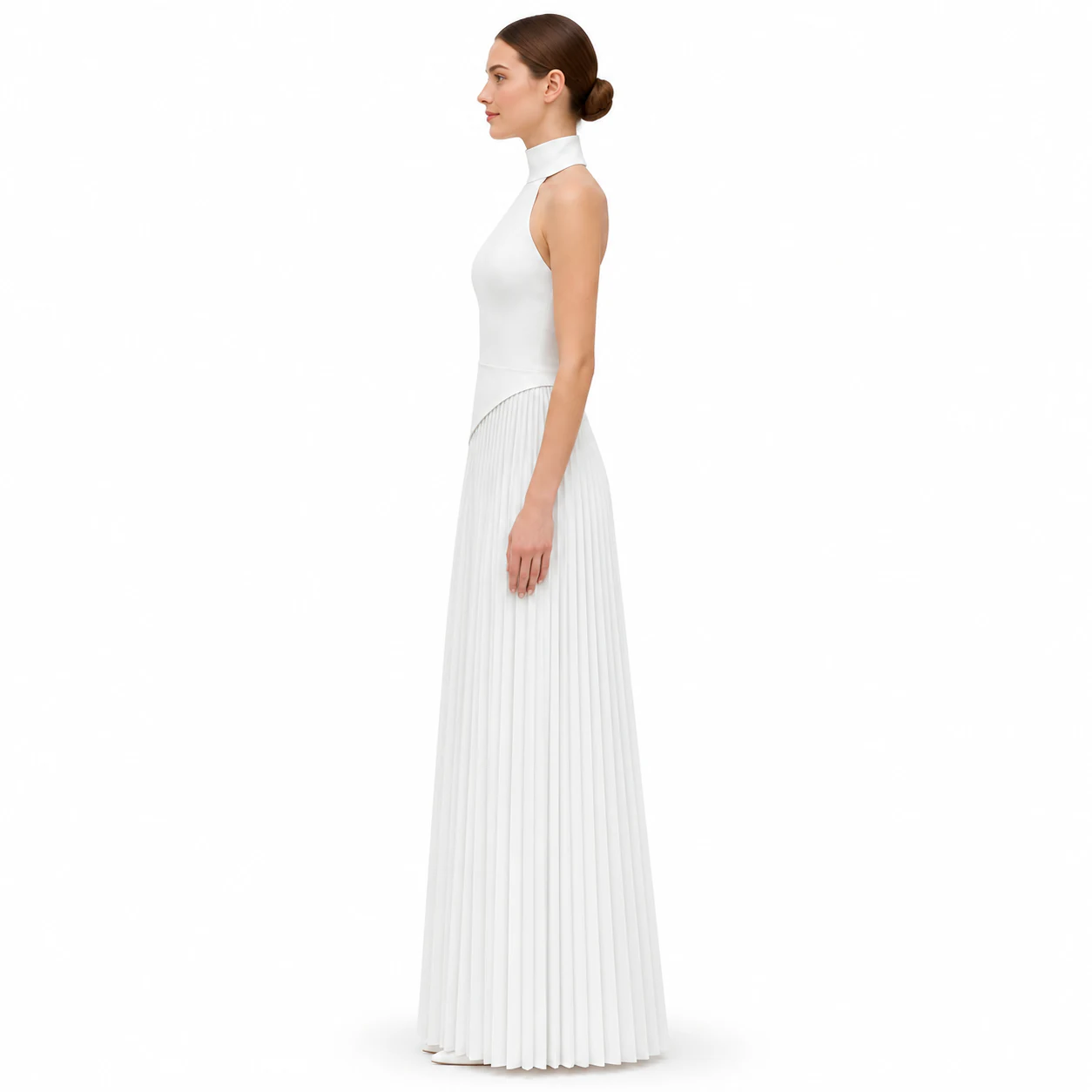
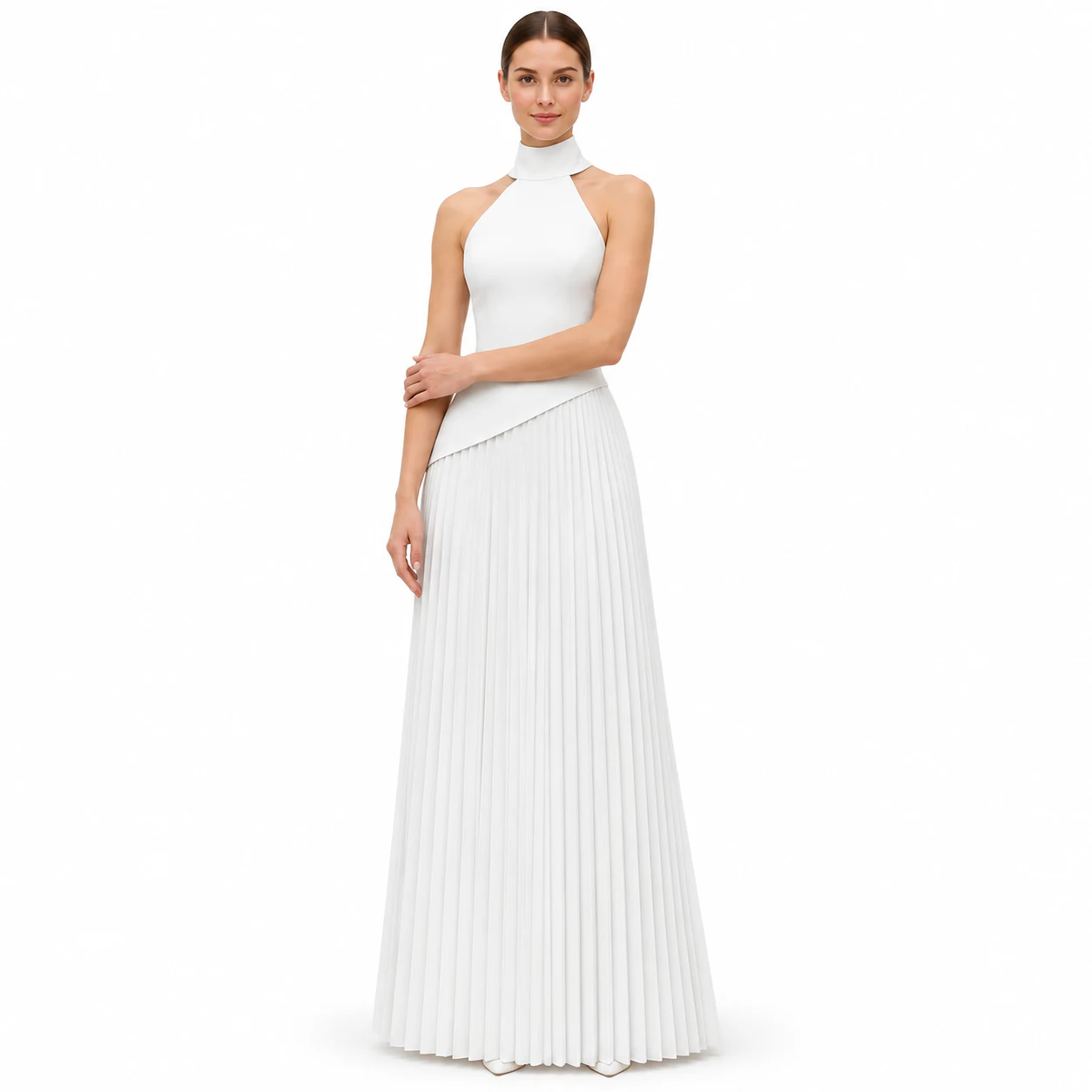
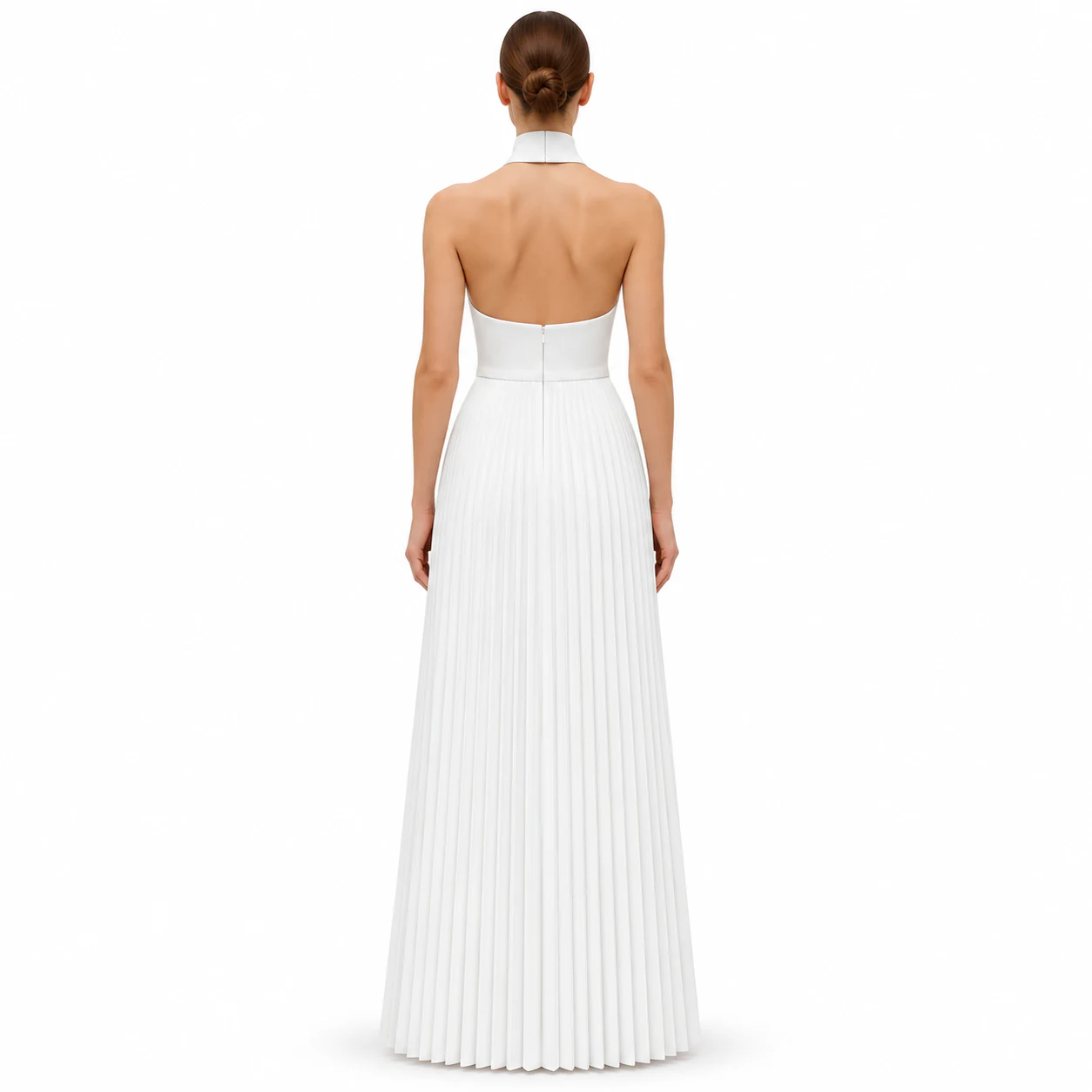
This white gown keeps the front smooth from the high halter collar to the waist. At the hip, a diagonal seam crosses the bodice and changes where the skirt pleats begin. The fine folds continue all the way around, giving the long skirt movement without adding ruffles. A low white band crosses the back, leaving the shoulder blades open while the skirt falls in one continuous line to the floor.
A high halter
The covered neckline narrows into a high collar, while the sleeveless cut keeps the line across the shoulders open.
A diagonal waist seam
The white bodice ends at an angle, so the fine pleats start higher at one side rather than forming an even band.
Fine all-around pleats
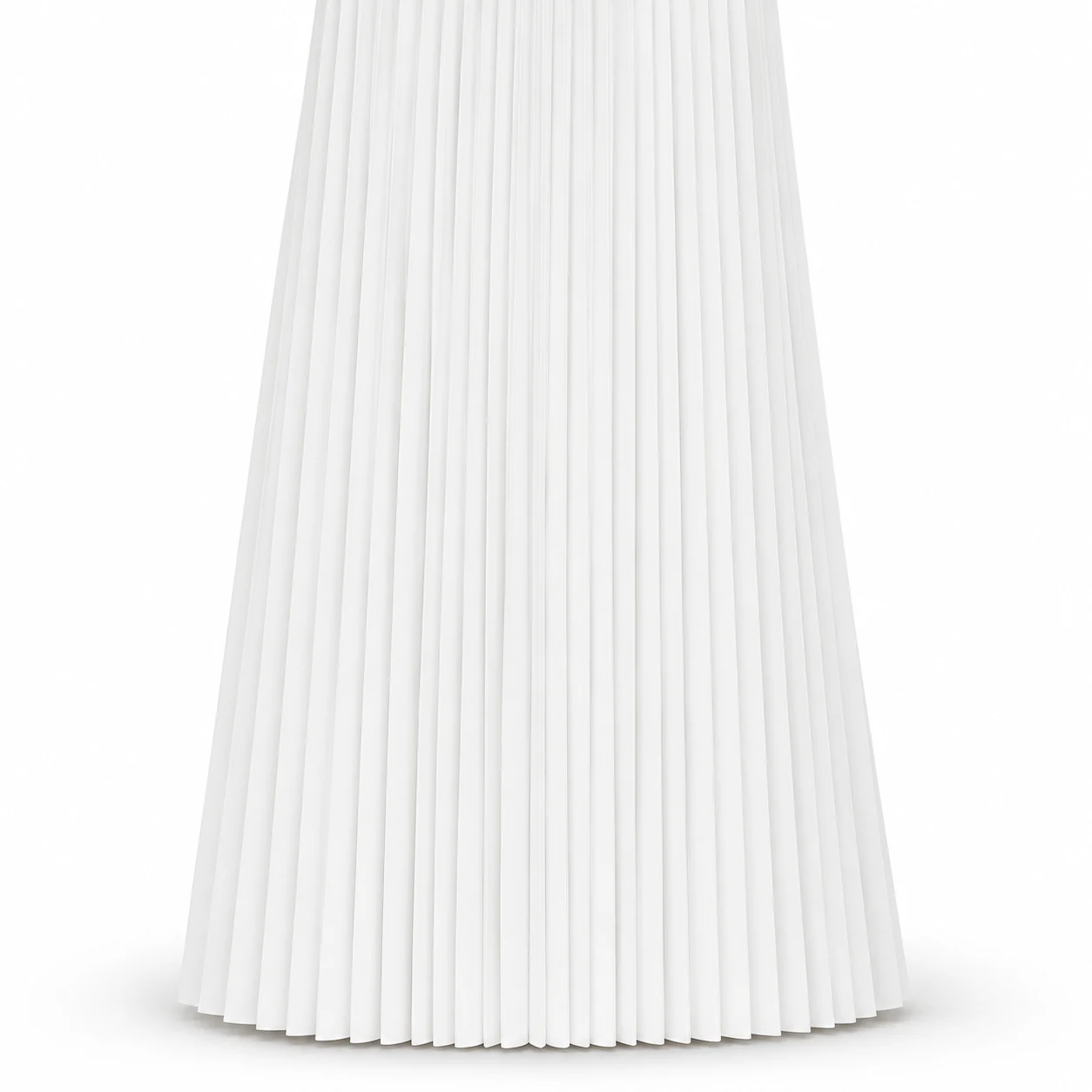
The skirt uses narrow vertical folds across the front and back, so the fabric keeps its texture from either angle.
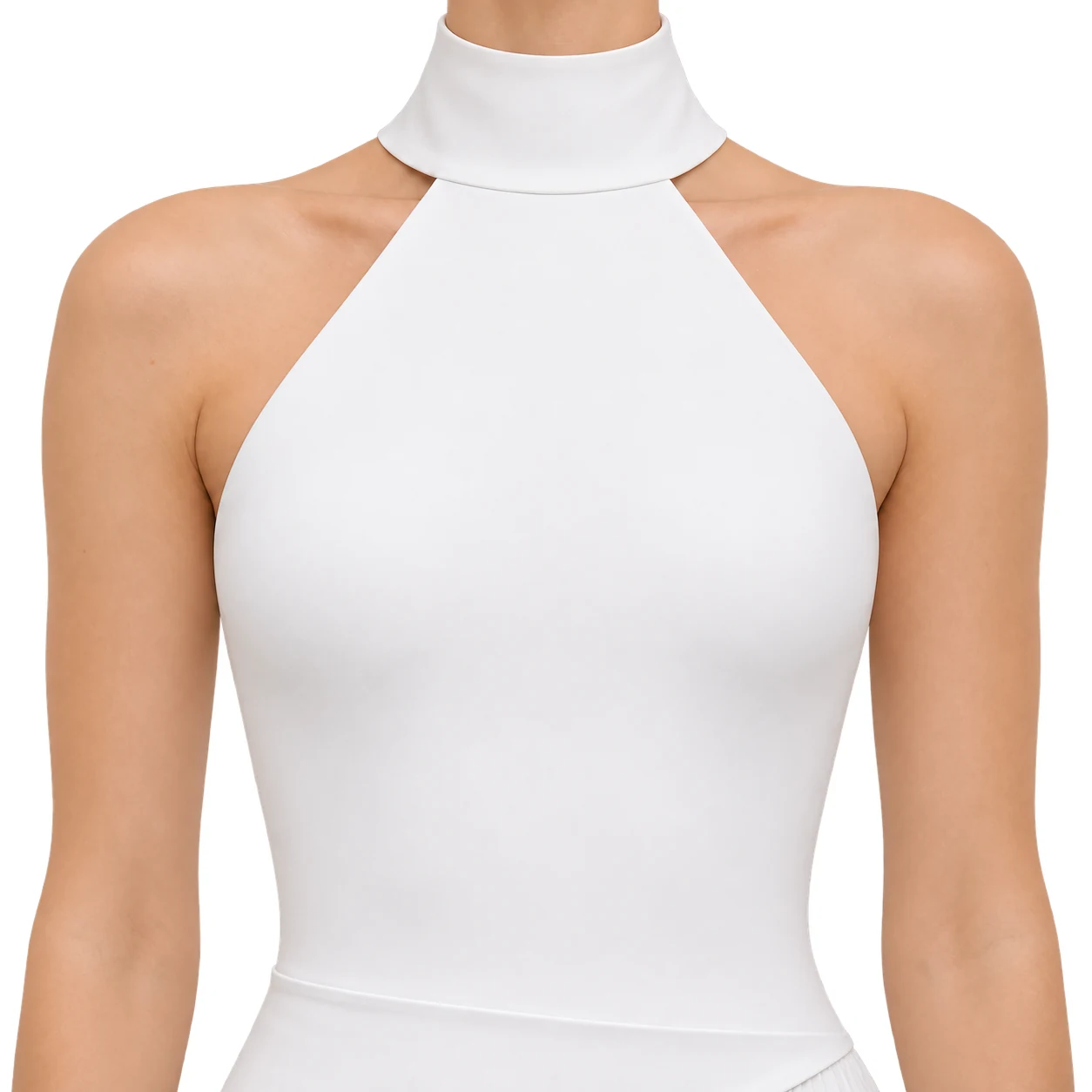
The halter bodice
1. A clean line to the collar
The halter collar sits high, and the front widens below it to cover the bust. Both shoulders stay bare, with no cap sleeves or straps tracing the shoulder line. The bodice stays smooth on the way down to the diagonal seam, leaving the shape of the fabric, rather than trim, to frame the front.
If you want to keep the collar visible, small earrings work better than a necklace over the high neckline. For a cooler evening, try a short wrap that you can take off indoors. Keep it above the seam so it does not hide the switch from the smooth bodice to the finer texture.
Pleats and hem
2. Pleats from hip to hem
The pleats start where the diagonal join meets the skirt and run straight down to the low hem. From the back, the folds continue across the skirt under a more level waistband. The finished shape looks long and vertical until the folds open around the feet.
The skirt reaches low, so plan the shoes before deciding how you want it to fall. Check the front hem with the heel height you expect to wear, then walk and sit to see how the pleats settle. If you may change into flats, try these too as the lower heel can leave more fabric close to the floor.
Front and back
3. Two different lines
The angled front seam
The front waist looks asymmetric even though both halves are white. The seam climbs toward one side, which shifts where the narrow folds begin. The top stays smooth above the angle, so the front design is visible without a contrasting waistband.
The open upper back
The back leaves the shoulder blades bare above a low fabric band. There are no wide straps crossing the open area. Try the gown with the undergarment you plan to wear, then check from behind to see whether any band shows above the dress.
Styling the long skirt
4. Keep the details clear
For a formal dinner or a ceremony with a white dress code, let the high neckline and the pleats carry the outfit. A small handheld bag leaves the bare shoulders clear, and a quiet shoe keeps the emphasis on the skirt. Try the entire outfit once in the lighting you expect to be in, especially if you want to check how the white fabric looks. If you are going to a wedding as a guest, check whether the couple has requested white.
When you sit down
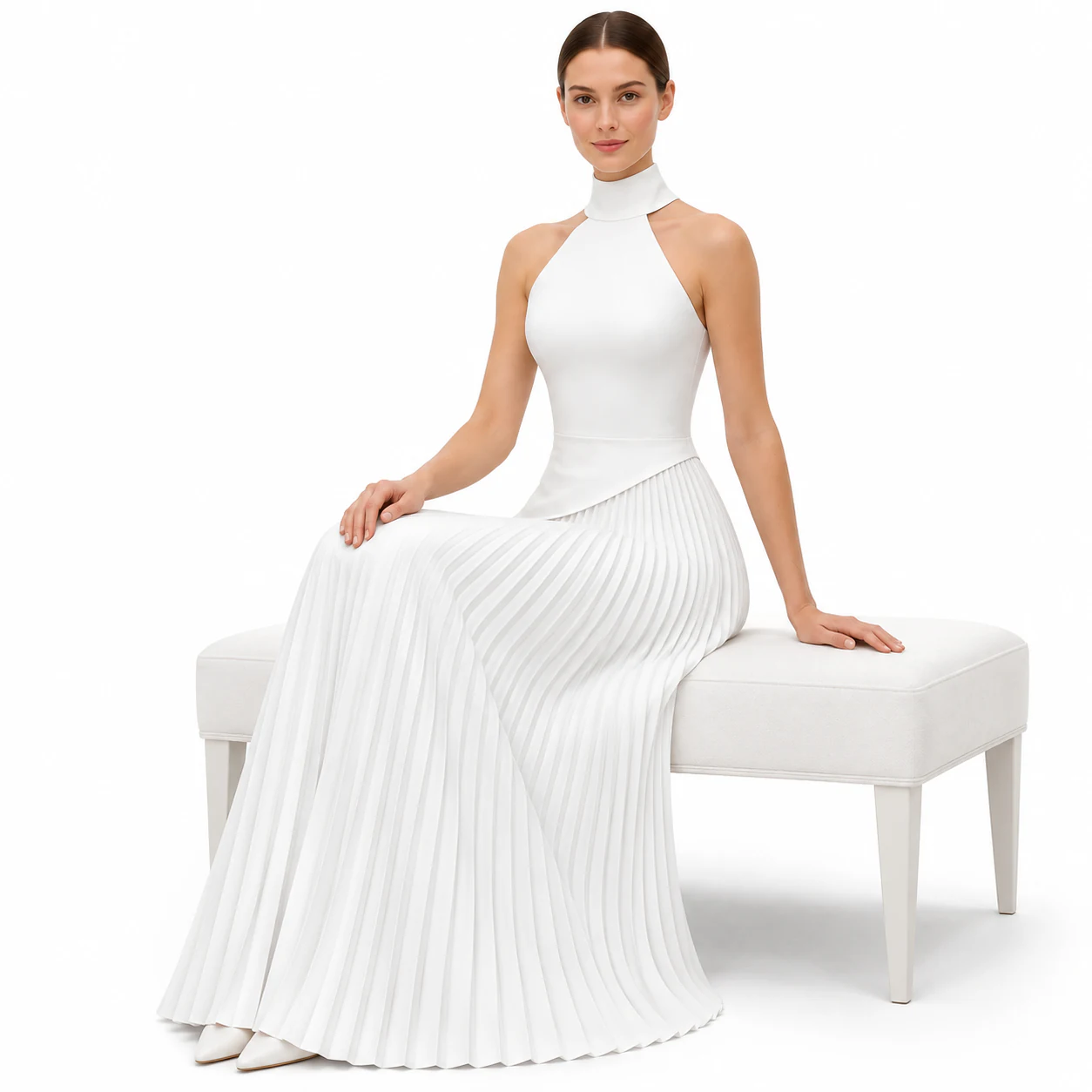
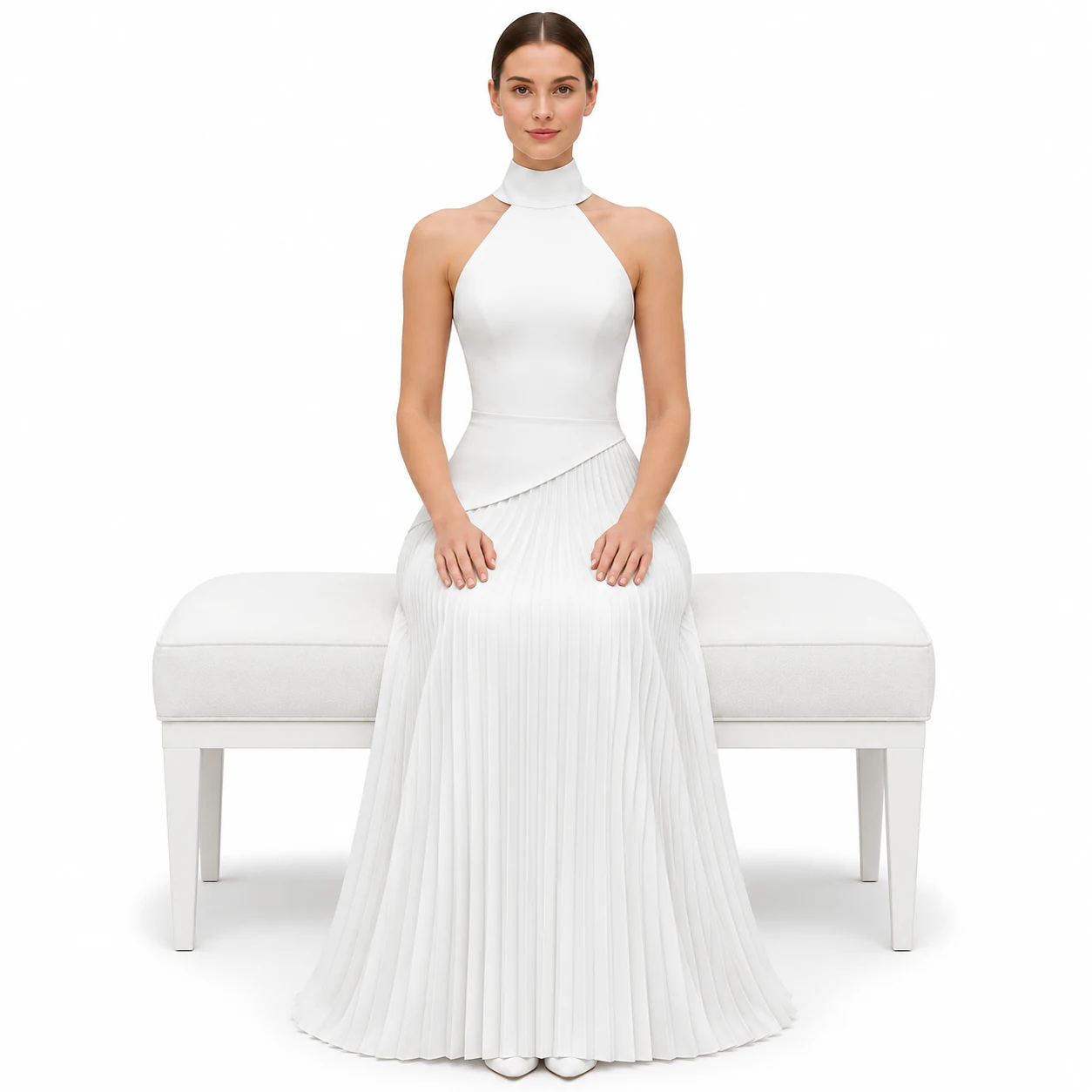
Let the lower skirt fall toward the floor instead of folding the pleats under you. Set the hem clear of the chair and give it a quick check before you stand. For steps, lift just enough fabric to clear the front edge without gathering all of the pleats at the hip. The folds can then fall back into place.
The essentials
- High halter collar
- A high white collar anchors the front of the gown. The bodice widens toward the bust and keeps the front covered, while the sleeveless shape leaves the shoulders exposed on both sides.
- Smooth front bodice
- The fitted front sits close above the angled join. It does not use a separate belt or a row of gathers across the waist. The fit is most noticeable where the smooth top meets the skirt.
- Diagonal front seam
- One side of the front seam sits higher than the other. The pleats start immediately below it, so their top edges form a diagonal line even though the folds fall vertically to the hem.
- Low band at the back
- The upper back is open from the collar to the low fabric band. Look at where the band sits before choosing undergarments or a layer to wear over the dress for a cooler part of an event.
- Full-length pleats
- Narrow pleats run all around the skirt. If you want an extra layer, try a lightweight, low-back slip in a close-to-skin shade. Choose one short enough to stay clear of the hem.
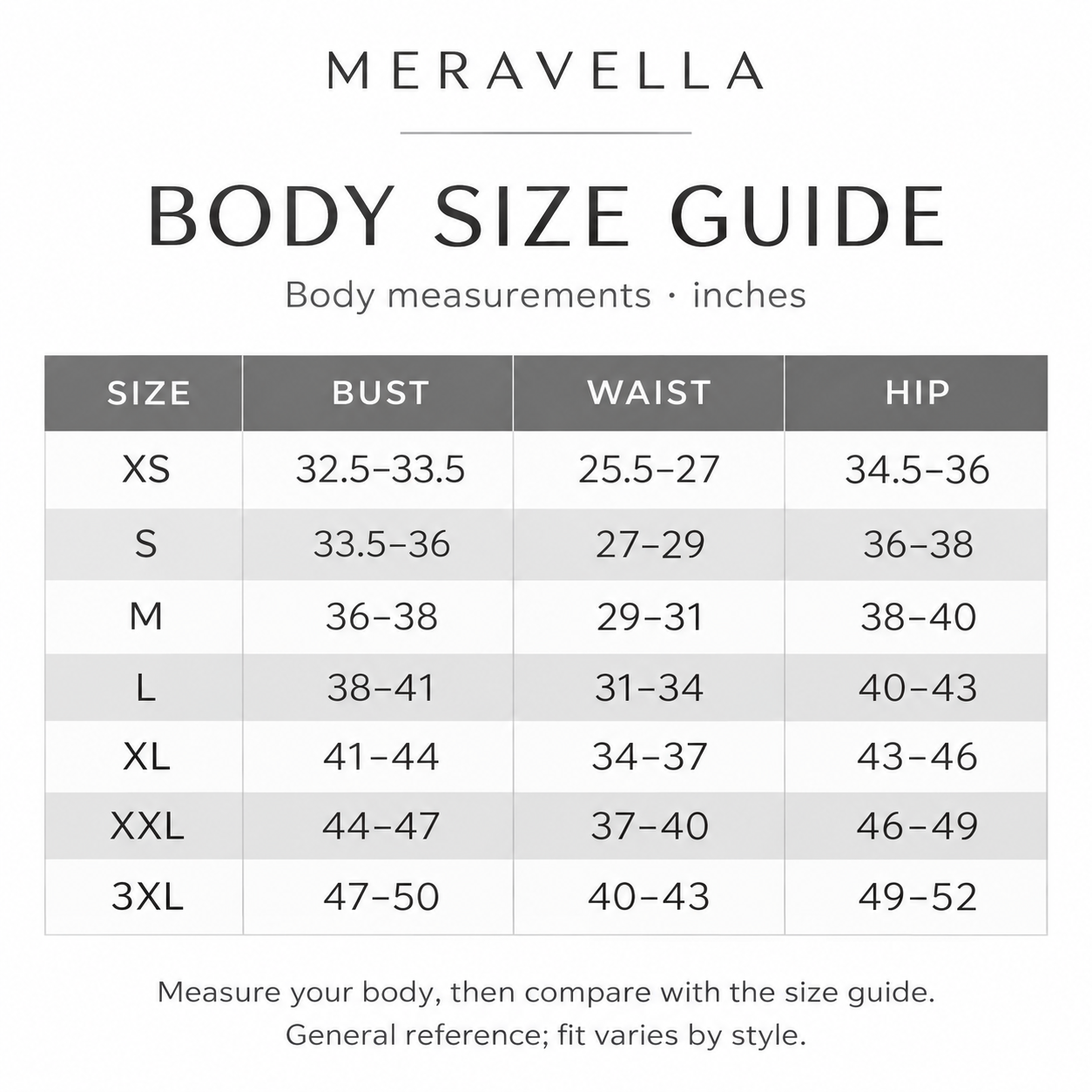
Compare bust and length
Start with a similarly fitted dress you already wear comfortably and compare its bust measurement with the garment figures in the Size Guide. Then check the full dress length against a long dress you own in the shoes you expect to wear. A halter neckline sits high, so it helps to make the comparison with another high-neck dress rather than judging from a waist-to-hem skirt length.
Keep the pleats hanging freely
Start with the sewn-in care label rather than pressing the folds by eye. If the label allows steam or pressing, follow its directions around the finer pleats. Hang the gown with enough clearance for the hem to stay off the floor, and give the skirt room to fall without being pinched between crowded pieces. Check the open back before adding a hanger clip.