


Evening drape with a defined waist
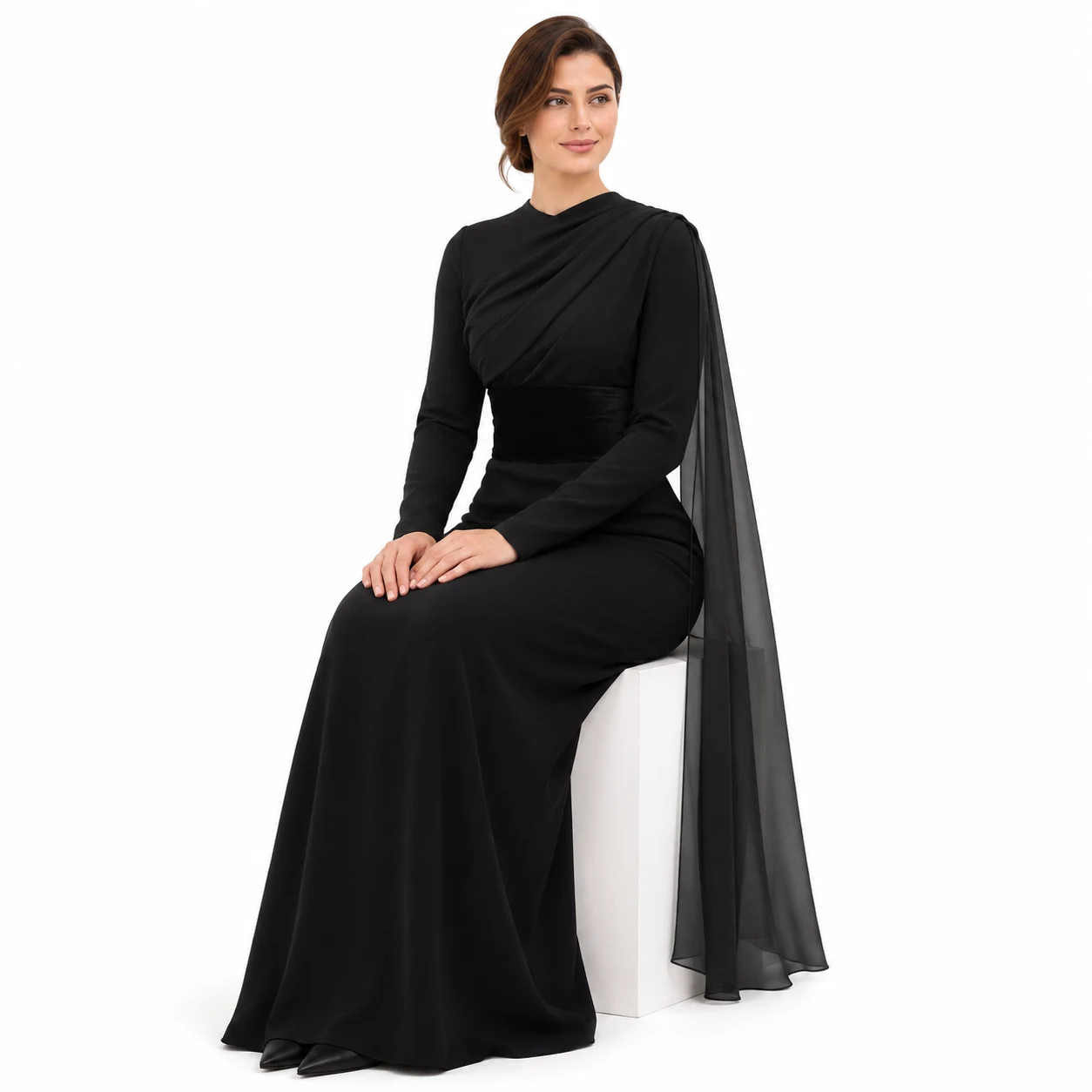
This high-neck cape maxi dress brings its detail above the waist: diagonal folds cross the bodice while a broad tonal panel frames the fit. The long sleeves sit close to the arms, and the cape falls behind one shoulder. It is a good choice for an evening event if you prefer a covered neckline but want a silhouette that changes as you turn. Add small earrings to keep the neckline clear.
A cape that falls from one shoulder
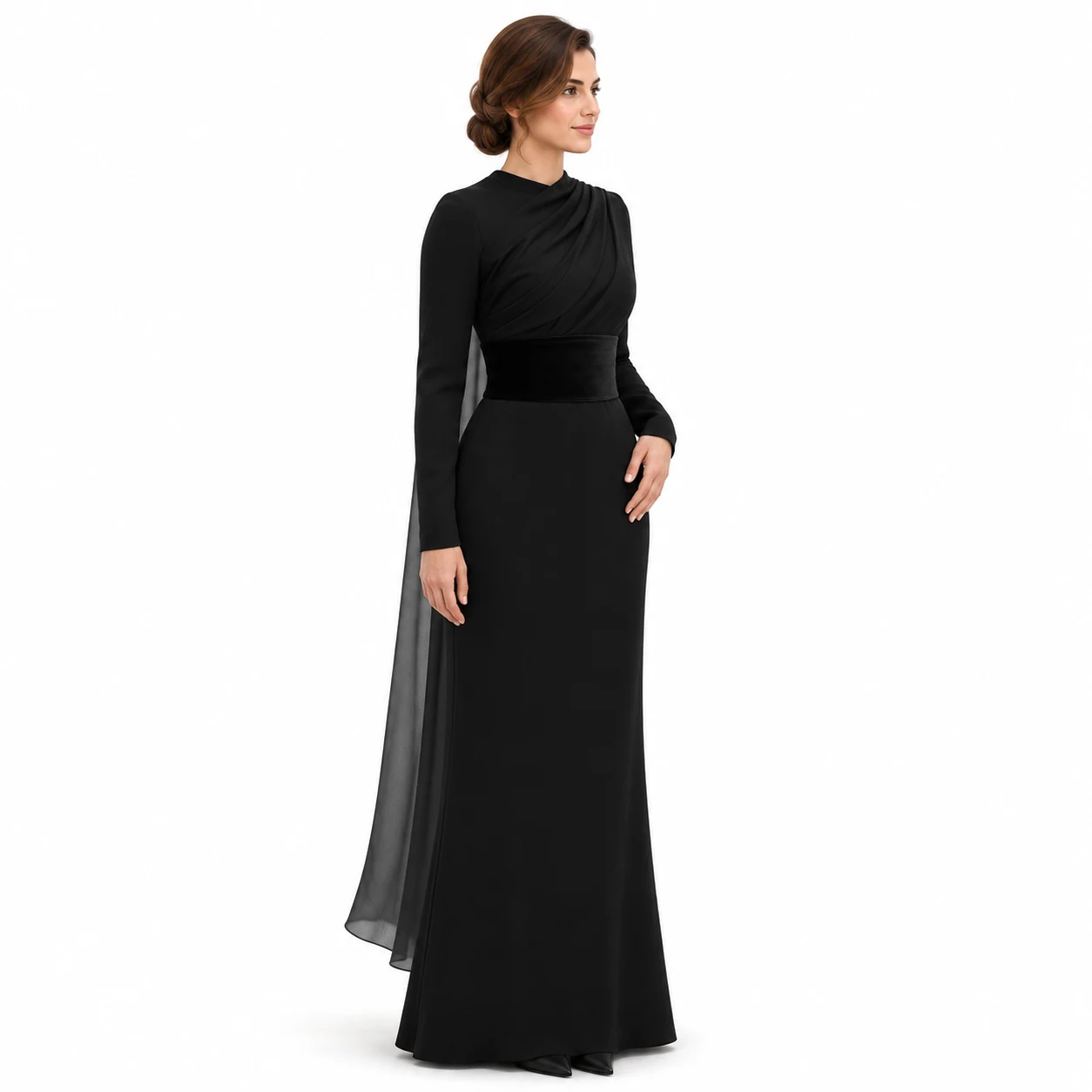
The cape stays behind one arm when at rest, leaving the front panel and the long fitted sleeves in clear view.
A clean line across the waist
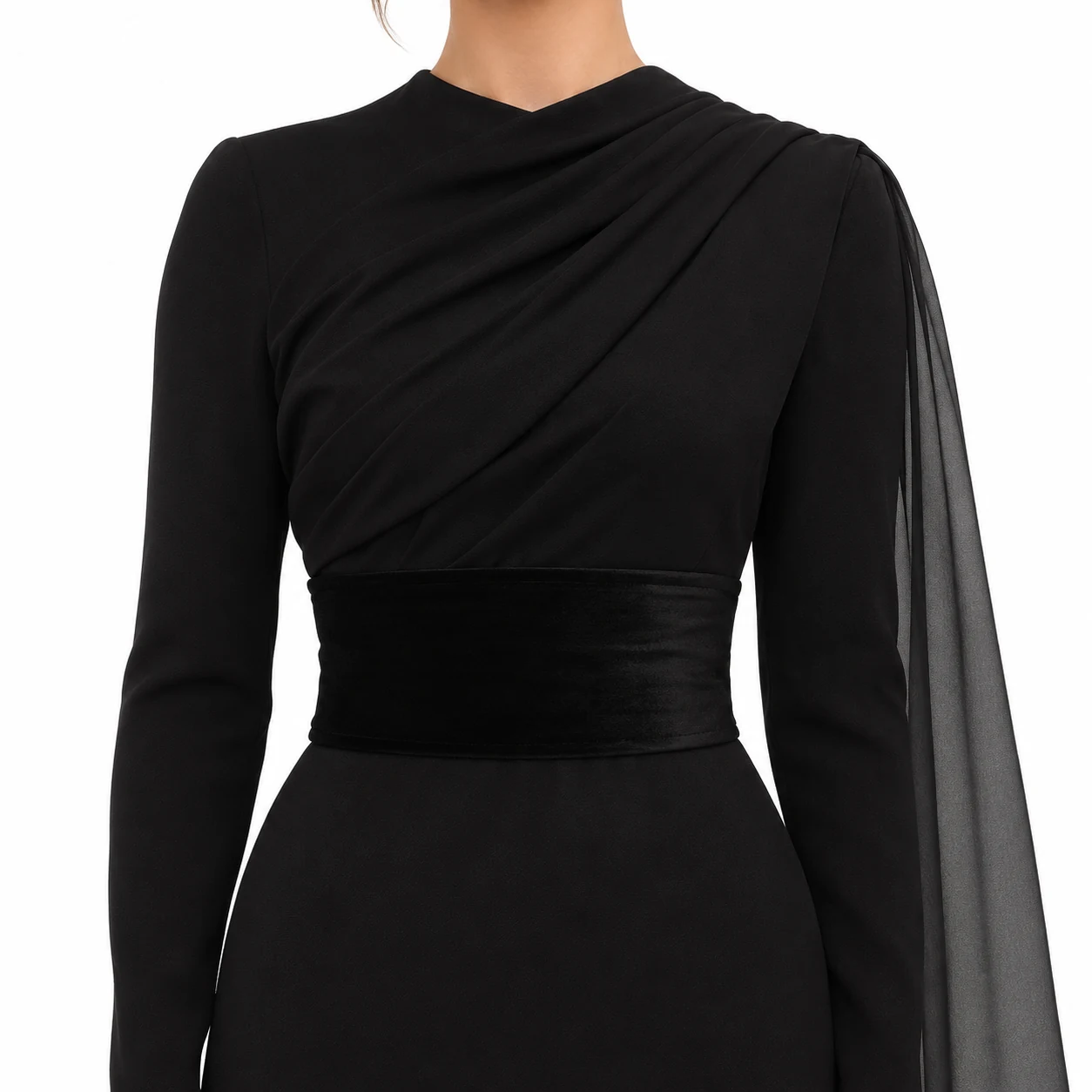
The broad waist panel sets the upper drape apart from the skirt, so the dress does not need a separate belt for shape.
A skirt that skims the floor
The skirt falls close through the hips before opening slightly toward the hem. Check the hem with your shoes.
Draping at the high neckline
1. Diagonal folds
Diagonal folds cross the upper bodice below a covered neckline. They stop above the broad waist panel instead of continuing across the long skirt. The fitted sleeves sit close through the arms and end tidily at the wrists. Keep the neck clear of a necklace.
Small earrings keep the folds visible at the neck and shoulder. A smooth clutch is easier to keep clear of the cape than a shoulder strap, especially if you plan to move through a crowded room at an evening reception or dinner.
Full-length skirt and hem
2. A hem that stays long
The skirt follows a slim line from the waist, then eases outward near the hem. The lower edge is smooth and uninterrupted. It falls long enough to frame the shoes rather than stopping at the ankle or mid-calf on the model.
The listed dress length is 54.7 to 56.3 inches across sizes S through XXL. Compare that range with a long dress you already wear. Try it with your chosen shoes and check both the skirt and cape when you climb a step. If you plan to change shoes, check the lengths with both pairs.

Two angles on the cape dress
3. A cape from one shoulder
A clean line from the front
From the front, the wide waist panel gives the skirt and upper drape separate lines. The cape sits behind one shoulder, leaving the fitted sleeve uncovered from the front. The result is clean enough to wear with a small clutch rather than a large accessory.

A cape in profile
An angled view makes the cape easier to see. Its lighter layer drops behind the arm instead of wrapping around both shoulders. Keep a shoulder strap clear of this side if you carry a bag, so the fabric has room to fall naturally at rest.

Styling the cape maxi dress
4. Keep the accessories simple
For a reception, a small clutch and closed-toe pumps leave the cape free to hang at the side. Try your shoes with the dress before leaving, ideally on both flat ground and a step. If the skirt or cape is close to the floor, gather the fabric gently before you climb stairs. When you sit, let the skirt fall forward and move the cape clear of the chair rather than pulling either layer tight against the waist.

Give the cape room to fall
The cape and skirt are easiest to manage when the cloth can hang freely. If you wear a coat on the way out, take care not to trap the sheer cape under a bag strap. Move it away from the chair back before sitting and check the hem as you stand again. On steps, draw it lightly toward you so the edge stays clear of your shoes.
The Essentials
- High draped neckline
- The round neckline sits high. Diagonal folds cross the front above the waist, and the neck and both shoulders remain covered. The diagonal folds draw the eye toward the cape attachment on one shoulder.
- Close-fitting long sleeves
- The fabric follows the arms to the wrists. Narrow wrist ends leave a clean edge without an open or oversized cuff. That fitted edge keeps loose fabric from falling over the hands.
- Tonal waist and long skirt
- A broad tonal band separates the folded bodice from the skirt, which falls in a long line and opens gently at the hem. The skirt has a continuous hem with no slit or tiered ruffles.
- Fabric and layering
- The dress uses a polyester blend. A lightweight tonal slip can add coverage or make the skirt feel smoother. Choose a size that lies flat and keep it above the outer hem.
- Colors and sizes
- Choose Black or Deep Red in S through XXL. Black shows the difference between the tonal textures; Deep Red makes the folds easier to see. The waist panel is tonal in both colors.
Check the bust and waist together
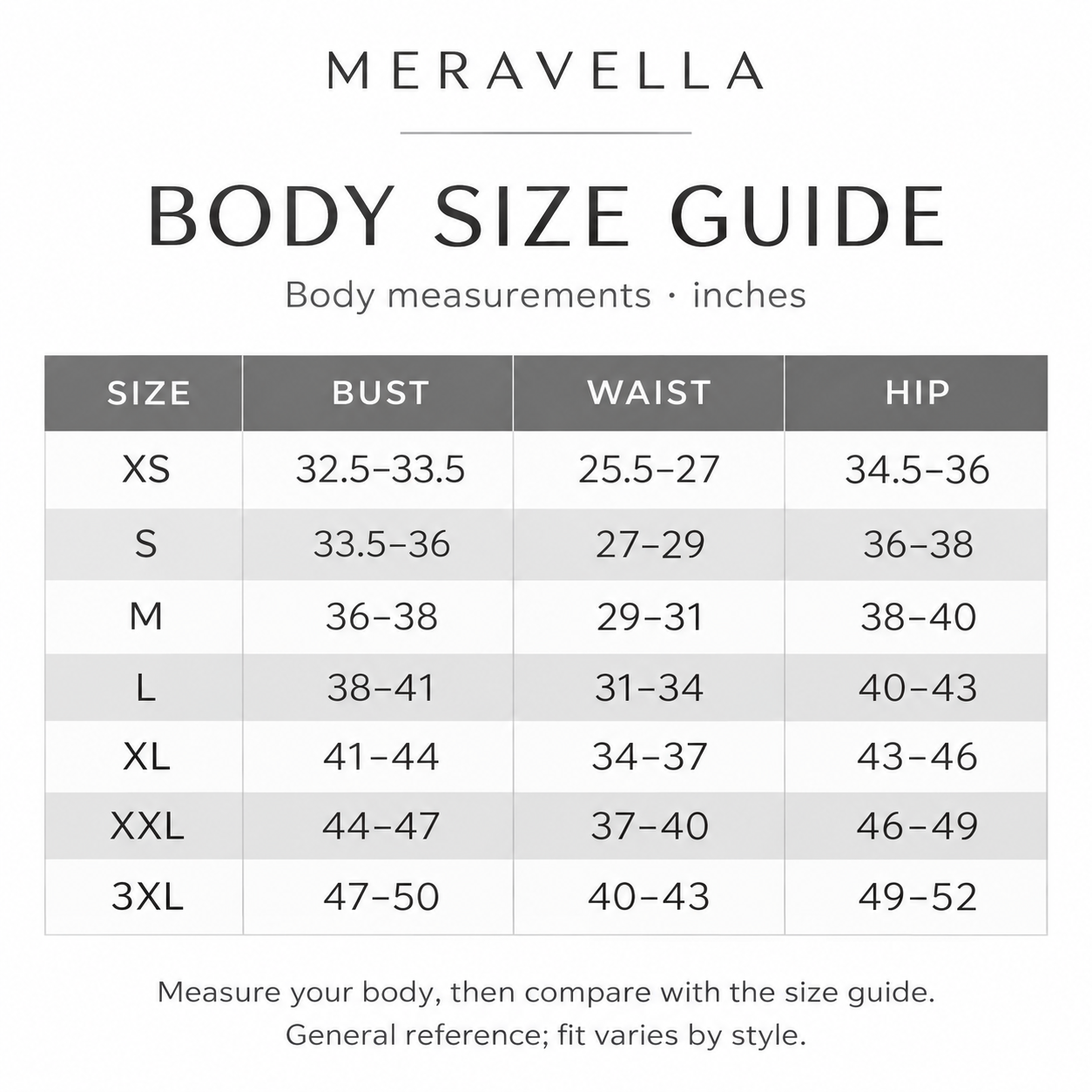
Compare the finished bust and waist against a similar dress you wear comfortably, not against the body chart alone. Check sleeve length to see where the wrist ends may sit. The size chart also shows overall dress length so you can look at the skirt hem with the shoes you intend to wear. If the waist is between sizes, use the finished bust and waist together rather than choosing on length alone.
Handle the cape separately
Follow the sewn-in care label. Keep the lighter cape layer away from hooks and sharp jewelry, and give it room to hang without being crushed behind other clothing. If the care label allows pressing or steaming, test in an inconspicuous area first and avoid pressing hard across the diagonal folds at the bodice and waistband.