



Soft folds without a full skirt
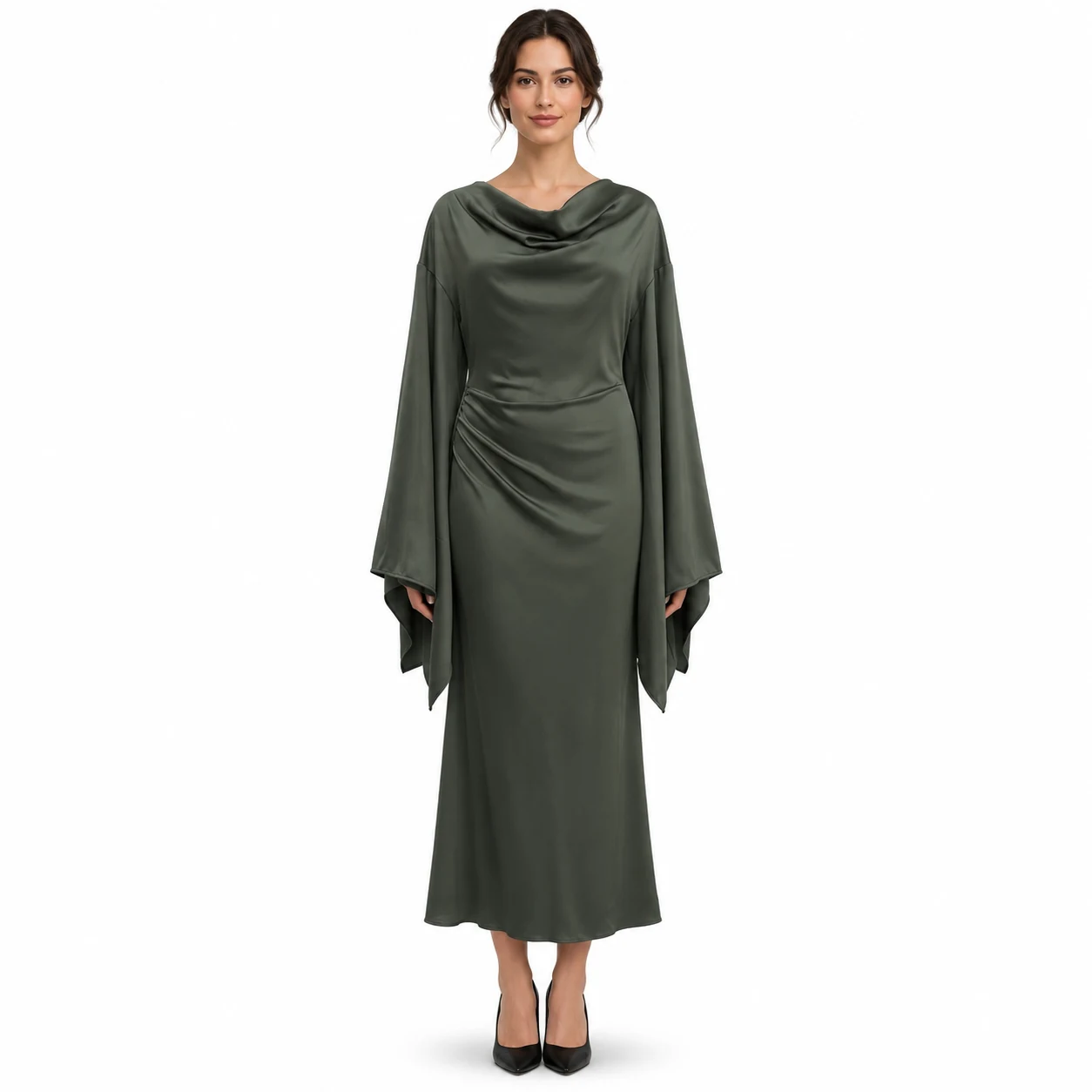
A soft cowl follows the front neckline of this lead gray midi. The arms have the most volume: long panels fall from dropped shoulders and swing away when you raise a hand. The bodice and waist sit closer to the body, with diagonal folds above a narrow skirt that softens at the hem. In the source photos, the dark gray has an olive cast, so it looks warmer than a flat charcoal.
A neckline with a soft fold
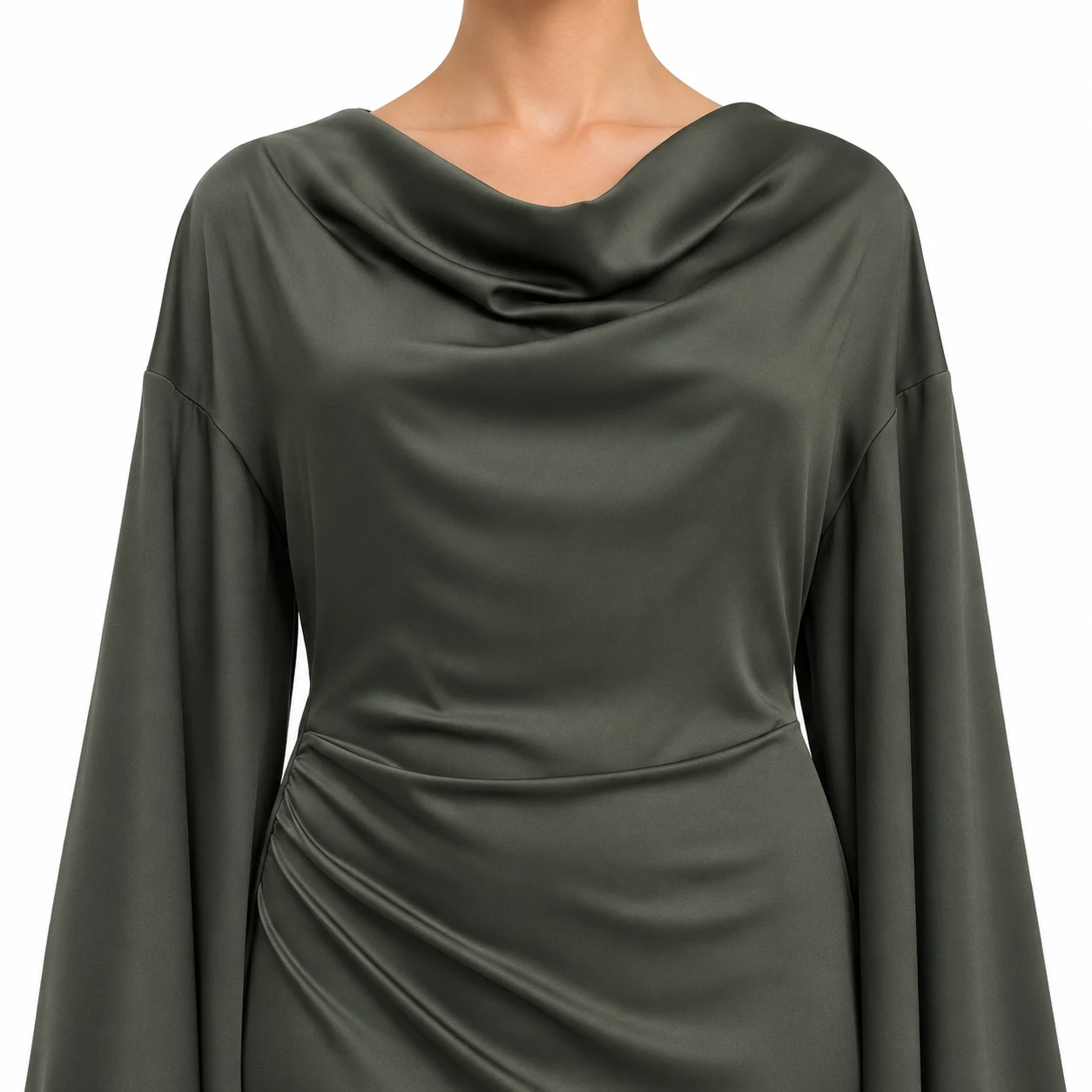
The fabric dips gently at the front, with a shallow cowl that frames the neck without a separate collar or tie.
Sleeves with room to move
The long panels fall past the wrists in places. Their openings let the forearms show when you lift your hands.
A softly shaped hem
The skirt follows a narrow line below the waist, then opens slightly at the lower calf without a separate tier.
Draped neckline
The front fold is the main detail
The neckline falls into a shallow cowl instead of a sharp straight edge. Its folds are visible while the shoulders stay covered. The softly reflective surface makes the folds easier to see in changing light without adding trim or an extra scarf.
Small earrings let the drape stay visible, while a short fine chain can sit above the front fold. If you prefer a jacket, try it open and make sure the sleeve panels have room near the elbow so the neckline and arms keep their natural shape.
Lower skirt
A narrow skirt with a softer edge
The shape stays close below the waist and widens slightly near the hem. That makes a different silhouette from a full A-line or tiered skirt. The listing shows a lower-calf finish, which helps balance the longer drapes at the sides.
Check the dress length for your size against a familiar midi. Try that garment with the shoes you would wear to dinner or a special event. If you want more definition at the ankle, choose a simple low heel or keep the shoe close to the dress color.

Standing views
How the sleeves and waist work together
With the hands lightly joined
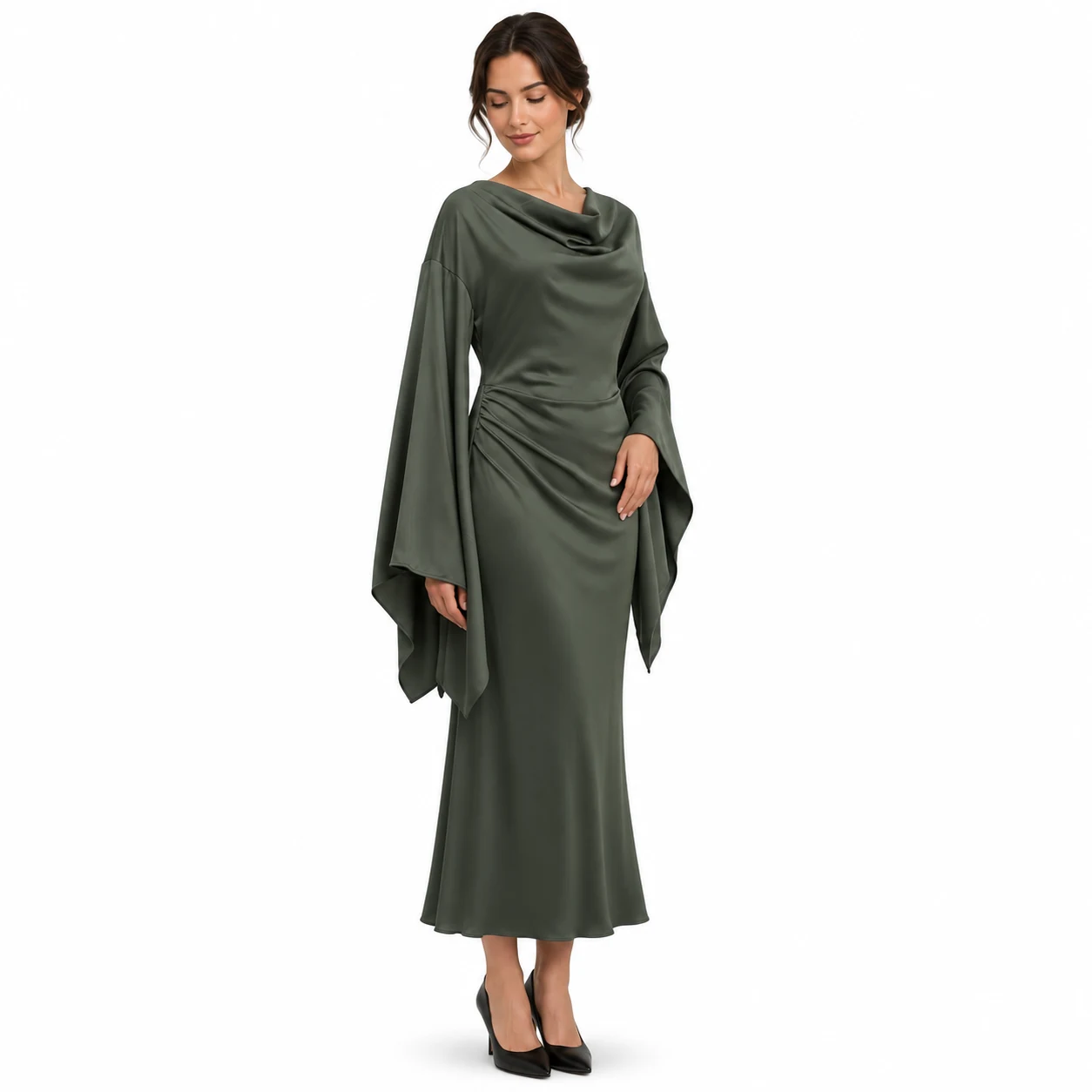
The broad sleeves fall from seams below the shoulder. Their outside panels hang lower than the hand openings, so they add length without forcing the bodice to sit loose. The waist stays defined even when both hands come together gently in front.

From the front angle
The diagonal folds turn toward the waist and break up the plain front. At a slight angle, they show the contrast between the closer bodice and the fuller arms. A small bag with a short handle is less likely to press the sleeve into a heavy fold.
Seated views
Give the sleeve panels room when you sit
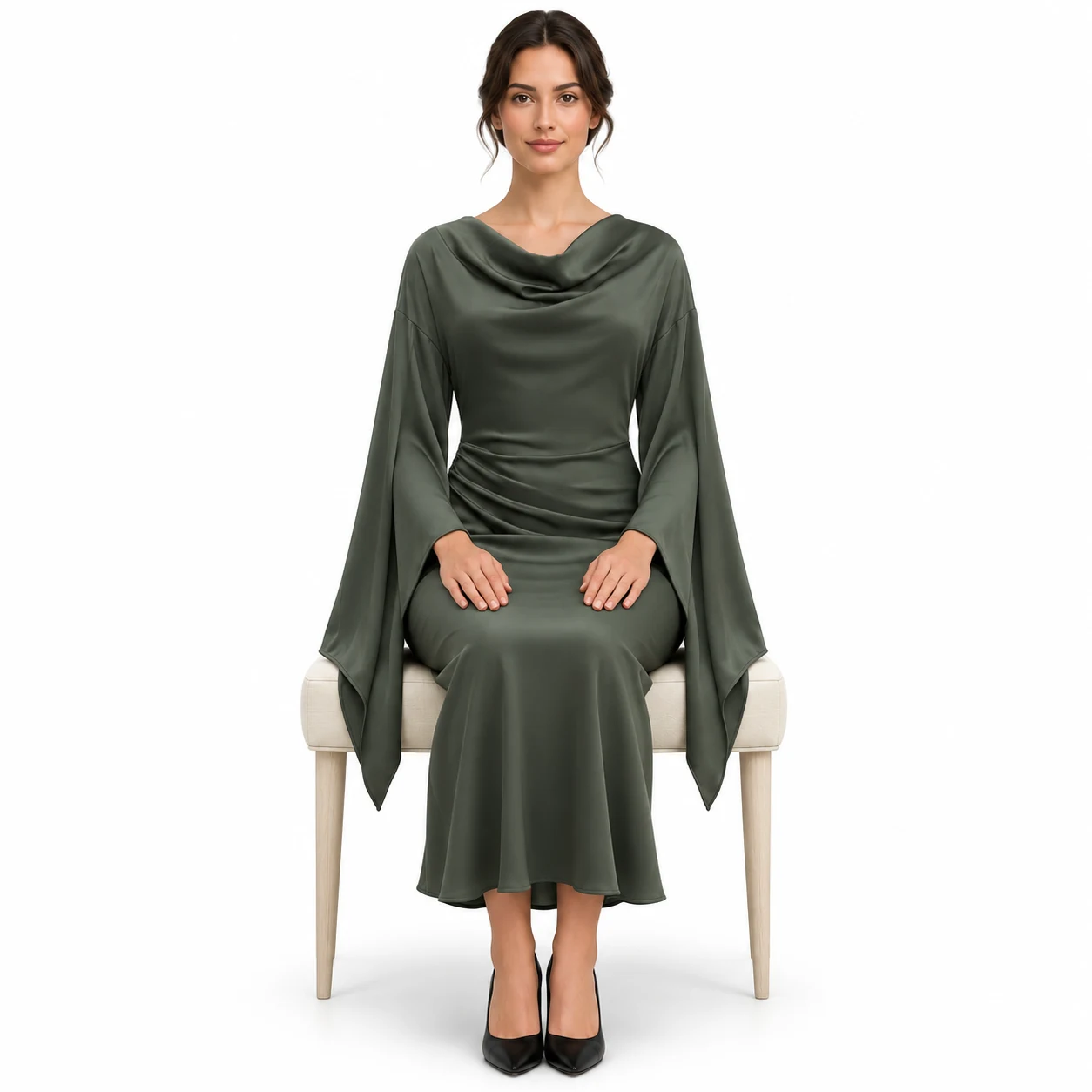
When seated, the smooth skirt folds across the knees while the long sleeve panels can hang beside the seat. Pull the panels clear before you sit so the fabric does not bunch under your arms. If you wear a smooth layer underneath, check that its hem stays hidden. The waist remains the more fitted part of the dress, so use both the bust and waist when comparing sizes rather than relying on the sleeve room alone.

Leave a clear line at the wrist
A slim bracelet or watch is easier to keep clear of the sleeve panel than a wide cuff. A small bag also keeps attention on the drape without adding another hanging strap. If you wear a coat over the dress, leave enough room around the forearm for the fabric to fall naturally when you take the coat off.
Dress details
- Neckline
- A shallow cowl softens the front neckline without a tie or separate scarf. The shoulders stay covered, so small earrings offer an easy accent without hiding the drape at the neckline.
- Sleeves
- Dropped shoulders lead into long split panels that hang lower at the outer edges. The forearms can show when you lift your hands through the side openings in each sleeve.
- Waist and skirt
- Diagonal gathers break up the closer waist, then the skirt follows a slim line before widening a little at the hem. There is no bulky tier to compete with the sleeves.
- Lead Gray
- The Lead Gray shown has a noticeable deep olive cast rather than a cool blue base. Its highlights can read lighter in direct light, especially around the neckline folds and sleeves.
- Length
- The listed length ranges from 50.0 inches in S to 51.6 in XXL. A midi you already wear can help you judge how far the hem will fall on you with your usual shoes.
Use both the bust and the waist
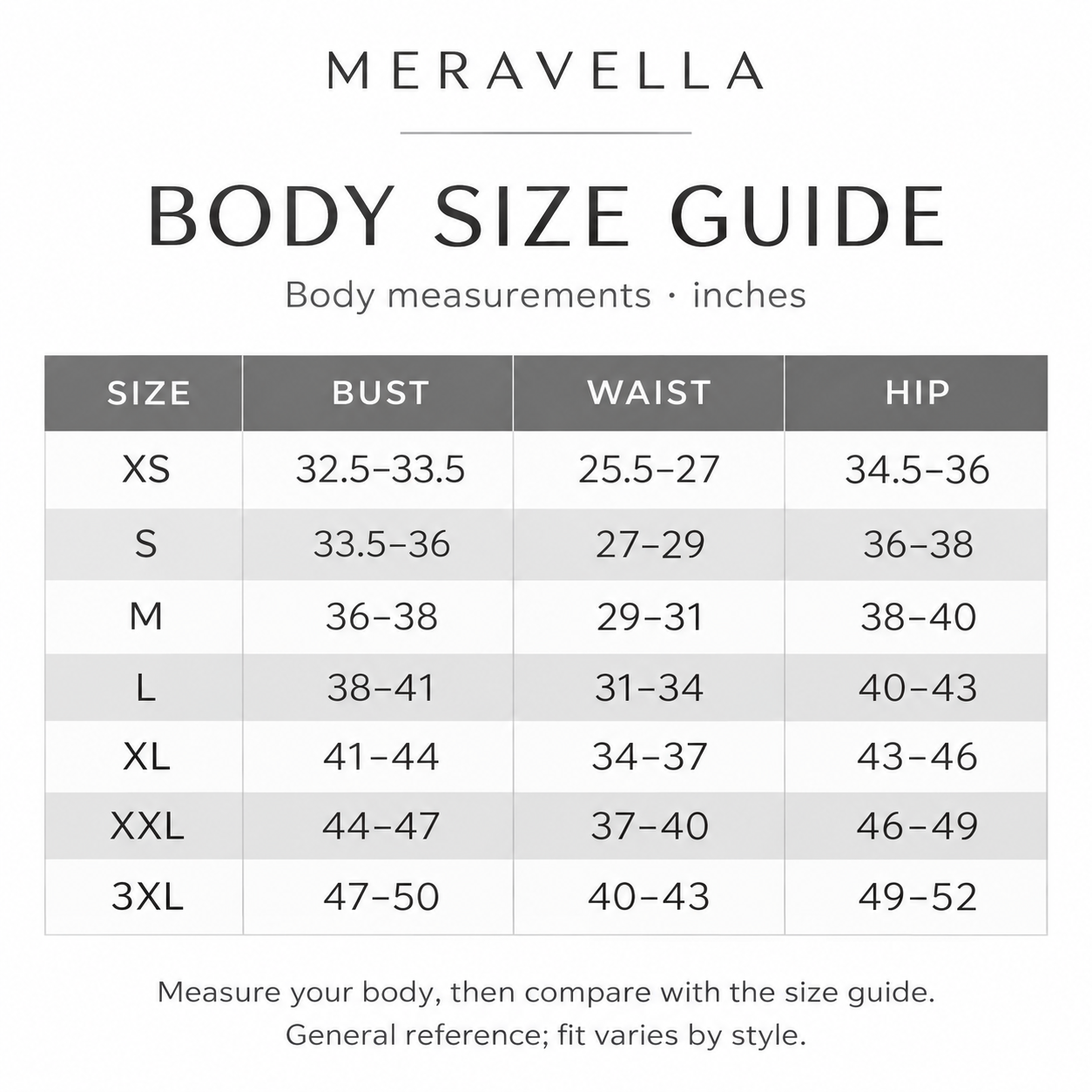
The general body chart and size-specific dress chart serve different purposes. Since the waist sits closer than the sleeves, compare both the bust and waist with a similar dress that feels comfortable when you sit and reach. Check the listed length against a piece you wear, and use the sleeve photos to see how far the longer panels can fall.
Keep the drape free
If you add a jacket for a cooler evening, leave enough room at the arms so the longer panels do not bunch. Simple earrings and a short strap or small clutch can let the cowl and sleeves remain the focus. Check the hem with the shoes you plan to wear and use the closer waist, not the open sleeves, as your main comparison for fit.