

A simple outfit, with a twist already built in.
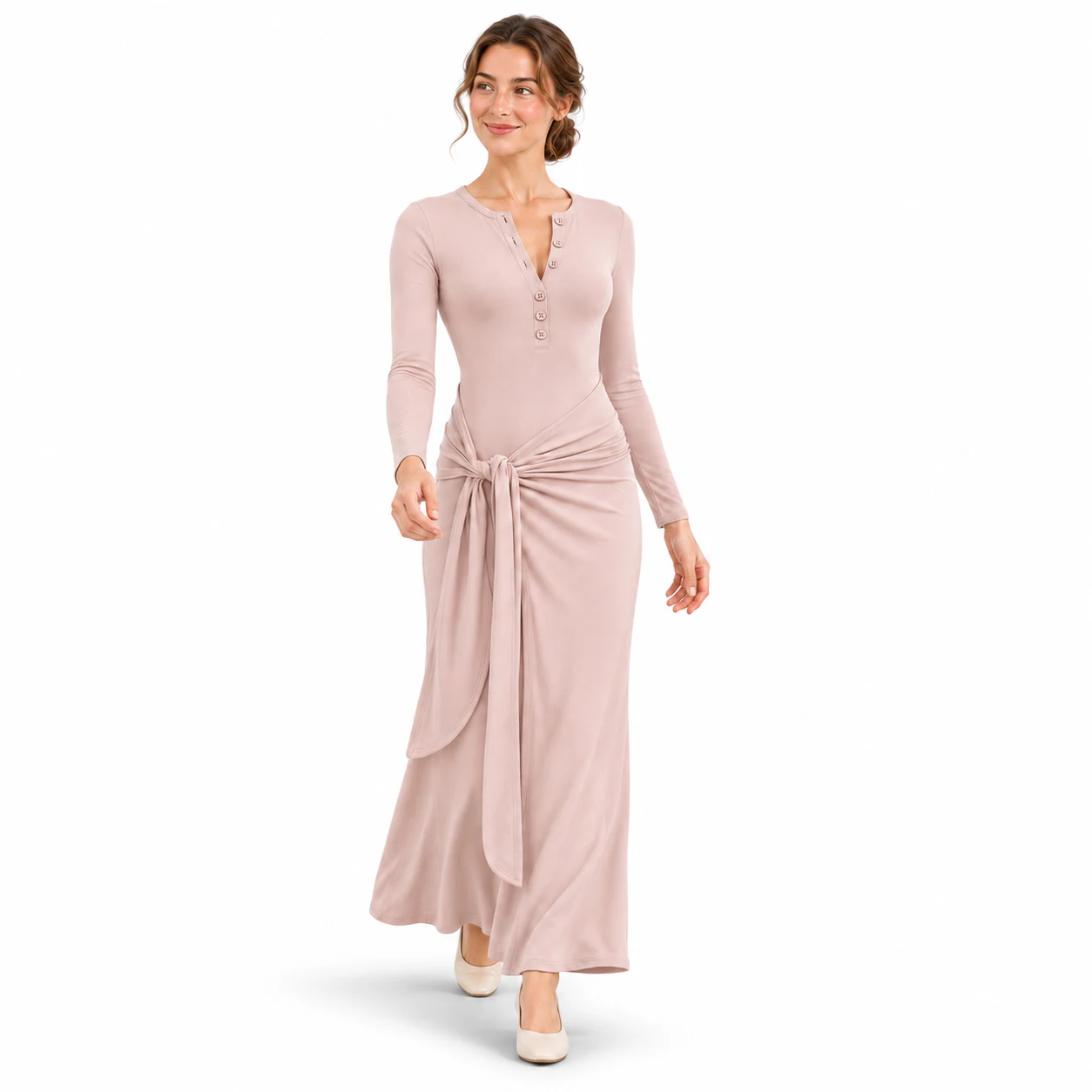
For a lunch date, an evening meal or an afternoon out, this side-tie knit maxi dress gives a plain colour a more distinctive outline. The knot at one hip draws diagonal folds across the front, while the long sleeves and gently flared hem keep the overall shape balanced. Choose pale Pink for a softer palette, or Dark Gray and Black when you prefer deeper tones around the same draped detail.
Let one detail lead
The side knot gives the outfit a focal point without adding a separate belt.
Frame the neckline
A short Henley opening adds interest near the face while the buttons stay tonal.
Set your colour mood
Choose pale Pink or a deeper neutral to work with shoes and bags you already own.

The side drape
1. Give a plain colour more shape.
The wrap panels gather at the wearer’s right hip, creating diagonal folds across the front. Two unequal tails fall over the skirt rather than stopping at the waist. This off-centre arrangement gives the dress its main detail without adding a contrasting print, a buckle or a separate belt.
Let that draping remain visible when you put the outfit together. A short outer layer can sit above it; a longer jacket works best left open. Keep a shoulder bag from resting directly over the knot so it does not hide the feature you chose the dress for.
Neckline & sleeves
2. Keep the finishing touches simple.
The neckline starts with a narrow round edge and a short Henley placket. Six matching buttons run down the front, with the upper opening forming a V in the photographs. They add detail without introducing another colour, while the long sleeves finish with simple narrow hems rather than ribbed cuffs.
For a dinner outfit, small earrings can echo that restrained finish without competing with the hip tie. A fine necklace is an option within the open neckline, rather than a necessary finishing piece. Choose one accent near the face and let the draped front carry the rest.

The full silhouette
3. Detail at the front, a quieter back.
A long line in profile
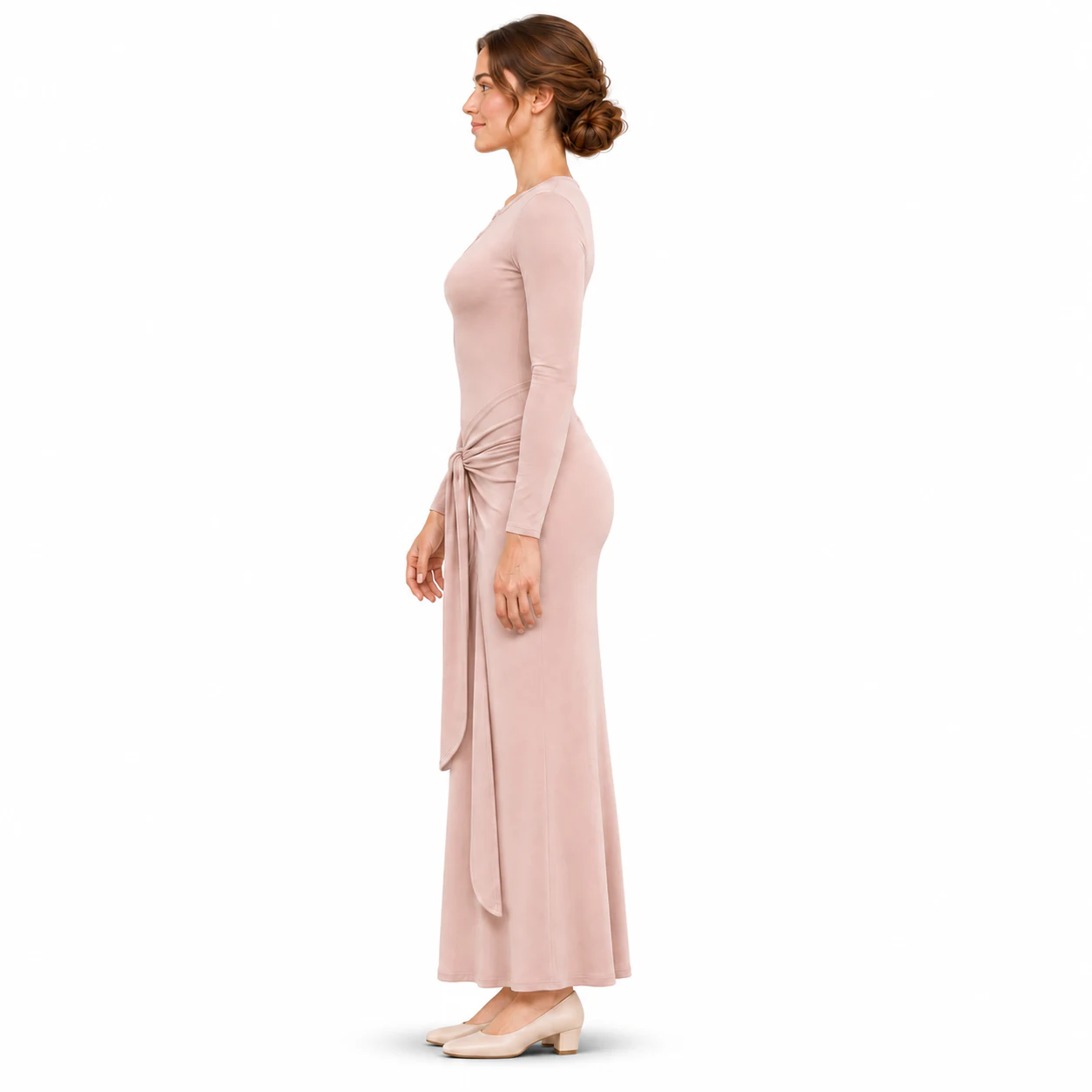
The fitted bodice gives way to a gently widening lower skirt. From the side, the hanging tie panels add another layer over that long line. Consider this shape if you like a maxi silhouette with more visual movement than a plain straight column.
A simple rear outline
The back has a vertical centre seam and no matching knot or bow. Its quieter surface balances the gathered front, so the dress does not carry the same volume all the way around. The lower edge still widens gently, keeping the front and rear silhouette connected.

Styling notes
4. Build the outfit around the drape.
For lunches and longer evenings at the table, keep the rest of the outfit easy to arrange around the side tie. A compact bag can sit beside you rather than across the gathered panels, while understated shoes leave the overlapping skirt edge in focus. Before heading out, check how the front overlap falls when you sit and walk; its coverage can change with posture and movement.


Soft Pink or deeper neutrals
The Pink option shown works with pale shoes for a close tonal match. Dark Gray and Black are available for a deeper palette; try matching footwear or a small metallic accent. The colour selector above shows each option, while these detail and styling photographs focus on Pink.
The essentials
- Material
- Fine-knit construction. Fibre composition and percentages have not been supplied.
- Colour
- Pink, Dark Gray and Black
- Sizes
- S, M and L
- Included
- One dress with its side-tie panels. Shoes, bags and jewellery are not included.
Read the chart’s plus signs carefully.
The supplier writes the bust entries as 61+, 65+ and 69+ cm without defining the plus sign or measurement basis. These are not verified body-fit limits. Compare the complete Size Guide and allow for the unspecified measuring method rather than assuming a stretch range.
Check the label before cleaning.
The fibre blend and washing instructions are not specified. Use the sewn-in care label for washing, drying and ironing directions; the appearance of the fine knit does not establish which temperature or treatment is suitable.