
Start with the things you reach for during an ordinary day. Set those beside the work you need to do, then find another home for the occasional supplies. A cup, shallow box, or pouch you already own may be enough to keep the small pieces together.
The layouts below work as starting points for a desk with a drawer or a simple tabletop without one. Adapt them to your own tools and the space you have.
Sort by how you use each item
Take the loose supplies off your desk and sort them into three groups:
- Used here every day: Your current notebook, a pen, and any small accessories you regularly reach for while working.
- Used here occasionally: Spare stationery, extra cables, and supplies for a task you do less often.
- Belongs elsewhere: Finished paperwork, items from your bag, and things that have collected on the desk without a reason to stay.
If you use several pens, keep the ones you actually choose. Put refills and duplicates with the occasional supplies. Move the third group to its proper home before putting anything back on the desk.
For an item you are unsure about, keep it with the occasional supplies and notice whether you reach for it over the next few days. You can change its place later.
Leave room for the task first
Put your main working tools back before adding storage. Open your notebook as you would while working. If you work on a computer, include the space you need for its usual accessories and any paper you consult beside it.
Try an ordinary task: turn a notebook page, move your mouse if you use one, or lay out the papers you need to compare. Keep that area free of cups, trays, and spare supplies. There is no fixed amount of empty desk space to copy from a photograph; use the room your own task takes up.
Now choose places for the remaining daily items. A container is useful when it keeps them together without taking over the area you just cleared.
Try a layout with a drawer
For a desk used with a laptop and notebook, start with the laptop in its usual place, the open notebook beside it, and one pen next to the notebook. Mirror the arrangement if you prefer writing on the other side.
Use the front of the drawer for the small supplies you reach for most often. A shallow box can hold an eraser, a sticky-note pad, and other small tools you use often. Keep the items visible rather than piling them in layers. Put less-used supplies farther back, grouped in a separate box or pouch so you can lift them out together.
Before choosing an insert, measure your drawer and check the space needed for both the container and its contents. The measurement guide covers the opening, closing clearance, and a paper layout in detail.
Keep anything you need constantly on the surface if repeatedly opening the drawer feels awkward. The drawer gives you more clear desktop space, but it adds an extra step whenever you need an item.
Try a layout without a drawer
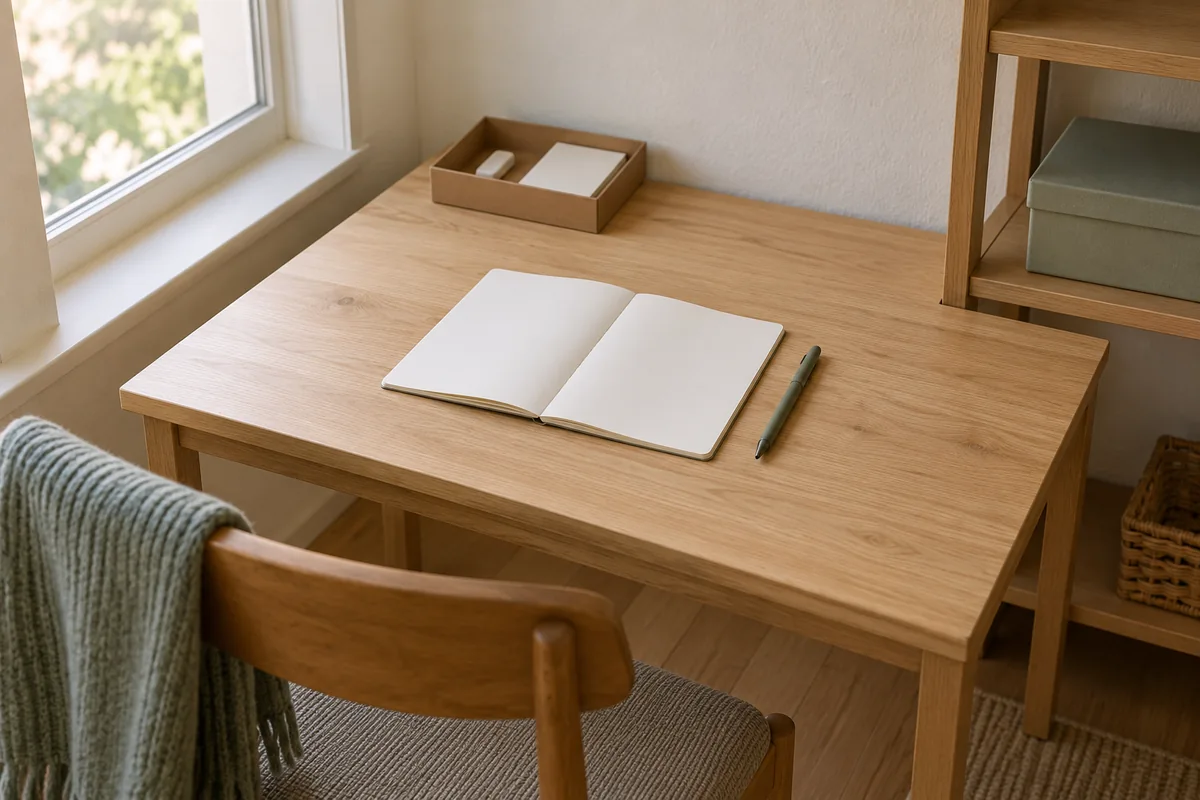
Keep the same working area, then give your daily stationery one small place at the back or side of the desk. Try a stable cup for pens or a shallow box lid for items that need to lie flat. Choose whichever holds your supplies while leaving the work area usable.
For example, a notebook can stay open in the center with a pen beside it, while a shallow box at the back holds an eraser and a small notepad. Keep occasional supplies in a box on an existing nearby shelf or in a cupboard.
If there is no nearby storage, use one small removable tray or box for the supplies needed for your current task. When you switch tasks, swap its contents instead of adding another container. On a shared table, move the whole kit to an agreed storage spot when you finish.
This layout keeps daily supplies visible. Check that the container itself does not crowd the notebook, keyboard, or other tools. If it does, try a smaller container or keep fewer things in it.
Give papers and spare cables a specific home
Put paperwork that still needs attention in one folder. Write the next action on a note if you need a reminder of why a sheet is there. File completed papers where you keep your records, and move reference material out of the active folder once you have finished with it.
Use a pouch or small box for spare, disconnected cables and small accessories. Group the ones you know belong together, and add a plain label if their purpose is easy to forget. If you take the same accessories between your desk and bag, give that pouch a regular place rather than scattering its contents across the desk.
Choose a container that lets you take out and return an item without emptying everything else. Try the arrangement with what you own before deciding whether anything is missing.
Reset the desk when you finish
Before you leave the desk:
- Return daily stationery to its cup, tray, or drawer.
- Put unfinished papers in the active folder and file anything completed.
- Return spare cables and small accessories to their pouch or box.
- Take away items that belong elsewhere.
- Leave enough room to begin your next task.
After a few days, look at anything that keeps being left out. Move its storage closer, choose a container that is easier to use, or reconsider whether it belongs on the desk. Keep the arrangement you can put back without rearranging everything around it.
Pingback: How to Measure a Drawer for Organizers | Meravella