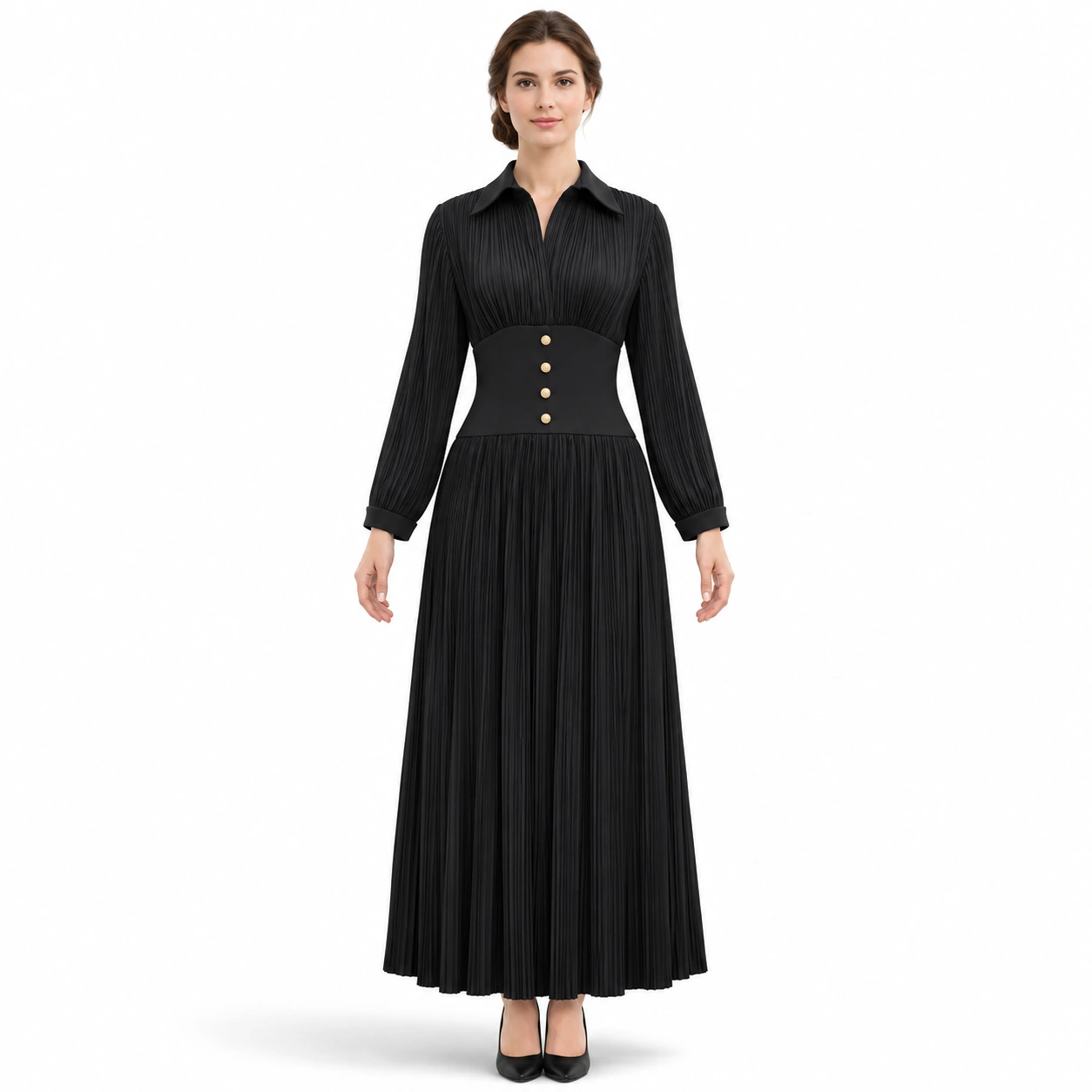



Fine pleats around a smooth waist panel
Fine vertical pleats run through the bodice, sleeves and skirt. A wide, smooth panel gives the dress a clear waist and breaks up that texture, with four small gold-tone accents along the center. The pointed collar and long sleeves keep the top neat, while the skirt falls away below the waist in a soft A-line. It’s an easy shape to dress up without putting a separate belt or a large necklace over it.
A crisp frame at the neck
A pointed collar opens slightly at the center, giving the neckline shape without the weight of a closed high collar.
A contrast in texture
The wide waist panel gives the fine pleats a clean break, and four small gold-tone accents draw the eye to the middle.
A soft flare below the waist
The pleated skirt opens out below the fitted panel, so the hem keeps a soft shape instead of sitting close to the legs.

Collar and waist
1. A neat collar and a defined waist
The pointed collar frames a short opening in the front. Fine vertical folds below it give the black fabric some depth even without a print. The sleeves carry the same folds through to plain cuffs, keeping the treatment consistent through the upper half.
The smooth waist panel is part of the dress rather than a separate belt. Four small gold-tone accents sit down its center. That detail gives the eye a place to settle between the pleated top and skirt without introducing another color into the fabric.
Skirt and hem
2. Fine pleats down to the hem
The skirt opens gradually below the smooth waist panel. Its vertical pleats keep the broad lower shape from looking heavy, while the plain hem lets the same rhythm of folds carry all the way to the finished bottom edge.
The length is part of the silhouette. The skirt falls to the ankle area in the photos, but where it lands on you depends on height and shoes. Compare the dress length in the chart with a long dress you can try on, and use the pleat detail to judge the shape rather than the length alone.

Shape from two angles
3. A continuous waist from side to back
A clear change at the waist
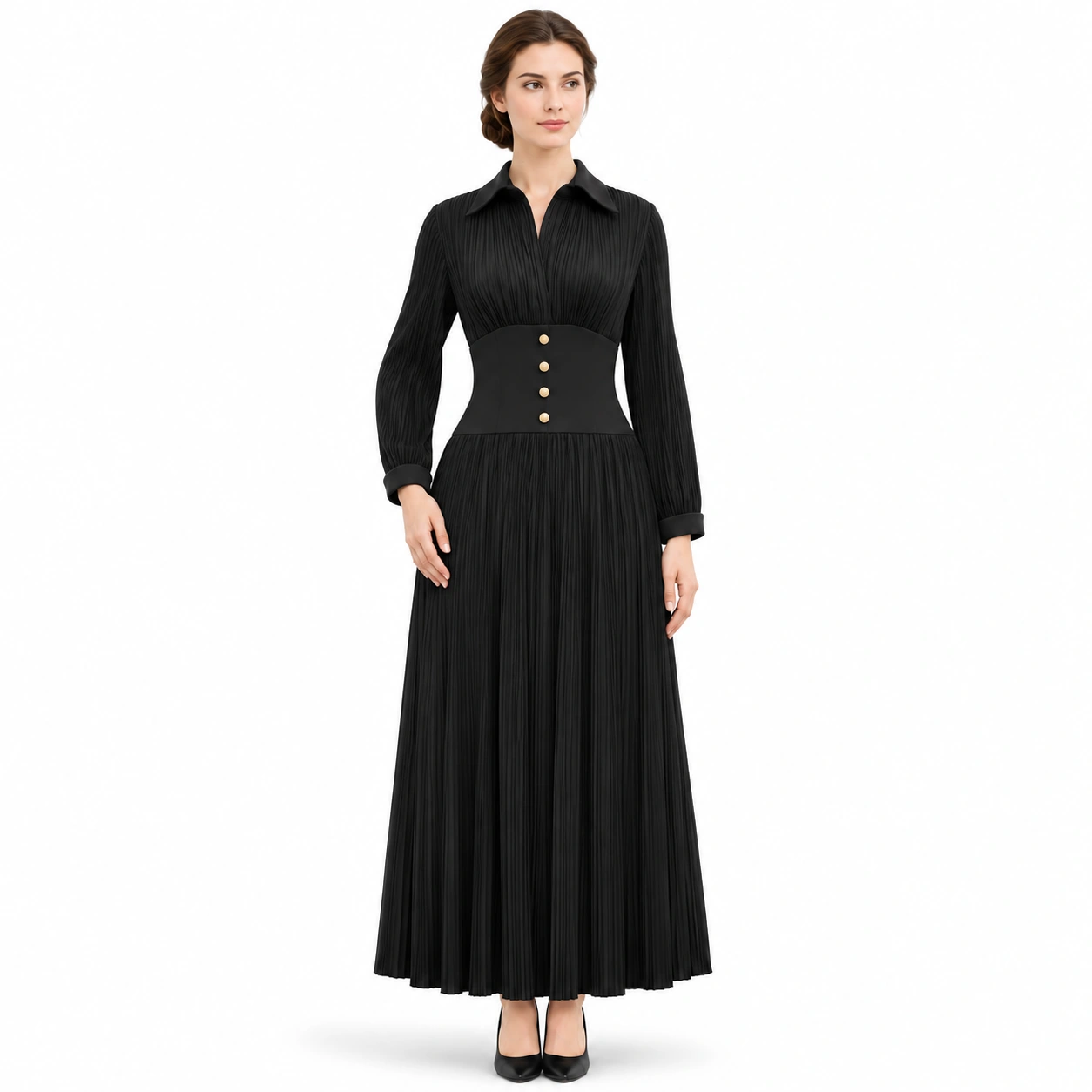
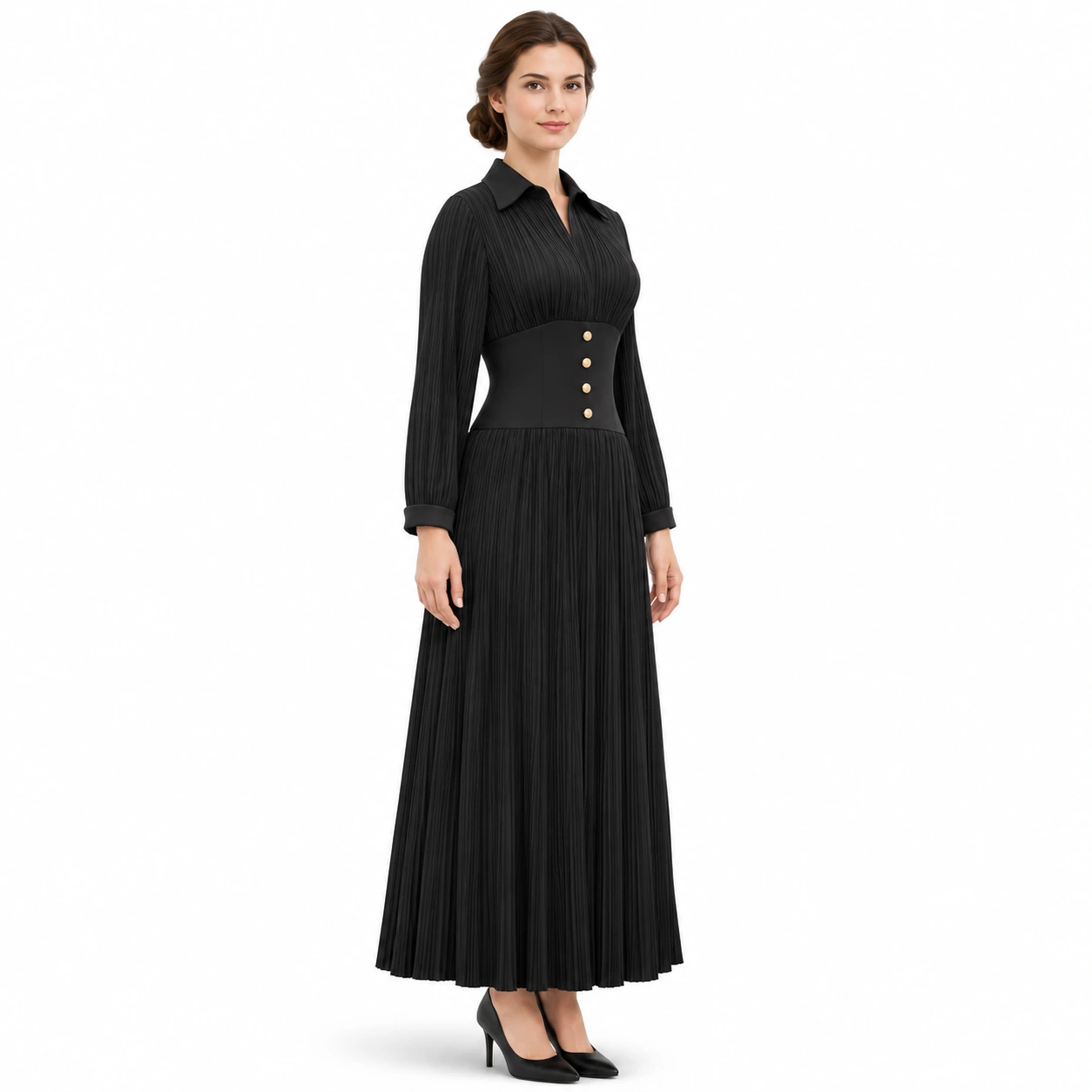
From the side, the panel gives the waist a smoother outline than the pleated bodice and skirt on either side of it. The fabric gains width below the lower seam. This angle is useful if you want a defined waist without a skirt that fits closely to the legs.
A covered back
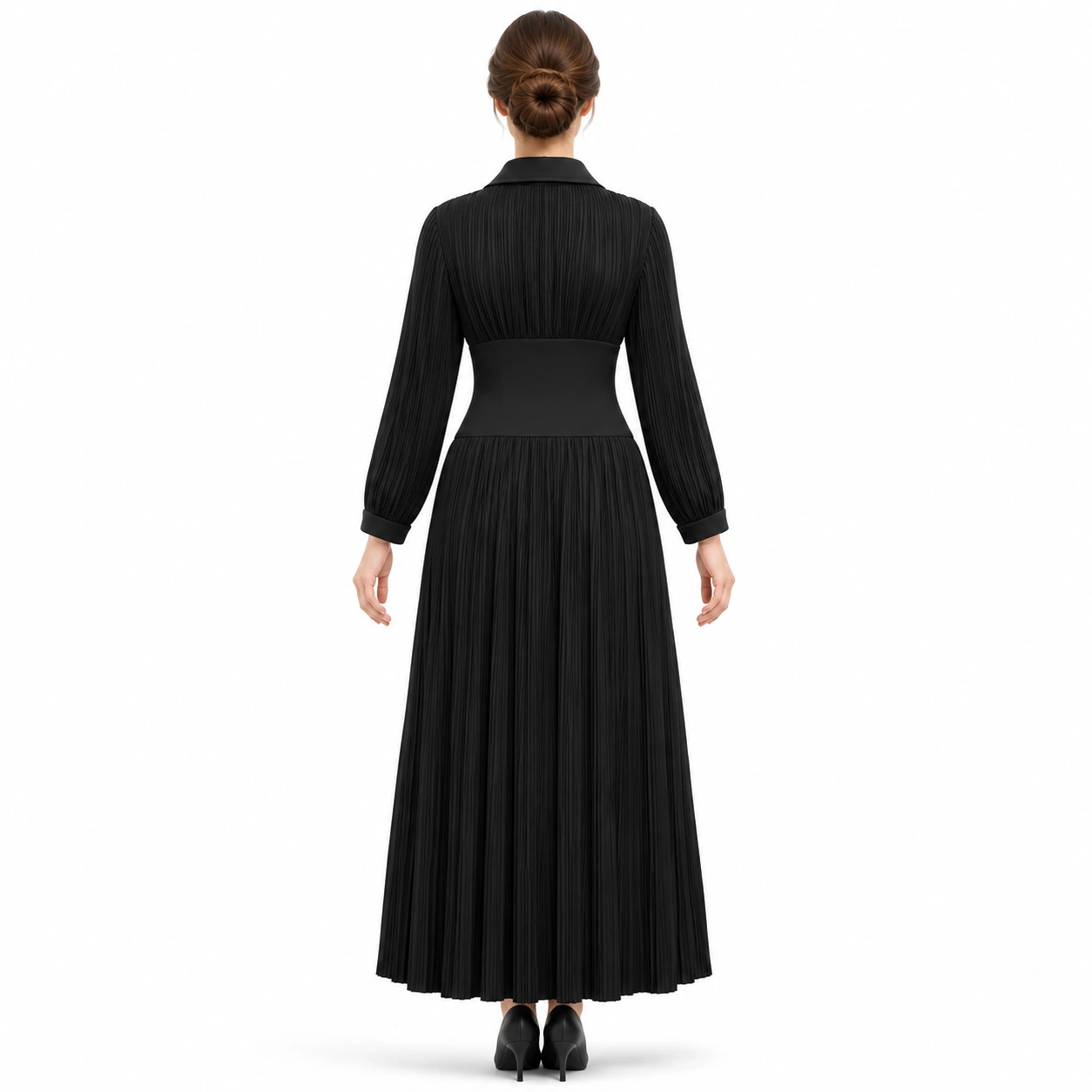
At the back, the smooth black panel continues around the waist and the pleats return above and below it. The collar and shoulders stay covered. The small gold-tone details belong to the front, so the rear view keeps the same shape without extra decoration.
How to style it
4. Let the pleats and waist do the work
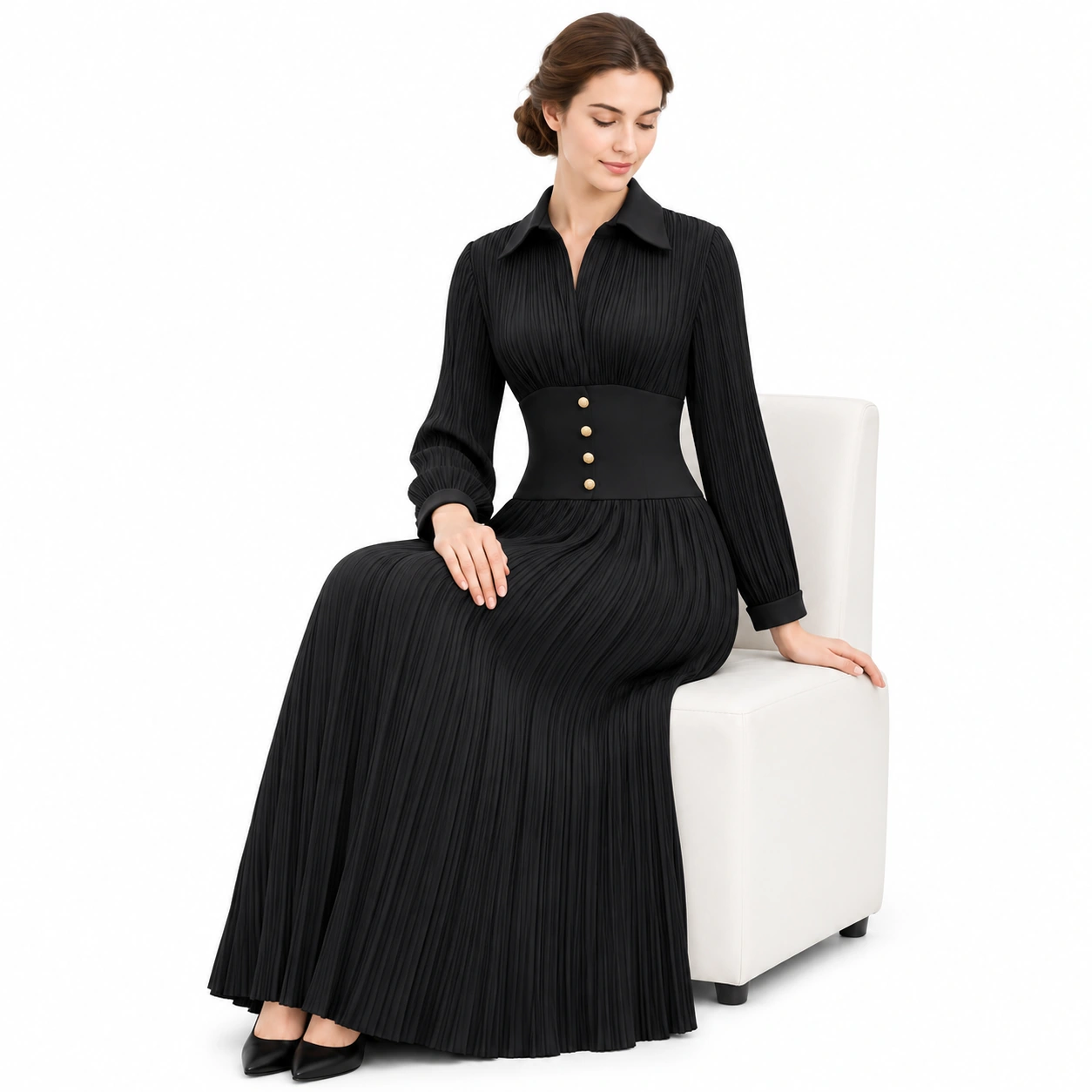
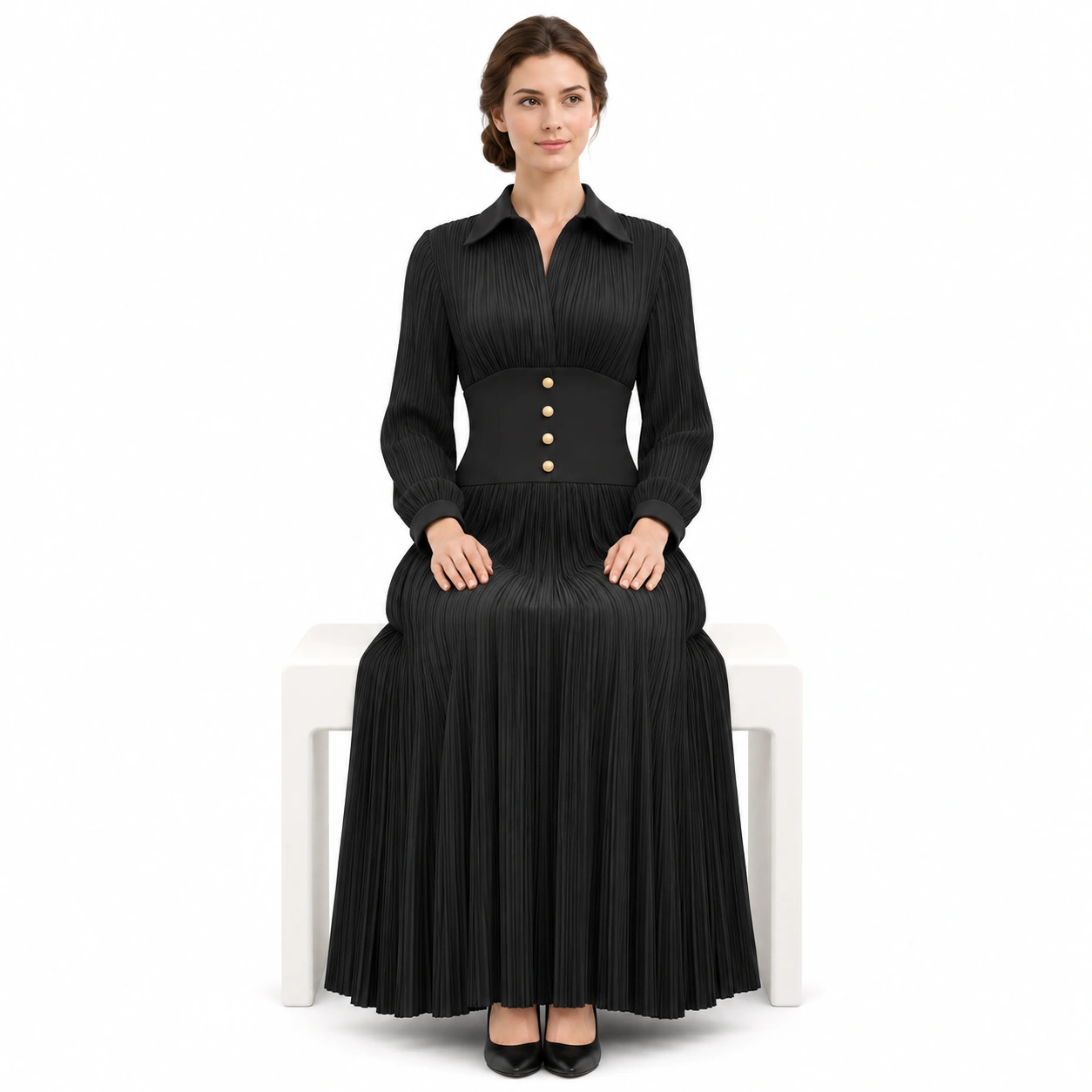
For dinner or a dressed-up daytime look, start with simple shoes and a bag that doesn’t compete with the gold-tone accents. Small earrings can echo the front detail without crowding the collar. If you want to add color, put it in the bag or shoes rather than adding a belt over the panel. The waist already gives the outfit a clear dividing line, so even a plain pair of pumps makes the dress feel finished.
Choose outerwear that leaves space
An open coat keeps the waist detail in view without pressing the pleats flat. If you prefer a shorter layer, try one that ends above the lower edge of the waist panel. Decide on shoes before comparing the hem with a dress you own, so you can judge the amount of clearance you actually want.
The essentials
- Silhouette
- A shaped long-sleeve top above a smooth, fitted waist panel and a flared long skirt. The skirt has more room than the upper dress, with fine folds that read as one uninterrupted line.
- Color and accents
- Solid Black at the collar, sleeves, waist and skirt. Four small round gold-tone accents sit in a row at the front waist, giving the middle a little contrast without a bright trim.
- Collar and sleeves
- A pointed fold-over collar with a small opening at center front. The sleeves are long and pleated, and each ends in a plain cuff rather than a wide bell or a decorative edge.
- Fabric
- Polyester with fine vertical pleats through the bodice, sleeves and skirt. The fitted waist panel is smooth and matte, so the change in texture is visible even in a solid color.
- Fit measurements
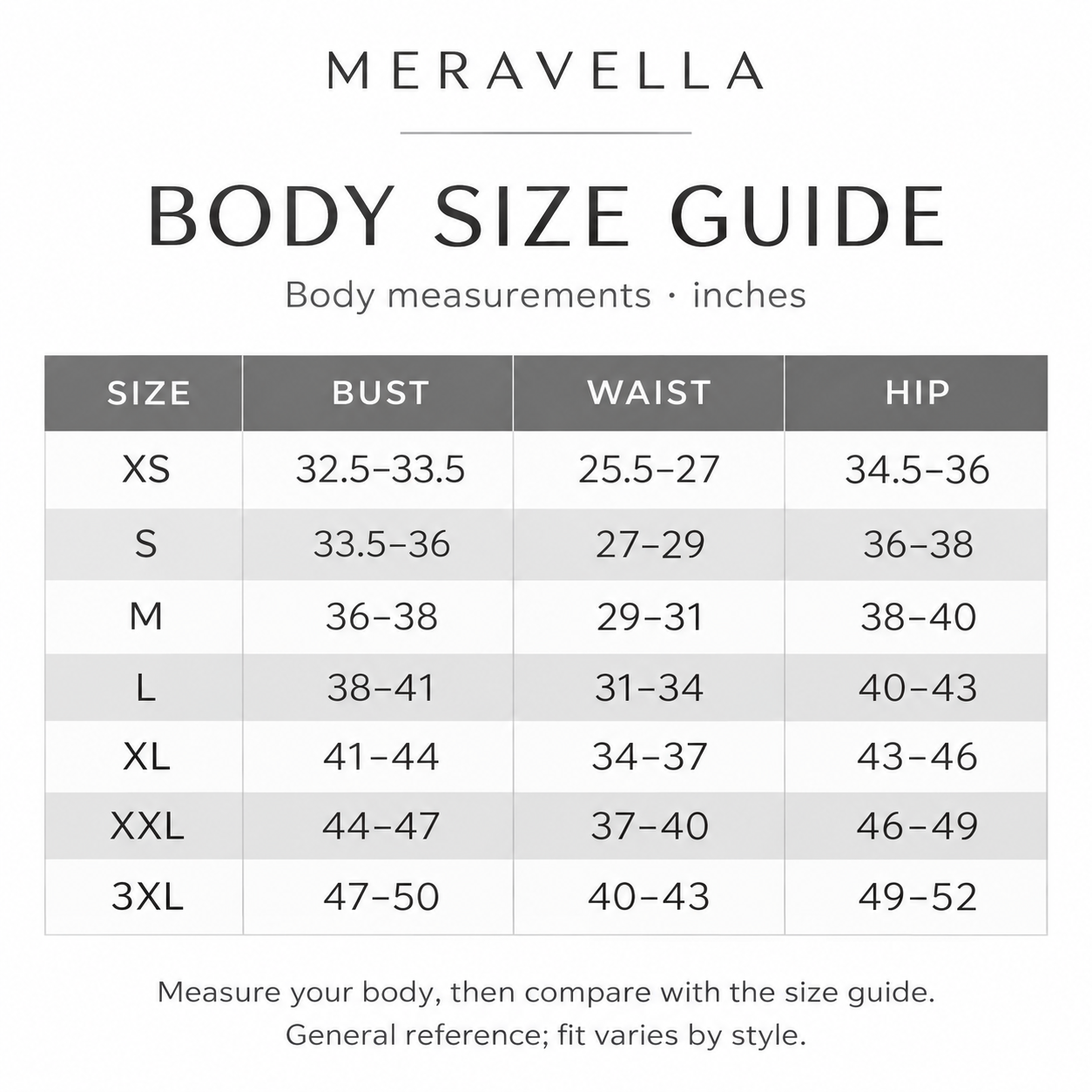
- Available in S through XL. Compare the waist and shoulder first, then check sleeve and dress lengths in the Size Guide against a long dress that fits you comfortably.
Check the waist before the length
Compare the finished waist with a dress you can sit in comfortably. The skirt relaxes below the waist, but the wide middle panel follows the body more closely, so use that measurement as your starting point. Check shoulder width and sleeve length next to decide where the cuffs are likely to sit. Then compare dress length with a similar piece and the shoes you plan to wear.
Keep the pleats from flattening
Follow the sewn-in label for washing, drying and pressing. Let the skirt hang without clips gripping the pleated area, and give the dress extra space between tightly packed clothes. If you need to pack it, follow the direction of the pleats as you fold it. Check the label before applying direct heat or steam to the folds.