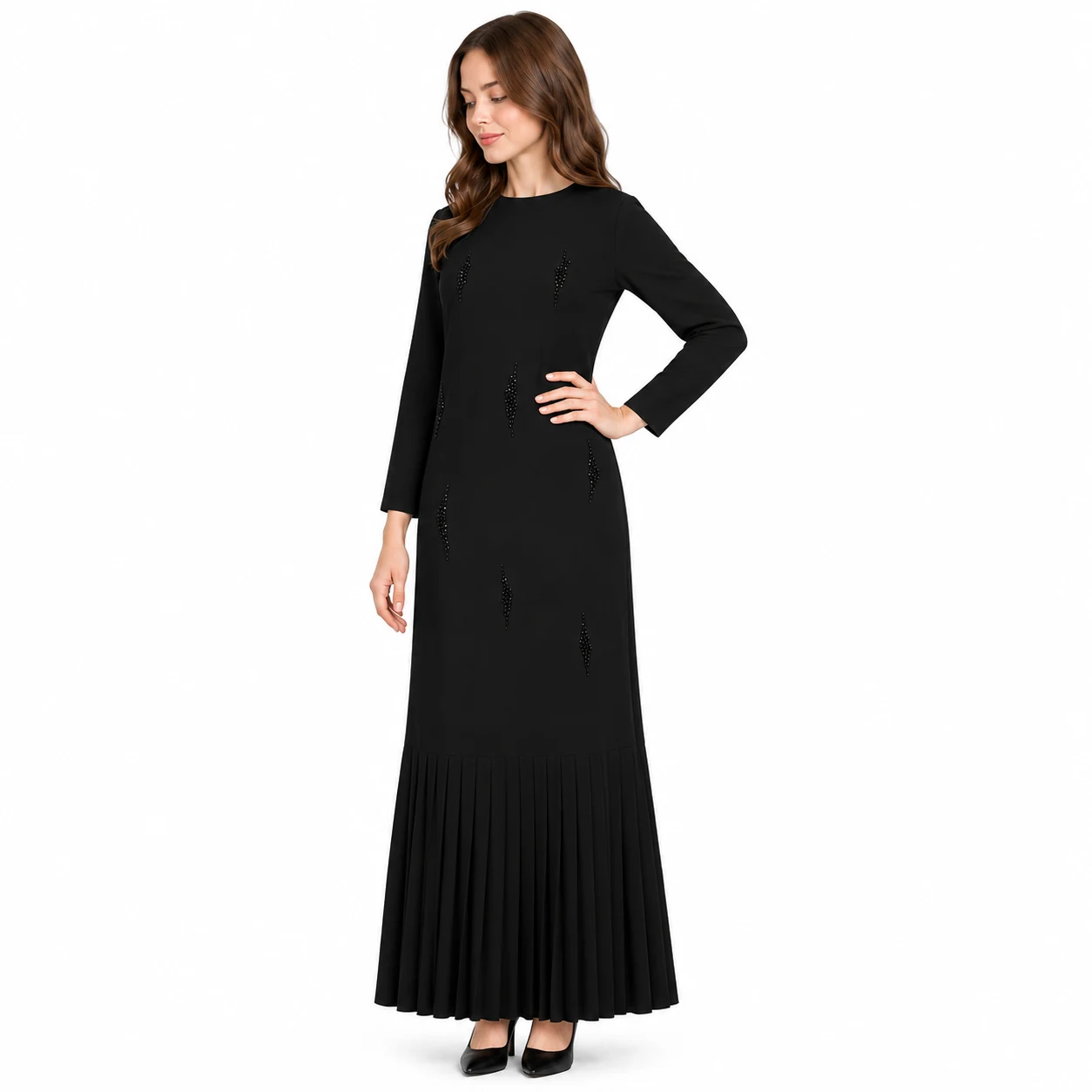


An understated black maxi
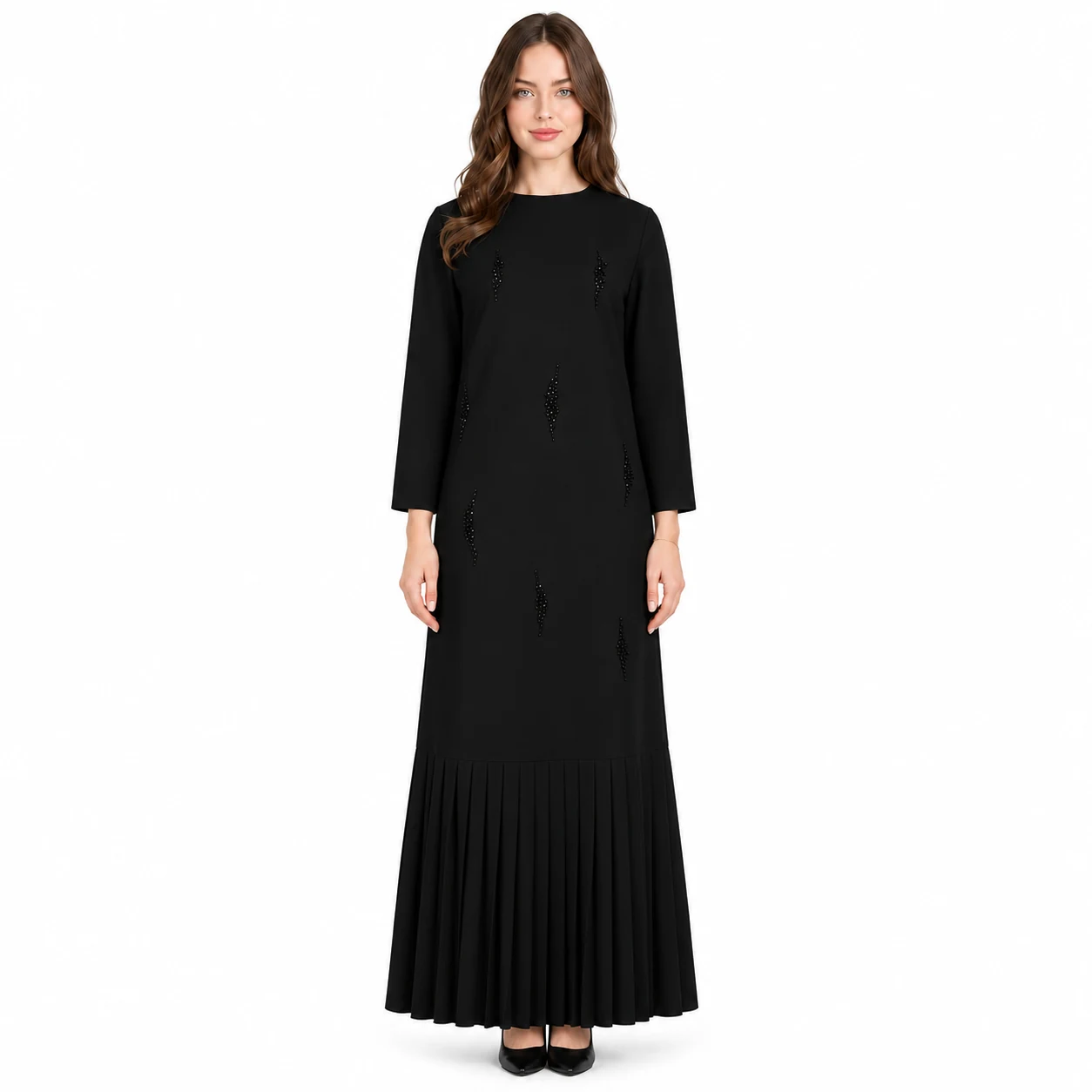
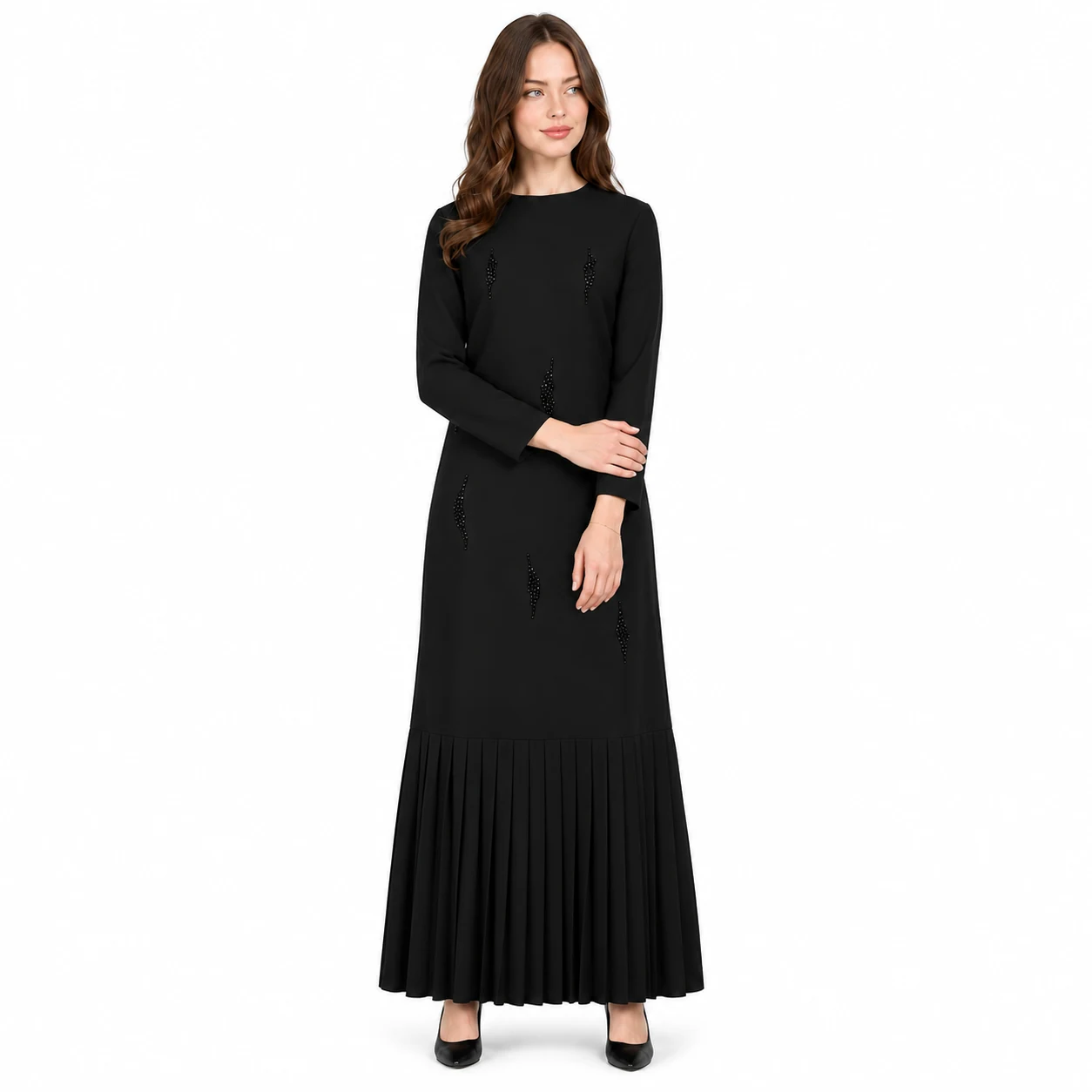
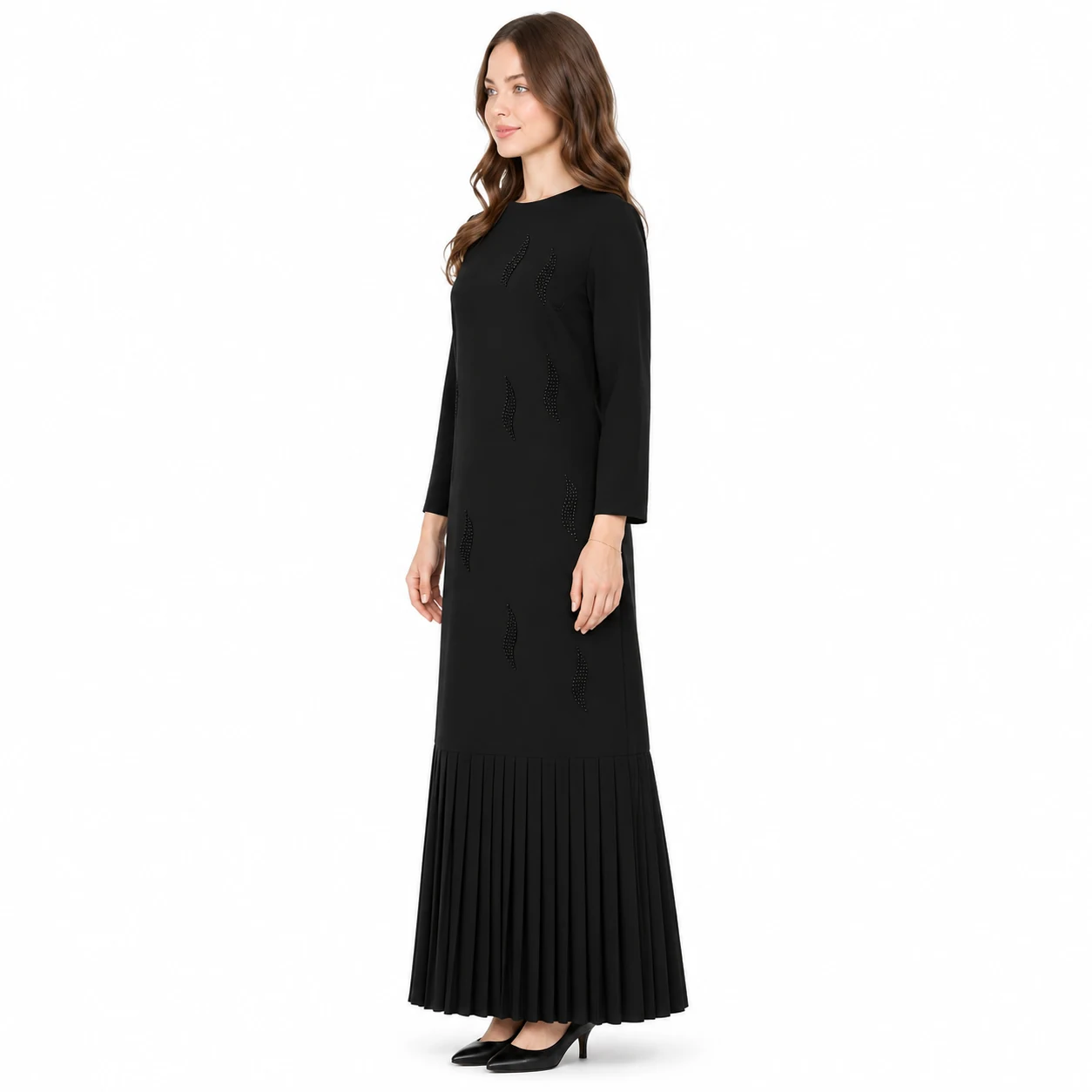
This black round-neck maxi is a quiet choice for a dinner or an evening gathering when you want a dress with detail but not a strong print. Small tonal accents give the front texture, and fine pleats add shape near the bottom while the upper skirt stays relatively straight. The long sleeves and simple neckline make it easy to wear with a favorite coat or a single piece of jewelry instead of assembling a full set of accessories.
A simple neckline
The round neckline leaves the upper edge simple, so the small details on the front don't compete with a collar.
Black-on-black accents
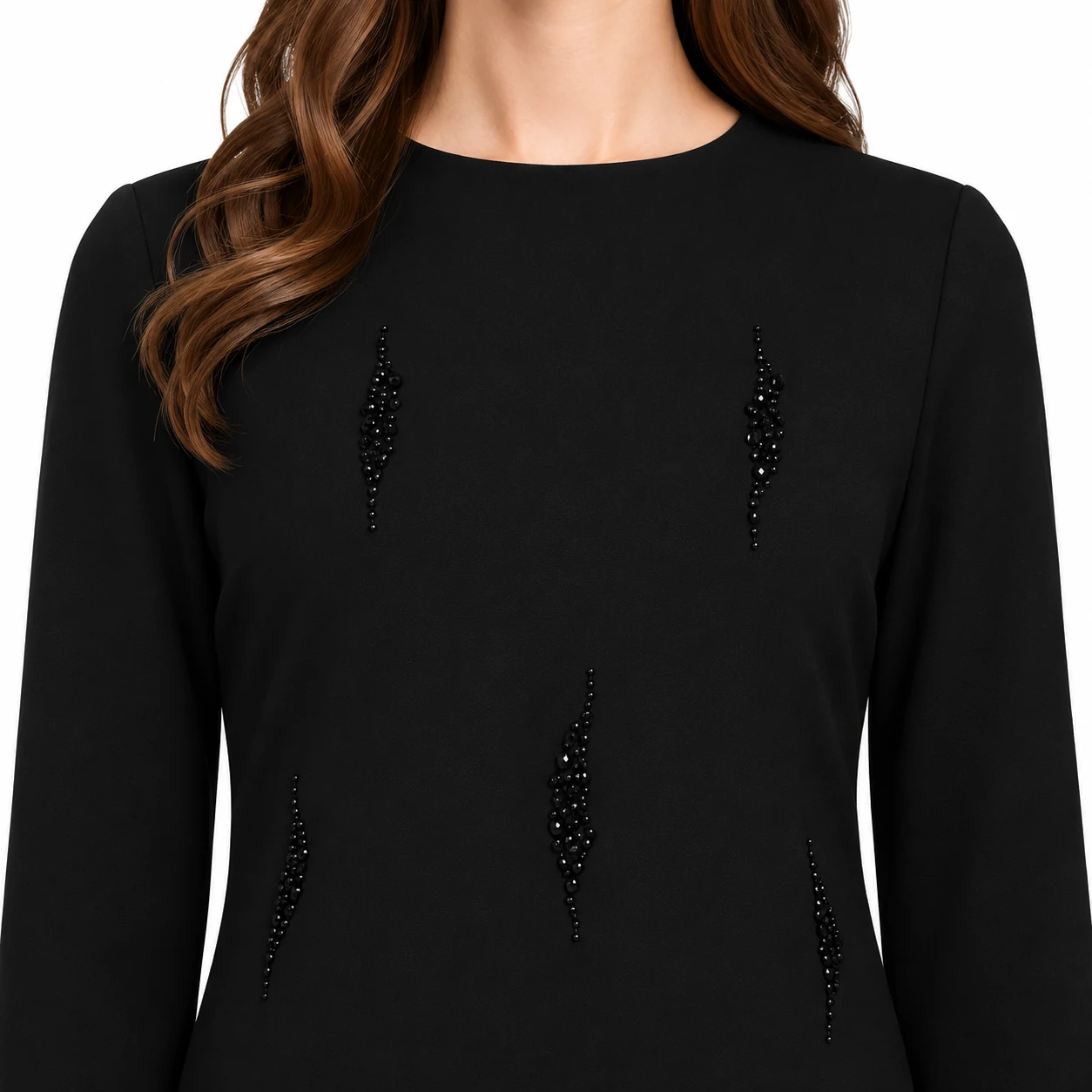
Small black accents sit against black fabric, giving the front a little texture without a strong contrast.
Low-set pleats
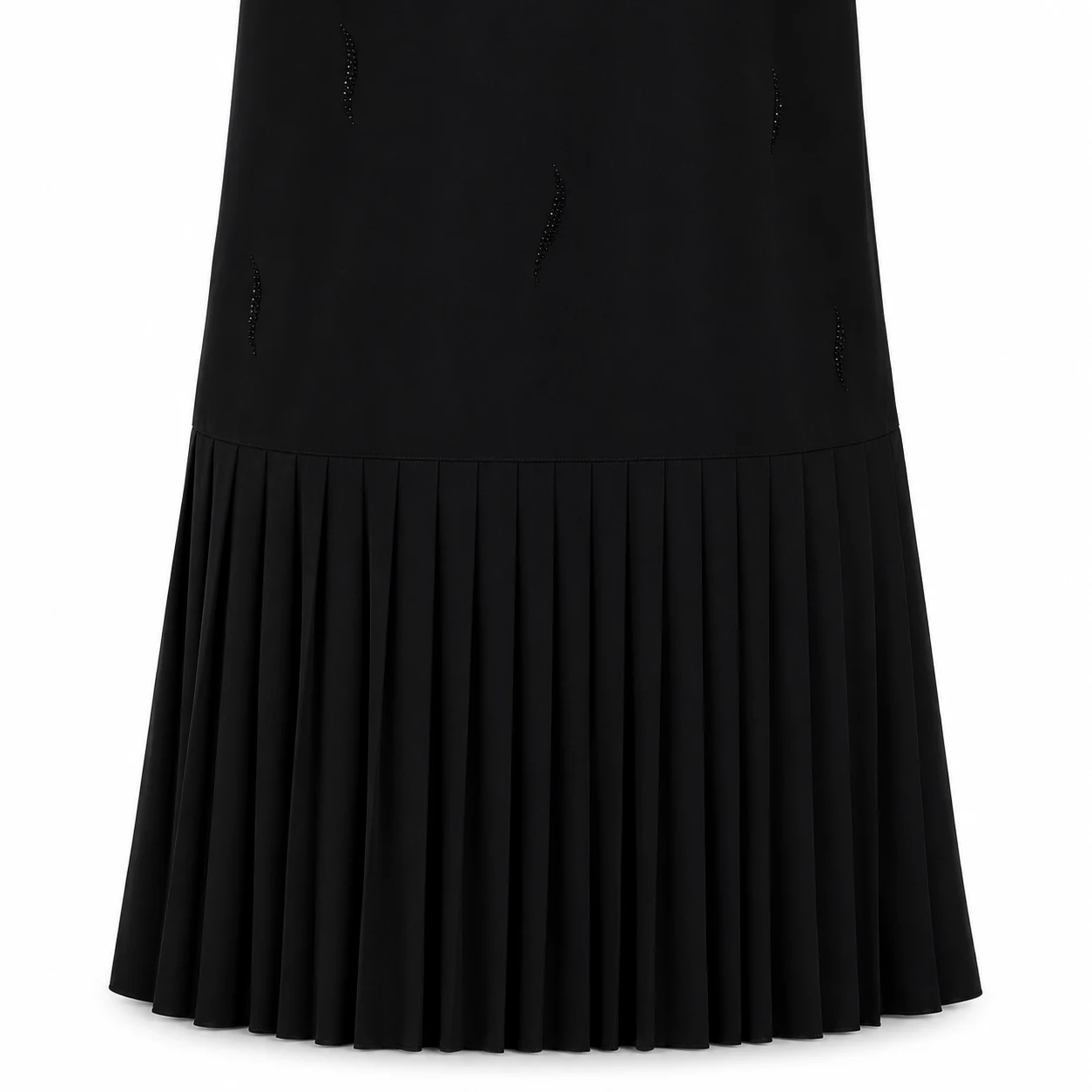
Straight fabric above the low seam gives way to closely spaced pleats near the lower edge of the long skirt.
Neckline and sleeves
1. A clean frame for subtle detail
The round neckline leaves a simple edge above the tonal accents. Choose this style if you want a dark dress with something to notice up close, but do not want a collar or contrasting trim to set the palette for everything else you wear with it.
Straight long sleeves keep the upper part of the dress uncluttered and give more arm coverage than a short-sleeved maxi. A bracelet is optional rather than the focal point here; small earrings can bring a little light to the face without covering the details on the front.
The low pleated panel
2. Fullness stays at the hem
The pleats begin low instead of opening out from the waist. That puts the fullness at the bottom of the dress, not through the whole skirt, which works well if you like the length of a maxi but prefer a straighter outline above the hem.
An uninterrupted black panel gives way to narrow vertical folds near the bottom. The difference in texture defines the hem without another color, so you can carry a patterned bag or wear a textured wrap without having to match a second shade in the dress.
Detail and layering
3. Keep the silhouette simple
Small tonal accents
The darker accents have a quieter effect than bright beads or a contrasting print. That leaves the outfit open to a small accessory with its own texture, whether you prefer a smooth leather clutch or a subtle metallic finish at the ears.

Layer without hiding the hem
The straighter upper skirt makes a short jacket an easy option: it can add structure at the shoulders without covering the part of the dress that gives the hem its shape. A plain wrap gives you a softer alternative if you want a layer for the evening.
Evening occasions
4. A quiet choice for evenings
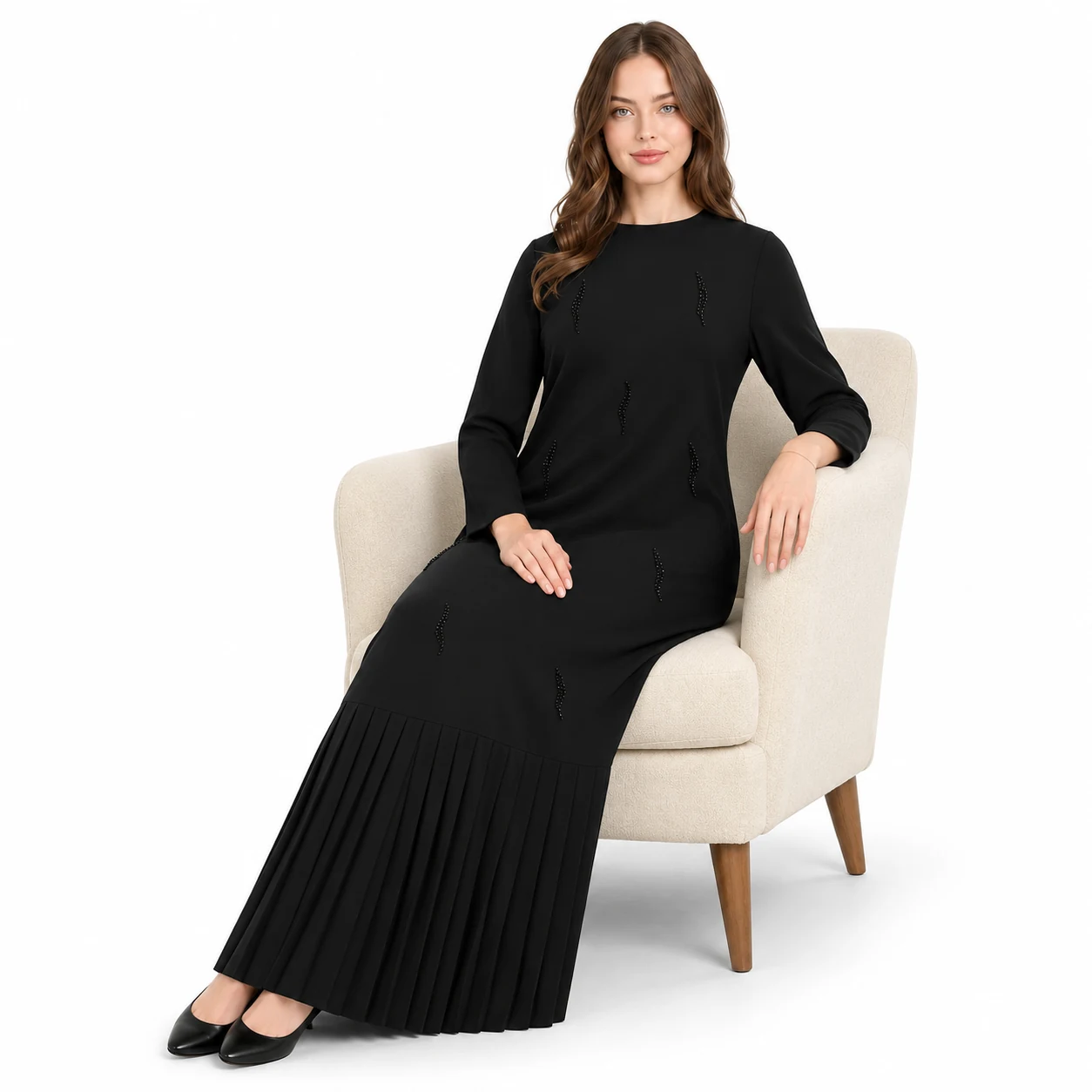
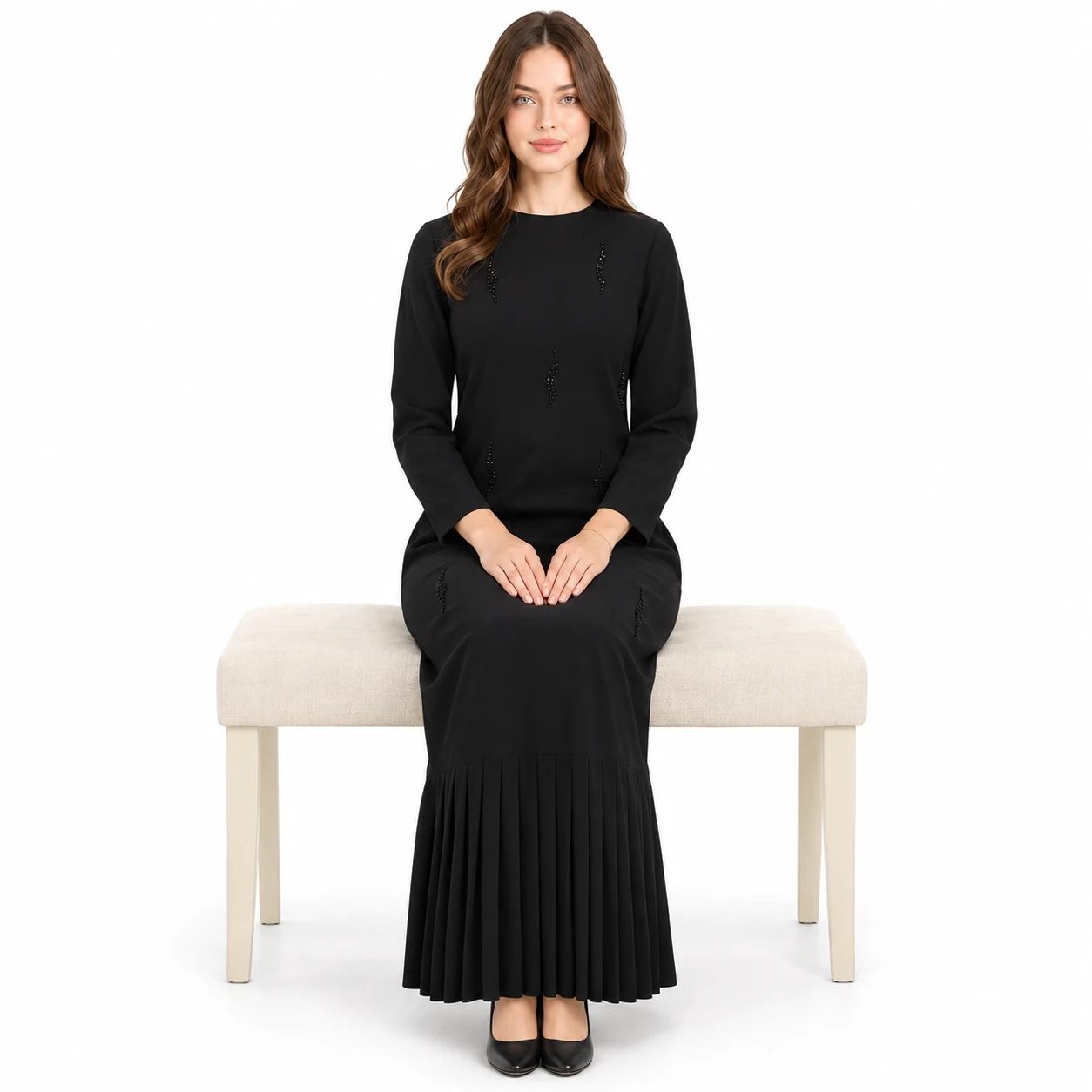
Wear it to a dinner, a gallery evening or a small celebration when you want a long dress without a loud print or glitter. The black-on-black detail keeps the top restrained, while the low pleats give the outline a more dressed-up finish than a plain straight skirt. For a quieter venue, keep the accessories close to black. For a more festive invitation, choose one brighter detail, such as a small metallic bag.
Keep the accessories simple
A plain closed-toe shoe keeps the focus on the pleats rather than introducing another detail at the hem. For a little more contrast, pick small silver-tone earrings or a bag with a simple clasp. If you prefer extra coverage below the skirt, a lightweight black slip with a shorter hem is an option.
The essentials
- Neckline
- A simple round opening frames the neckline without a raised collar. The dark tonal detail sits below it, so the two features stay distinct even if you choose not to wear a necklace.
- Sleeves
- The sleeves are long and fall straight without a flared cuff. They give the dress a quieter upper outline and leave the narrow pleats below as the main change in shape.
- Silhouette
- The skirt follows a comparatively straight line through its upper section before opening lower down. The dress is suited to someone who prefers the fullness away from the waist.
- Hem
- A low seam joins the straight upper skirt to a narrow pleated panel. The folds carry through to the lower edge, placing the softest part of the outline near the hem.
- Material
- The listed fabric is polyester. If you want added coverage in bright light or while moving, a lightweight black slip that stops above the pleats is an optional layer.
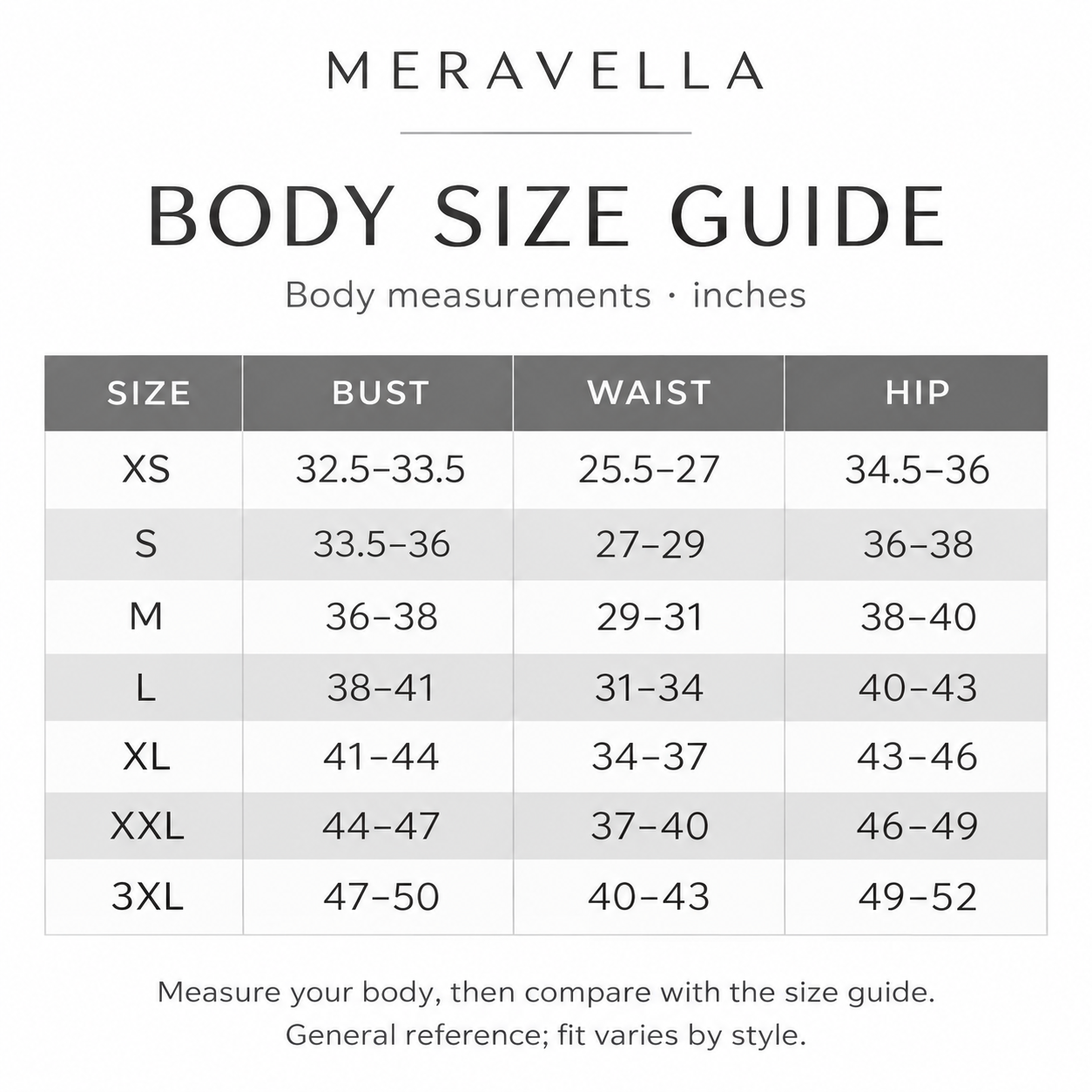
Compare the bust and shoulders
Start with the bust and shoulder width if you want the sleeves and upper dress to sit similarly to something you wear already. Measure a dress that feels comfortable when you reach forward and sit down. Compare its overall length and sleeve length next. The body chart is a separate reference; the dress table is the one to use when comparing finished garment measurements.
Care for the pleats and accents
Read the garment’s care label before washing, drying or pressing. Avoid catching the tonal accents or lower pleats on rough zippers and open hooks when carrying or storing the dress. If it has been folded for travel, hang it and let the pleats settle before deciding whether they need attention. Follow the label before applying any heat.