

Soft folds above a narrow skirt
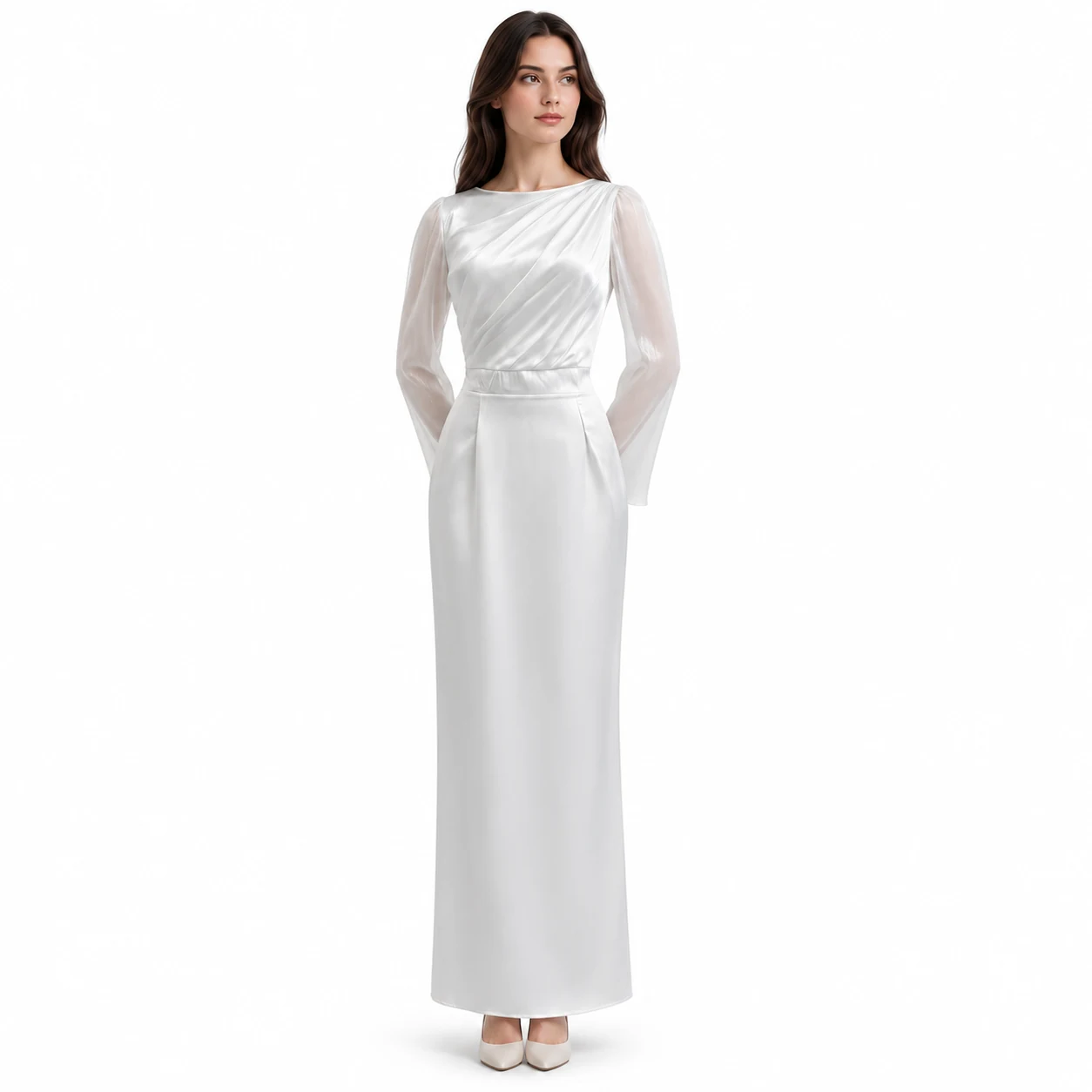
This evening maxi brings the detail to the shoulders and sleeves rather than scattering it across the dress. The shallow neckline leads into diagonal folds above a fitted waist, and the long sleeves spread toward the wrists. The skirt stays narrow and plain, leaving a clear difference between the fuller top and the long, uninterrupted line below the waist once the dress is on.
Keep the neckline covered
A shallow neckline follows the collarbones and leaves the diagonal folds visible without needing a separate layer.
Make room at the wrists
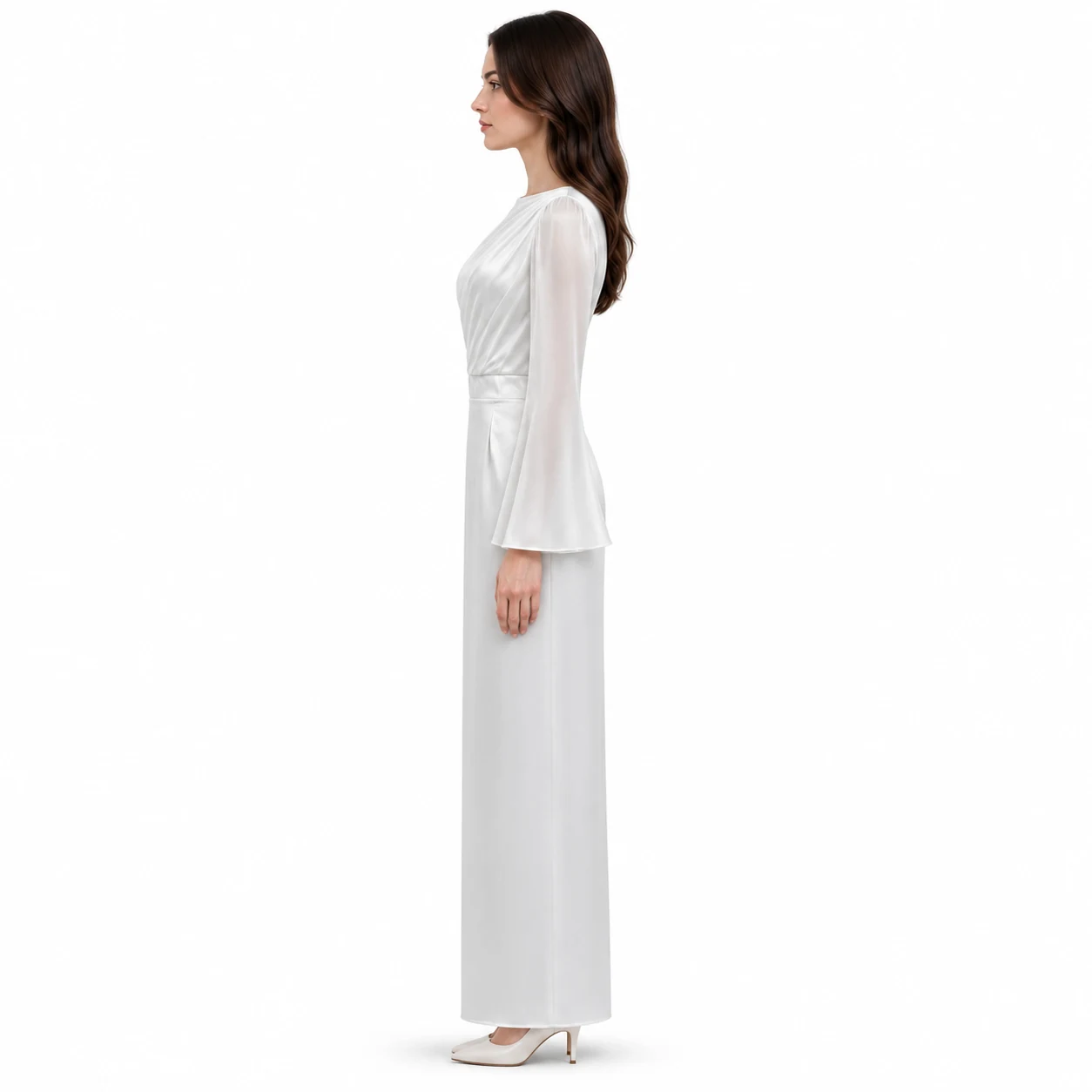
The full sleeves open lower down so the wrists are not held in by a narrow cuff. The contrast is clearest in profile.
Keep the skirt line simple
A fitted waist sits above a long column skirt, so the dress reads as a single clean line even with fuller sleeves.

Neckline and sleeves
1. Soft folds and bell sleeves
The front neckline sits shallow, following the collarbones rather than dipping low. Soft folds cross the bodice diagonally from the shoulder. The fabric catches the light across these folds, leaving enough detail to wear the neckline without a large necklace.
The sleeves curve away from the wrists rather than narrowing to a close cuff. This adds shape when you move your hands, even in a solid color. Keep bracelets simple if you want the fabric at the wrist to remain the focus near the hands.
Skirt and hem
2. A narrow skirt toward the ankles
The skirt stays relatively straight from the fitted waist down to the long hem. It does not need matching folds or trim to balance the draped bodice. That quiet lower line lends itself to a plain closed-toe shoe and a small evening bag.
Length changes by about an inch and a half across the five sizes. Choose a size for the bust and waist instead of using it to change the hem. Check the listed length against a long dress you wear comfortably, with the shoes you plan to wear to the occasion.

Waist and profile
3. The waist and sleeve shape
Where the bodice meets the skirt
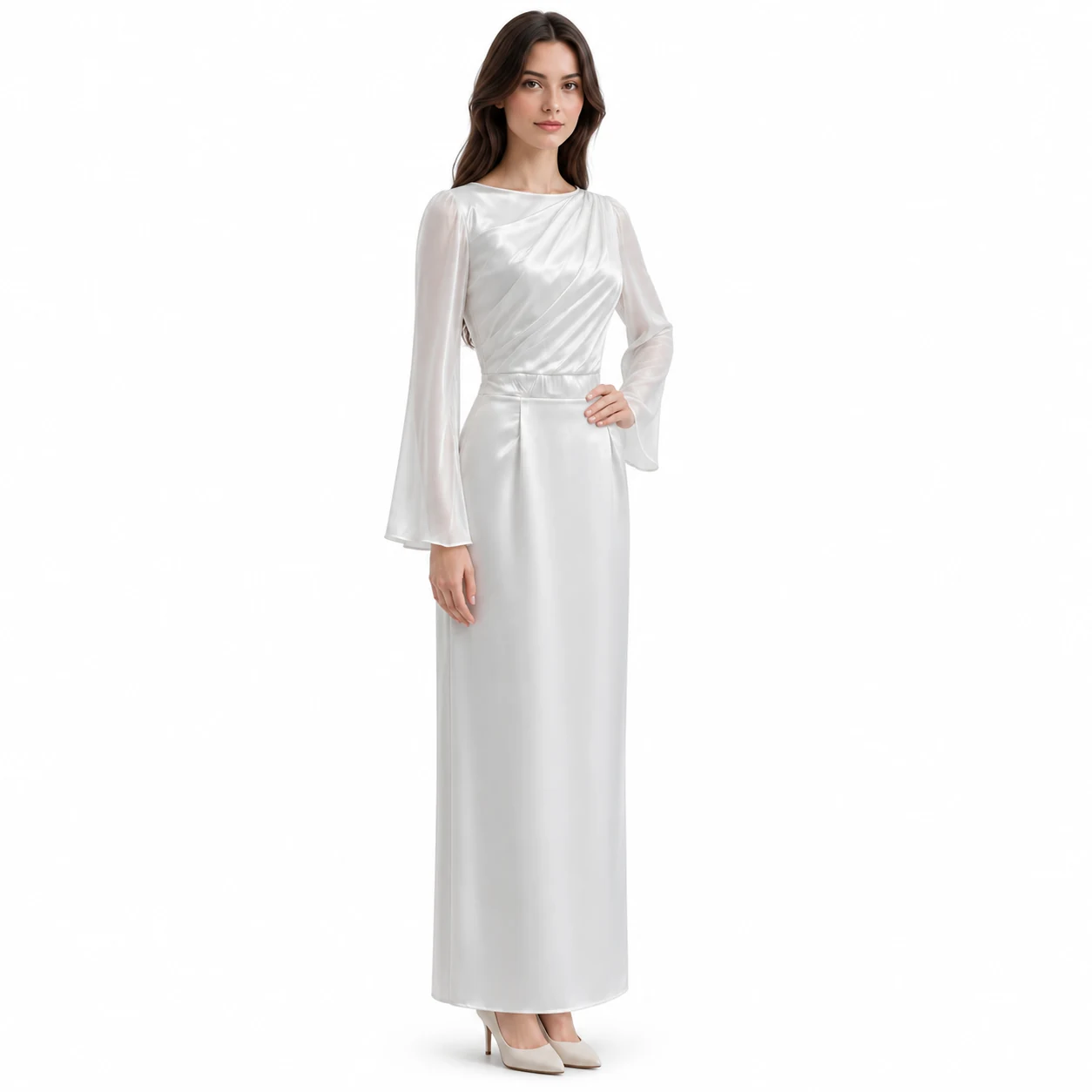
The diagonal folds stop above the waist, where the garment draws in before the lower skirt falls. A slight front angle makes it easier to see how the two shapes meet. The skirt then keeps the same plain finish rather than adding another layer of detail.
The sleeves from another angle
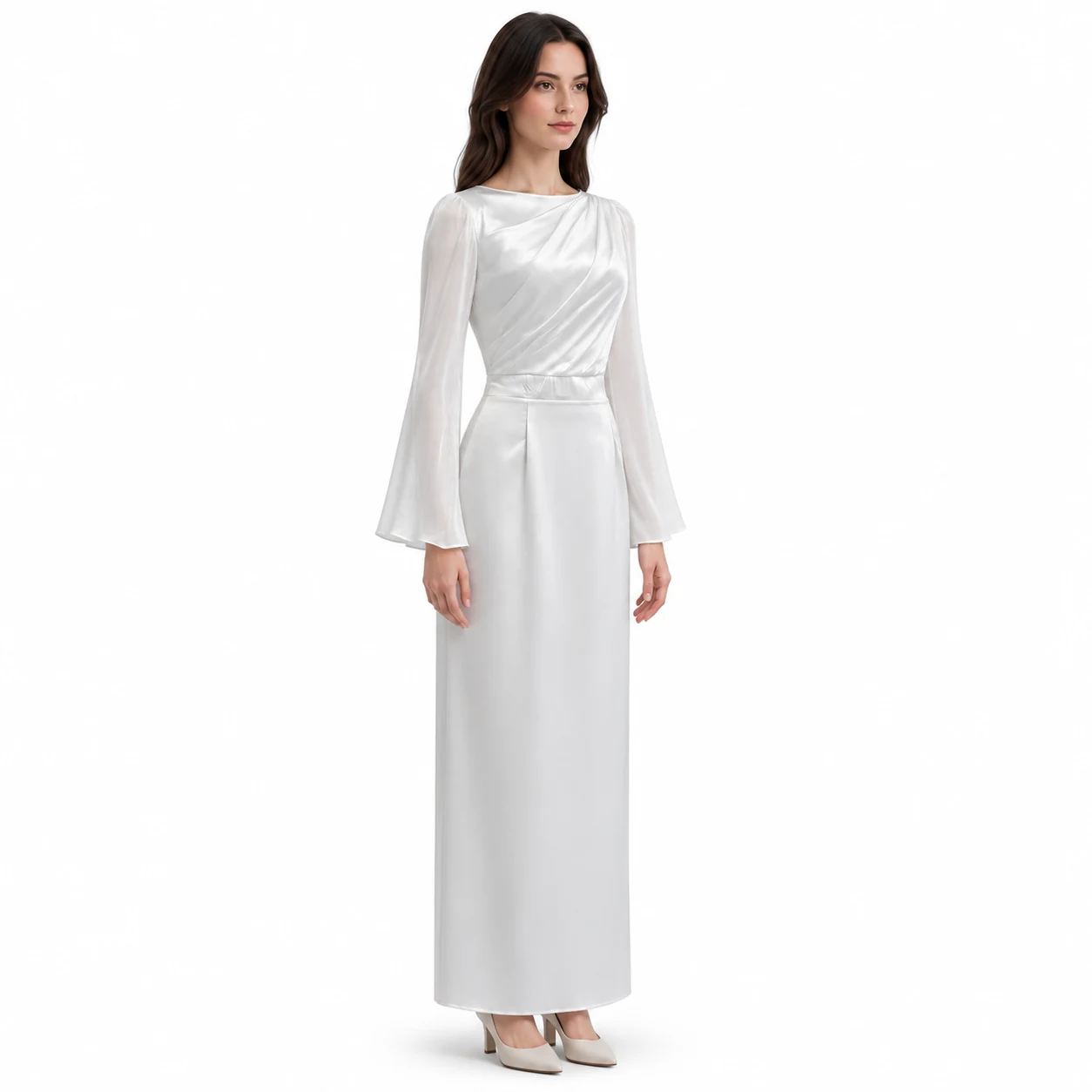
The sleeve fabric has room to fall away from the forearm, which shows up best at a slight angle. The edge is open and fairly wide instead of ending in a band. The waist remains fitted in this view, so the sleeves supply most of the volume at the sides.
Wear it out
4. Style the dress around the folds
Consider a quiet clutch and a small earring for a reception, with a shoe that does not compete with the folds at the shoulder. A warm neutral works against the lighter shades, while a darker shoe gives the Deep Red option a quieter evening finish. If you wear a patterned accessory, keep it small so the sleeve and diagonal folds still stand out. The dress works as a complete outfit without another layer.
Check what reaches the floor
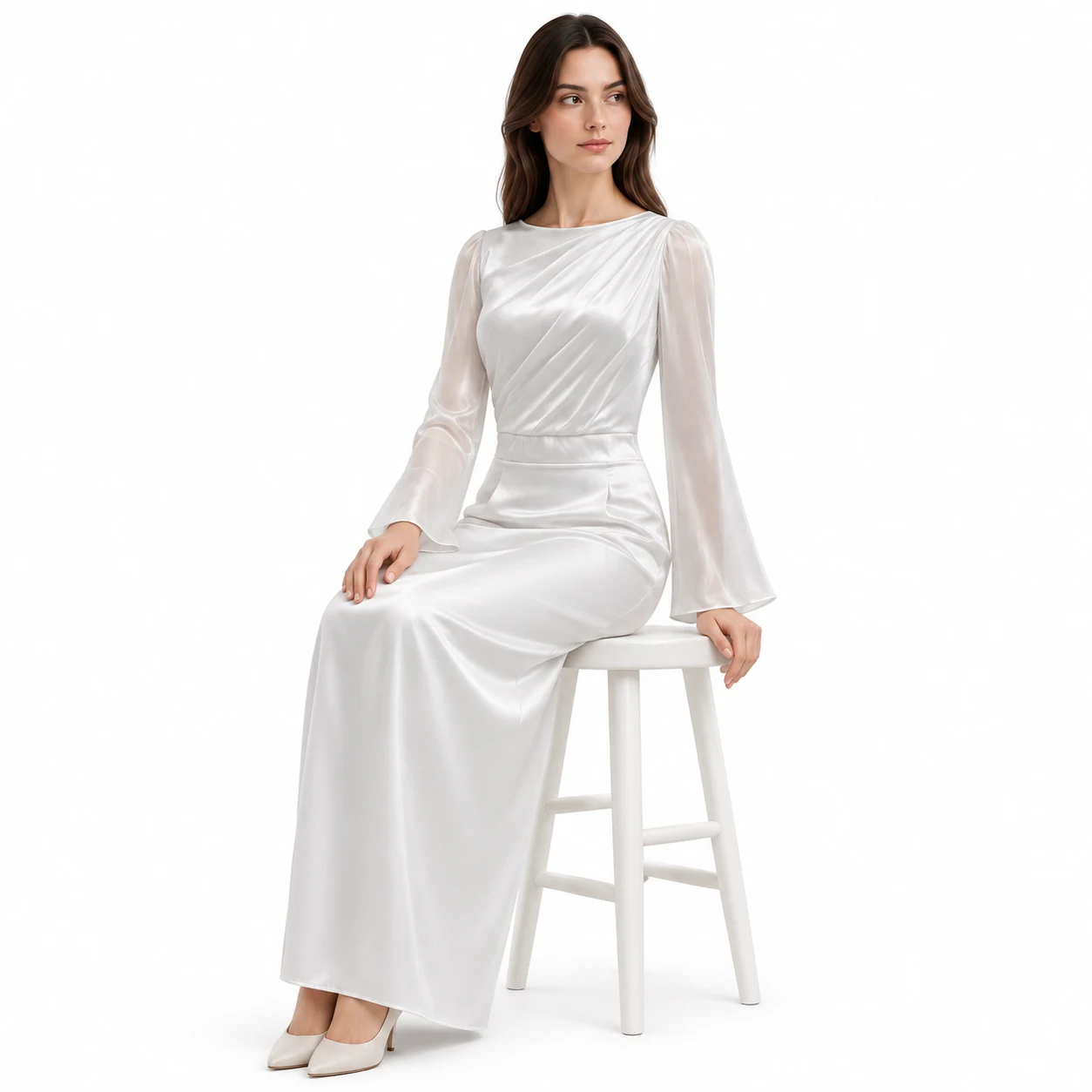
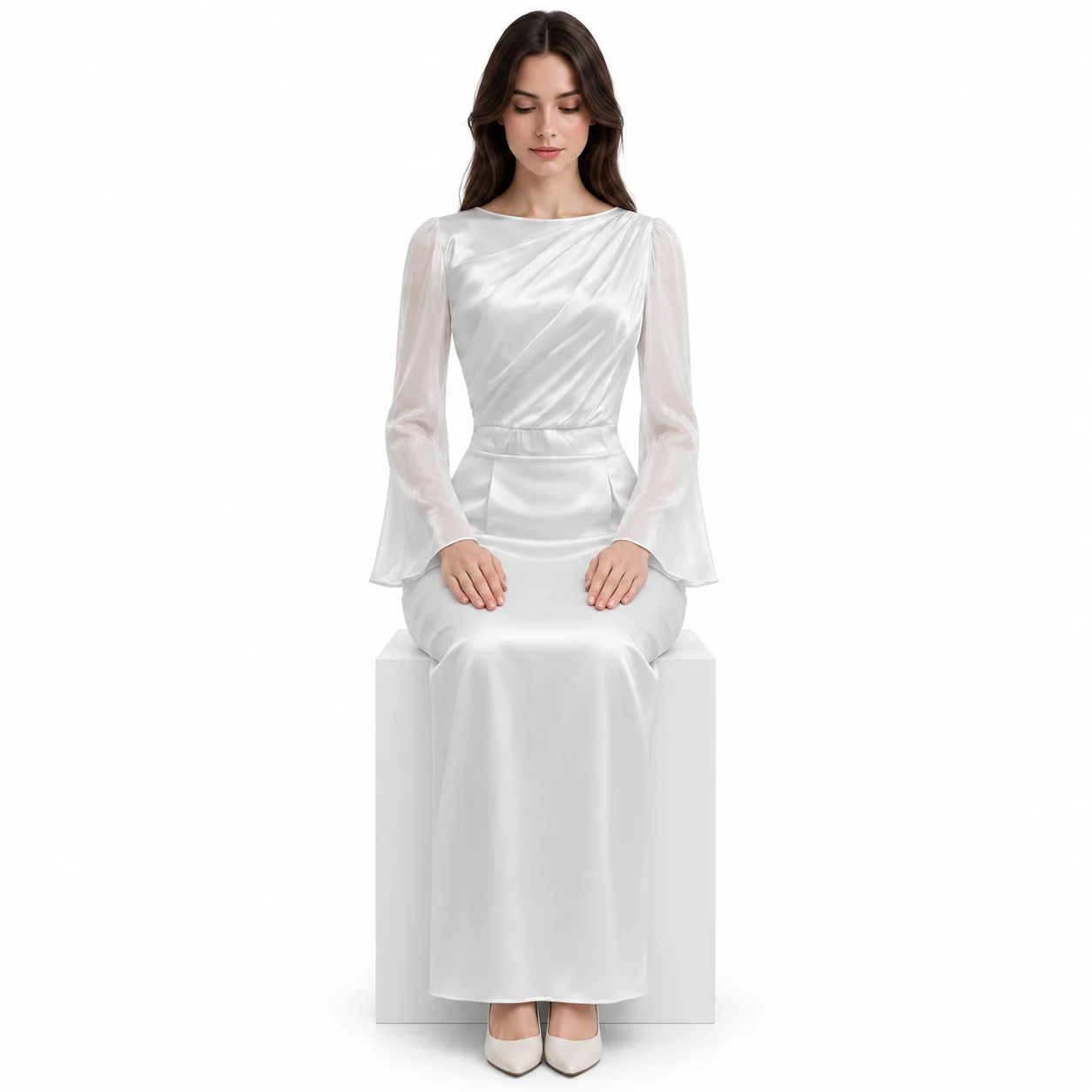
Choose your heel height before judging where the long hem will sit. A low closed-toe pump gives some lift without putting another strong shape next to the sleeve. If you usually wear flats, compare the chart with a dress you already wear in flats and allow room to move while seated.
The essentials
- Colors and layering
- Choose Light Blue, Pink, Deep Red or White. A lightweight slip is optional if you prefer a smoother drape; a shade close to your skin tone keeps the underlayer discreet in the lighter colors.
- Neck and bodice
- The neckline sits shallow across the front, with diagonal folds falling across the bodice. The top stays simple in color so the folds can carry detail without extra trim.
- Sleeves and cuffs
- Long sleeves widen through the lower arm and finish in a softly flared opening. Their volume is most noticeable where the fabric spreads out closest to the hands.
- Waist and skirt
- The waist is fitted below the draped bodice. The plain skirt falls close in a column line rather than opening into a full A-line, keeping most of the movement near the sleeves.
- Garment measurements
- Total dress length runs from 54.7 to 56.3 inches across S through XXL. The garment chart lists the corresponding bust, waist and sleeve length for each size.
Check the waist before choosing
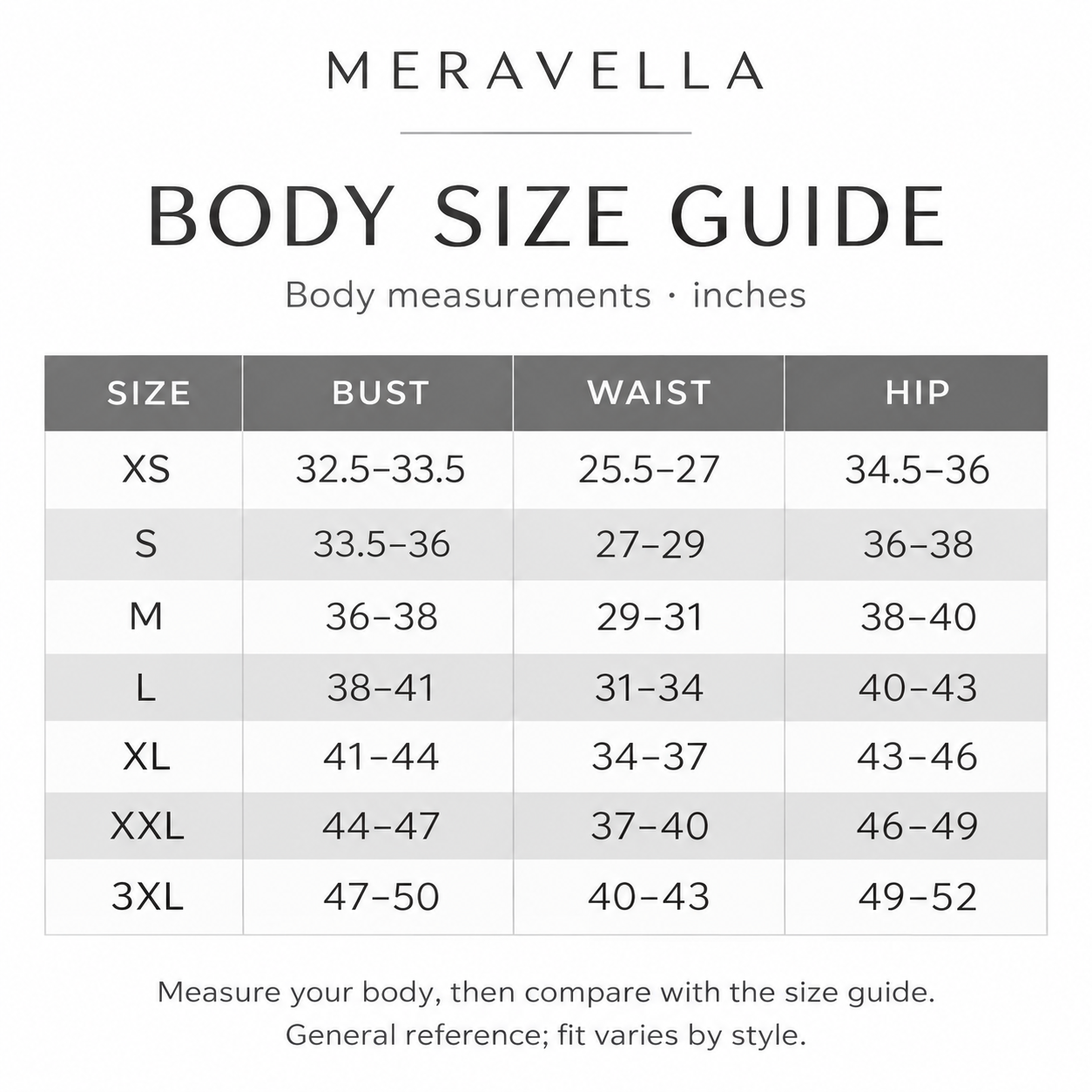
Compare the listed bust and waist against a fitted dress you wear comfortably. The separate body chart gives a starting point, but its numbers do not describe this garment. If your measurements point to different sizes, check the part where you usually need the most room. Compare the sleeve length and full dress length separately.
Let the sleeve folds hang naturally
Follow the sewn-in care label. Hang the dress with enough space around the sleeves and avoid catching the lower edges on rough hardware when changing. Give the skirt room to hang instead of pressing it under a clip. Check the label before using a steamer or iron, especially on the lighter sleeve fabric and its open edges.