
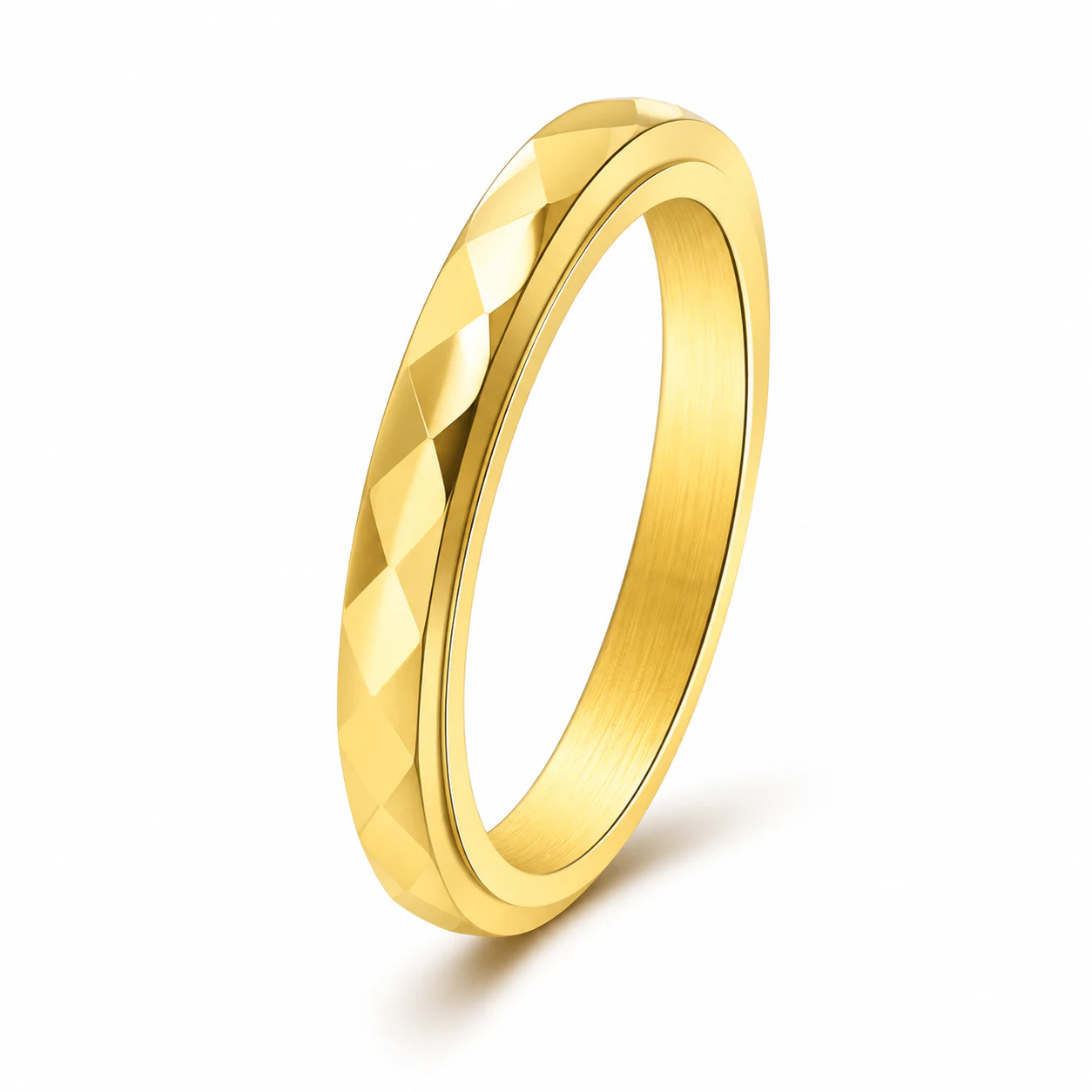




Faceted spinner ring
Geometric light. A little movement.
Small facets turn a narrow metal band into something worth a closer look. The 3 mm silhouette stays understated, while an outer section rotates around the inner band for a detail you can gently turn with a fingertip.
Shape, without stones
Reflections come from the faceted metal surface.
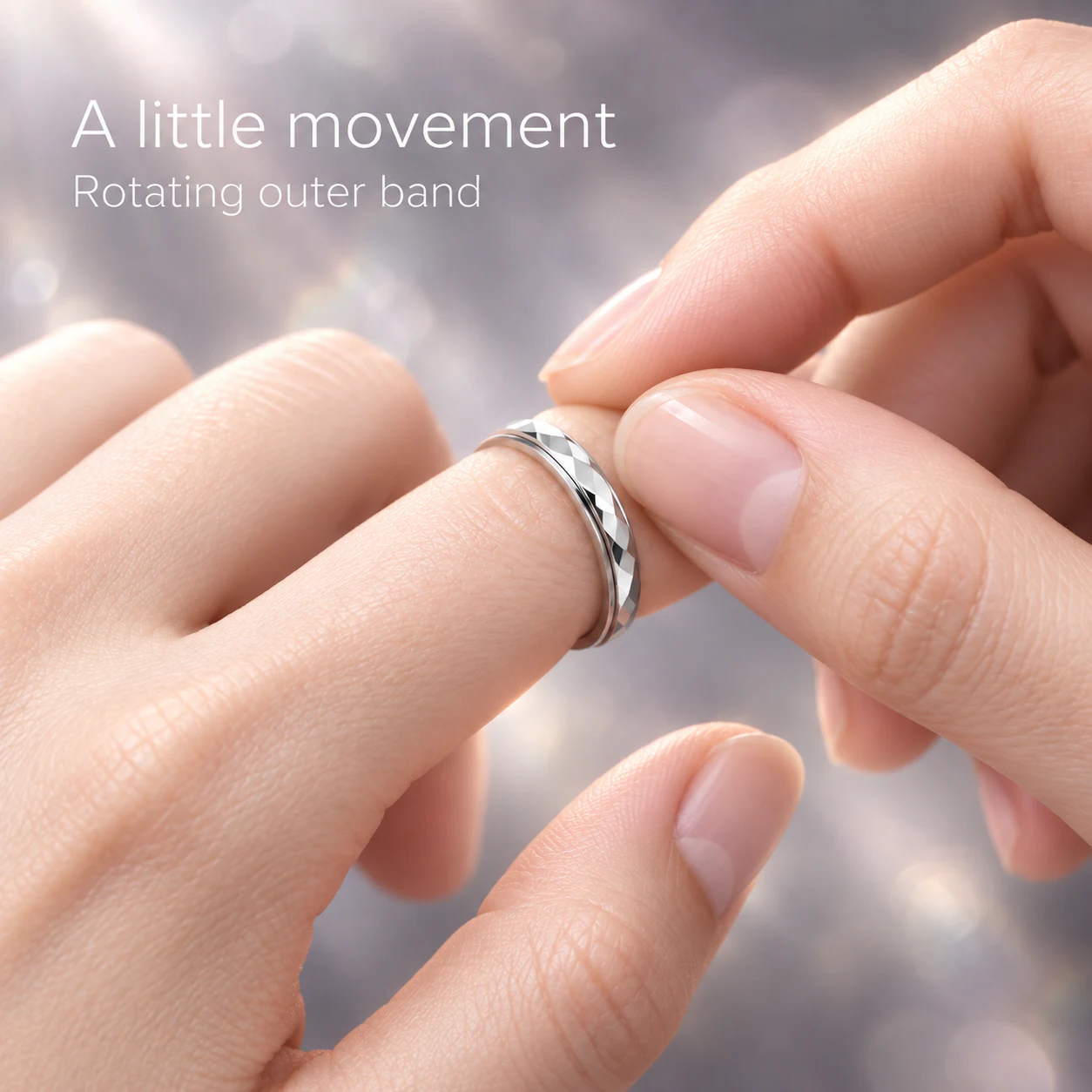
A moving detail
The outer band turns independently of the inner band.
Five color choices
Choose a familiar metal tone or a more graphic finish.

01 / The faceted surface
A narrow band,
with more to notice.
Each small plane meets the light at a different angle, breaking up the surface of an otherwise simple circle. The effect is more textured than a plain polished band, but there is no prominent centerpiece or raised stone setting.
At a listed 3 mm wide, the detail stays close to the finger. It suits a preference for jewelry that finishes an outfit without becoming its main feature.
“Faceted” describes the shape of the metal. No diamonds or other gemstones are listed in this design.
02 / The rotating construction
Turn the outer band.
Keep the fit steady.
The faceted outer section rotates around the inner band. While wearing the ring, gently move that outer section with a fingertip; you do not need to spin the whole ring around your finger.
The fine separation between the two parts belongs to this construction. It gives the narrow band a tactile detail to explore during a pause, rather than adding a separate charm or moving centerpiece.
Choose a size that fits the intended finger normally. A loose fit is not needed to use the spinner. Keep the movement gentle, and stop rather than force the outer band if it catches.
03 / A quiet everyday accent
A simple cuff
leaves room for the facets.
A plain knit or crisp shirt gives the narrow ring a calm backdrop. Wear it alone when you want the geometry to be the only detail on your hand, or echo the color of a watch or earrings you already reach for.
If you wear another ring beside it, leave enough room to reach the rotating section. The arrangement should make the moving detail easy to use rather than crowding it between neighboring bands.

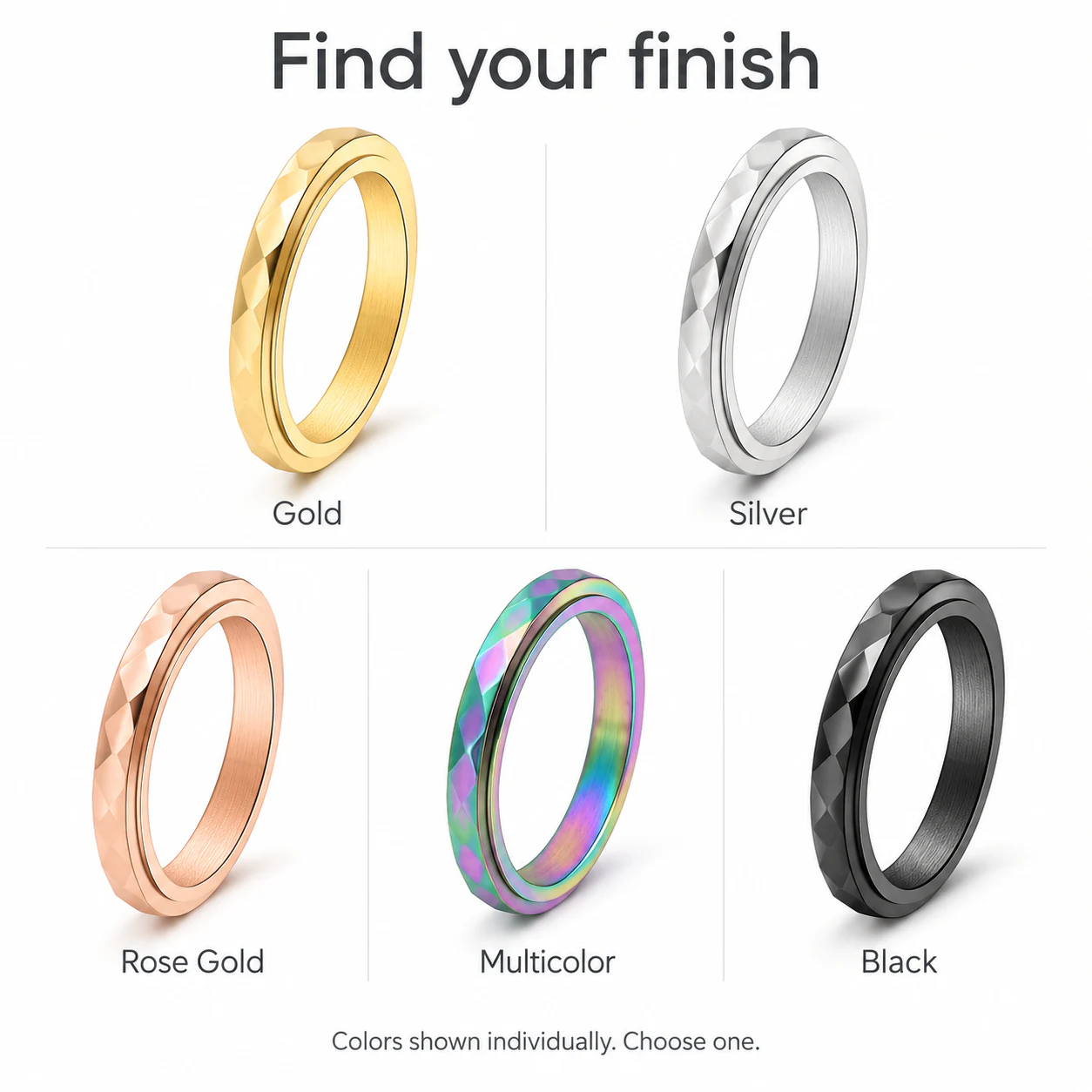
04 / Choose your finish
Warm, cool
or deliberately different.
Gold has a warm yellow tone. Rose Gold brings a softer pink tone. Both work with warm-colored jewelry, while Silver, listed as “silvery,” gives the geometric surface a cool, bright appearance.
Black makes the outline more graphic. Multicolor, listed as “multicolour,” combines iridescent green, violet and other shifting tones for the most colorful version of the design.
These names identify color choices. They do not establish solid gold, sterling silver or a particular gold karat. The comparison photo shows separate options; each selection is one ring in your chosen color and size.


A personal choice, including for a gift
Start with the jewelry they already wear.
A familiar metal color can help the ring feel at home beside their usual pieces. Black or multicolor offers a clearer contrast if that is already part of their style. The shared 3 mm shape means you are choosing a different visual mood rather than a wider or more prominent design.
For a gift, confirm the intended finger and size as carefully as the color. This is a closed band, and engraving is not offered on the listing.
The listed details
Shape, material and fit
- Construction
- Faceted outer band rotating around an inner band
- Band width
- 3 mm
- Material
- Titanium steel, the supplier’s designation
- Surface
- Polished metal; no gemstones
- Colors
- Silver, Gold, Rose Gold, Multicolor and Black
- Fit
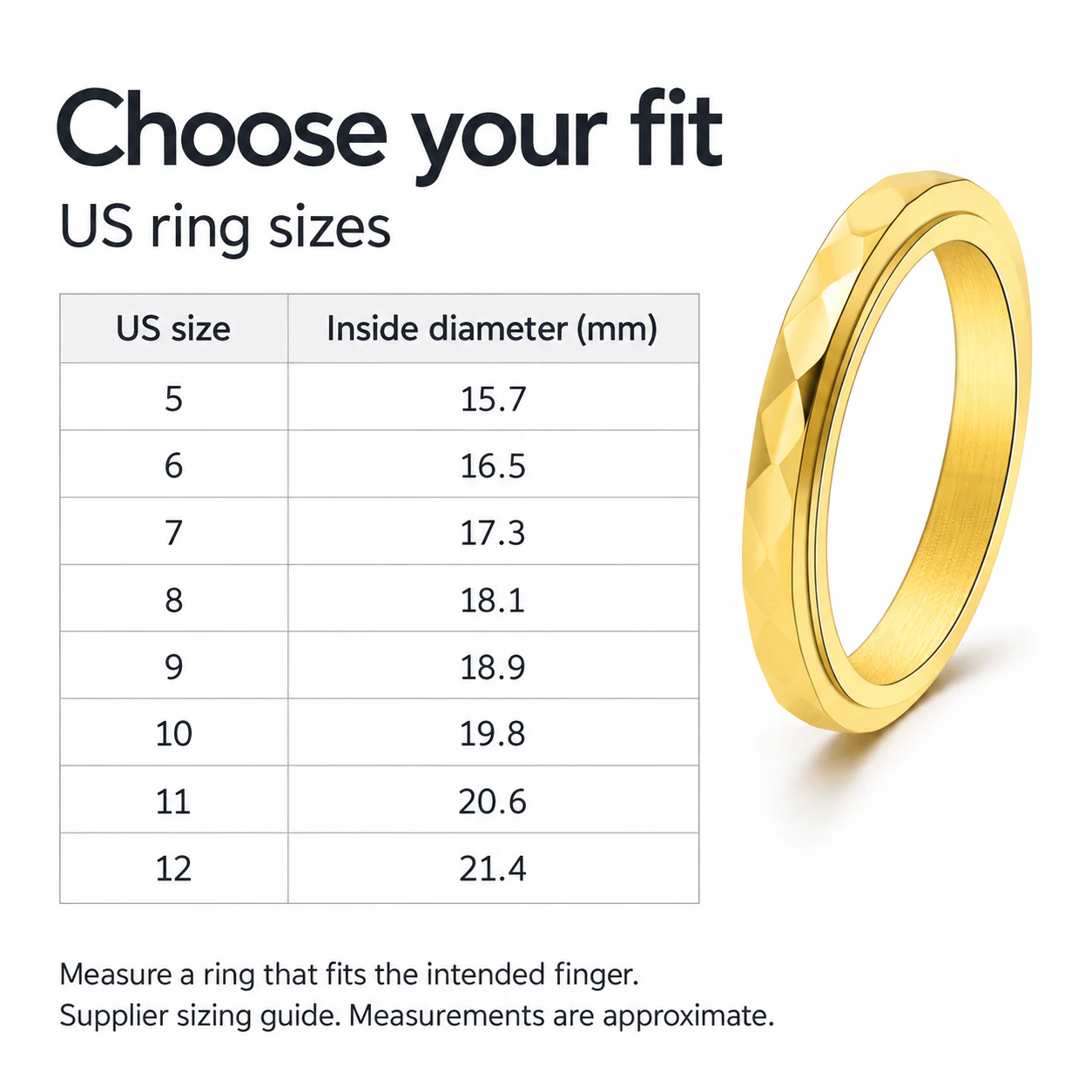
- Fixed sizes; supplier chart identifies US 5–12
- Selection
- One ring; no engraving option
The material designation does not specify alloy grade or nickel content. If you need a particular composition because of a known sensitivity, confirm that requirement before ordering.
05 / The supplier’s size guide
Measure the inside opening.
- US size / option
- Inside diameter · Inside circumference
- 5 / 5#
- 15.7 mm · 49.3 mm
- 6 / 6#
- 16.5 mm · 51.8 mm
- 7 / 7#
- 17.3 mm · 54.4 mm
- 8 / 8#
- 18.1 mm · 56.9 mm
- 9 / 9#
- 18.9 mm · 59.5 mm
- 10 / 10#
- 19.8 mm · 62.1 mm
- 11 / 11#
- 20.6 mm · 64.6 mm
- 12 / 12#
- 21.4 mm · 67.2 mm
Supplier measurements are approximate. Measure straight across the inside opening of a well-fitting ring, excluding the metal edges. If measuring around your finger, compare the circumference column instead.
A fixed fit.
Repeat your measurement to check it. The same finger on your other hand may need a different size.
If you are between options or uncertain, a jeweler’s measurement can help before you order.
Do not bend the band to change the size.
Care for both surfaces.
- Wipe gently with a soft cloth.
- Avoid abrasive cleaners and harsh chemicals.
- Remove for activities that could scratch or compress the band.
- Keep the moving section free of debris.
- Do not force, pry or bend a section that catches.
These are general handling precautions for the polished, moving design.


