

Blue florals and a layered skirt
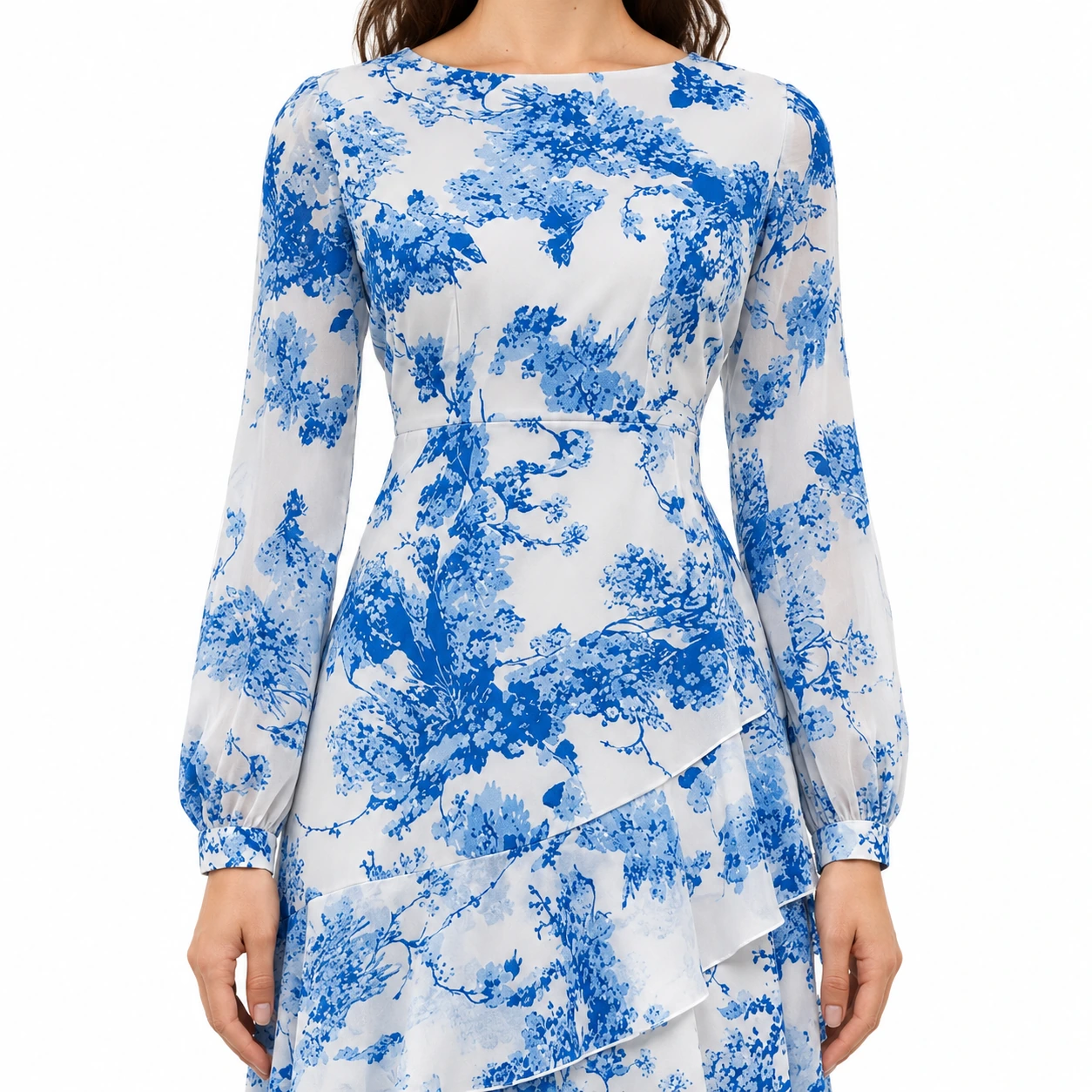
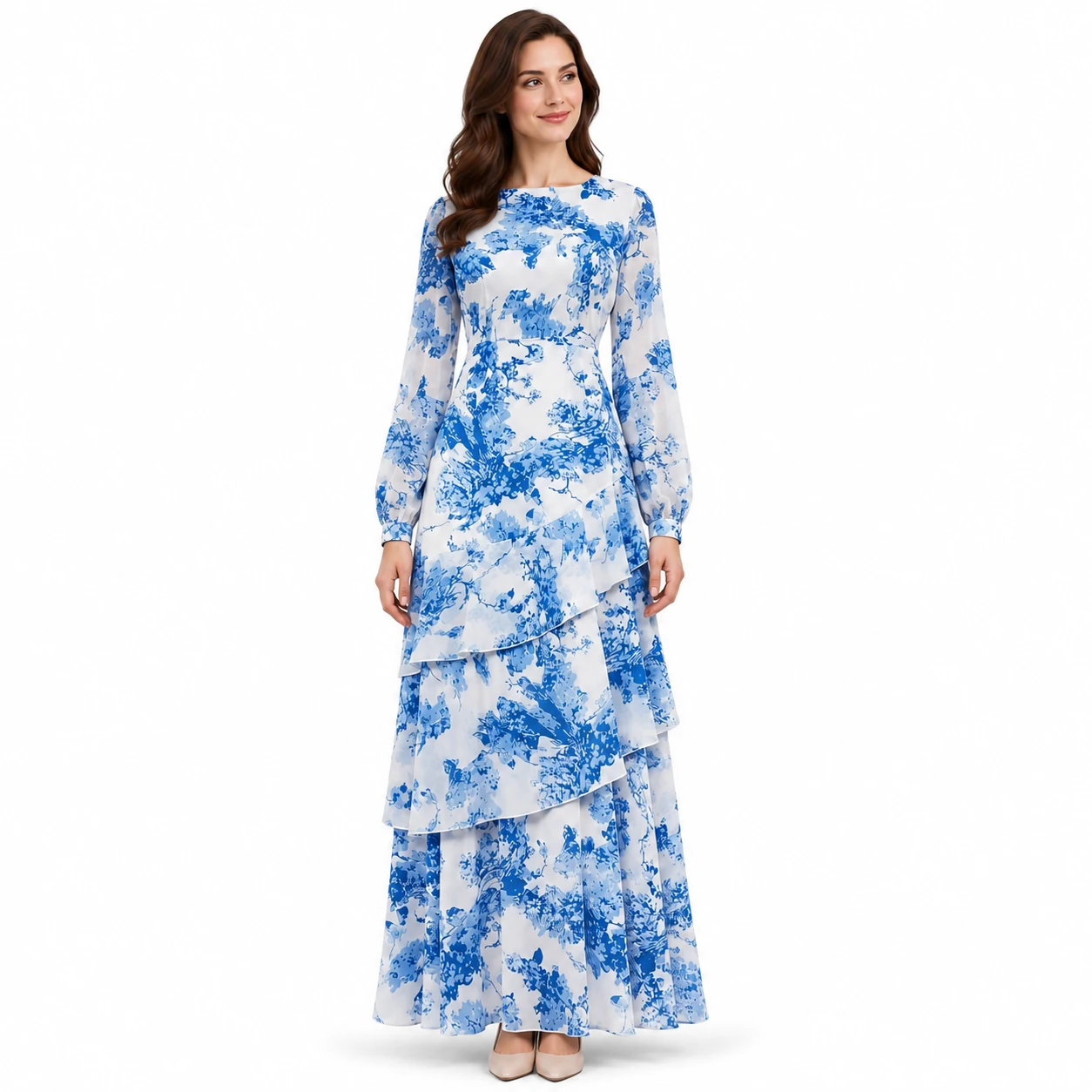
Blue floral branches run across the white ground, from the shallow round neckline to the longest skirt layer. The sleeves have room through the forearm and narrow at the wrist. Two overlapping skirt panels finish on an angle over the long hem. A small bag and plain shoes let those different edges show without adding another print or pulling attention away from the outfit.
Keep the neckline covered
The shallow round neck sits close to the collarbone and gives the large blue floral print a simple frame.
Keep fabric clear of the hands
A narrow matching cuff finishes the sleeve at the wrist, drawing the looser fabric back from the hands as you move.
Put the movement in the skirt
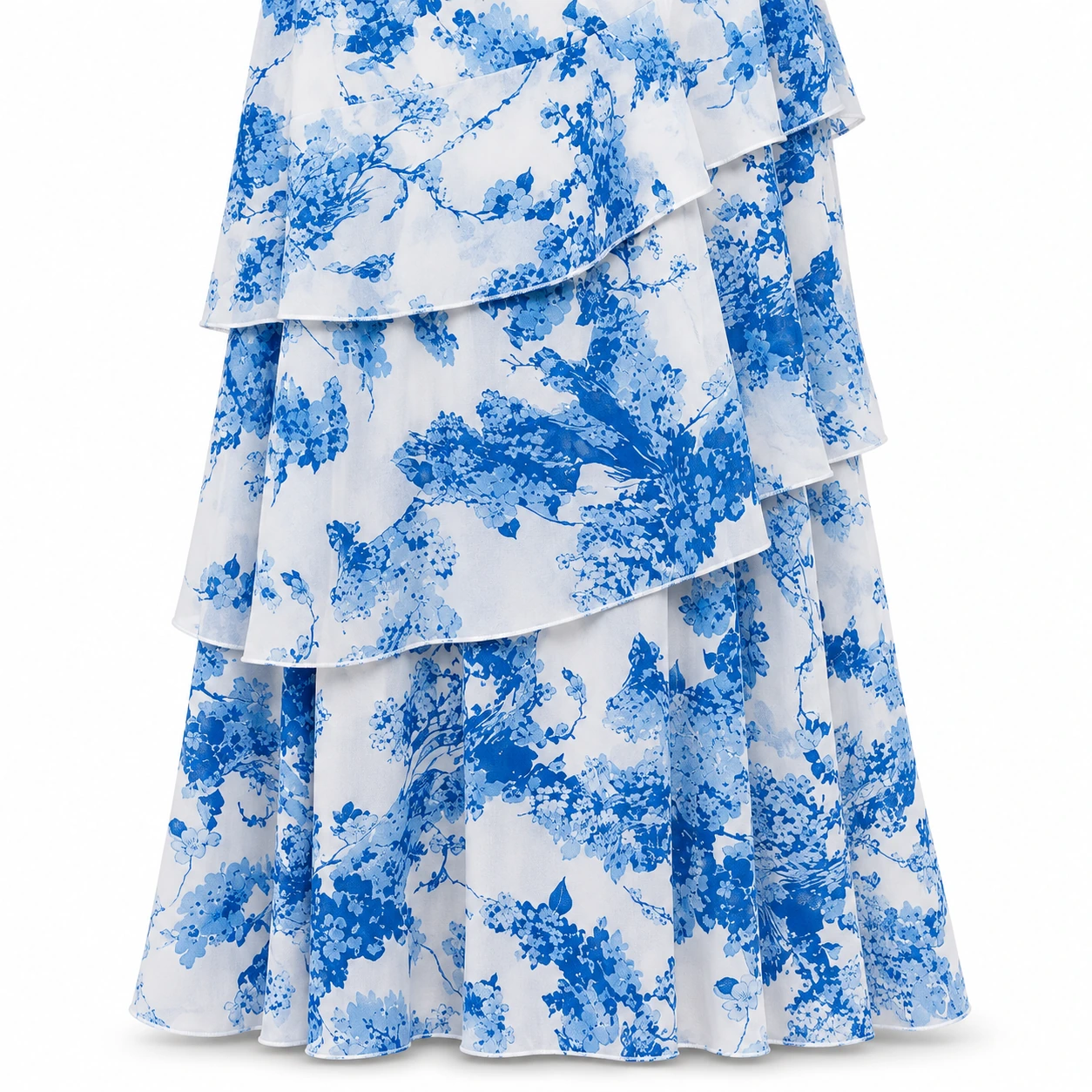
The two upper panels fall at different heights over a longer skirt, so the shape changes gently as you move.
Neckline and sleeves
1. A shallow round neckline
The neckline sits near the collarbone and leaves the shoulders covered. The blue and white print crosses the front without a contrasting band or standing collar. Small studs leave the edge in view and keep attention on the pattern rather than the jewelry.
The long sleeves are cut with room through the forearm before closing into narrower cuffs. Those cuffs keep the fabric from hanging over the fingers. A slim bracelet can sit below them if you want a little detail near the wrist.
Skirt and hem
2. Two angled skirt layers
Two panels overlap above the long hem and finish at different heights, each carrying the same blue floral print. There is no high slit in the source skirt. A plain shoe leaves the overlapping edges visible without breaking up the movement below.
The dress measures from 53.9 to 55.5 inches in overall length across the listed sizes. Compare that number with a maxi you already wear. Check how the hem sits with the shoes you plan to take, especially if you often switch from low heels to flats.
Waist and fit
3. A defined waist seam
Where the skirt starts
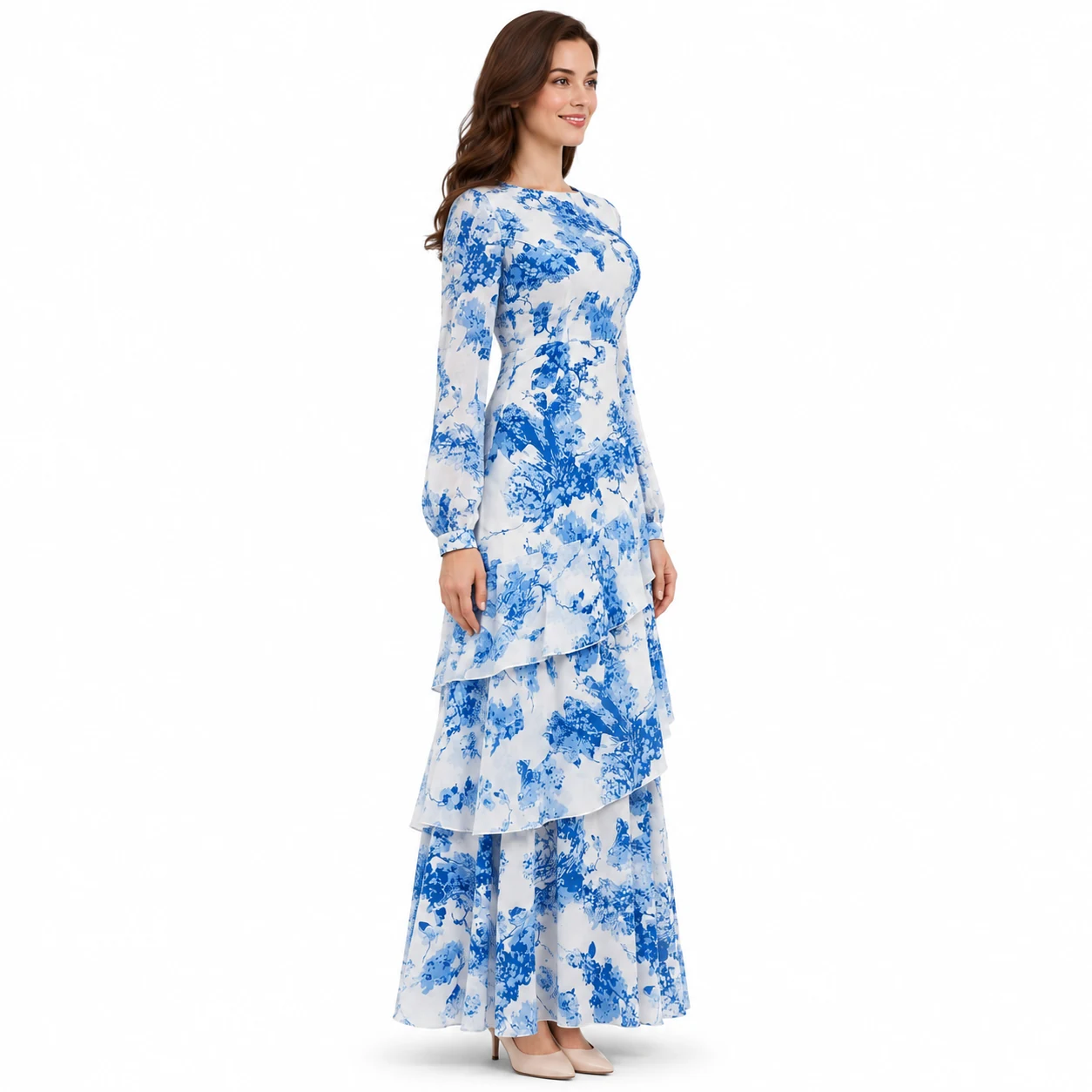
The waist seam separates the smoother top from the panelled skirt. The print crosses that seam without a contrasting waistband. Compare the listed bust and waist with a familiar dress if you usually need more room in one area than in the other.
The shape at an angle
The skirt eases out below the waist while the upper bodice stays closer. A narrow matching tie is visible at the back in the source, keeping the printed front uncluttered. Try a small shoulder bag if you want your hands free without covering the front.
Style the dress
4. Wear it with a plain shoe
A soft neutral pump keeps the blue-and-white print as the main feature, while a small blue bag can pick up the color without adding another pattern. For a lunch outside, bring a lightweight layer if you want one, but leave it open so the raised waist seam stays visible. If you expect to be on your feet, choose shoes you know are comfortable rather than picking a heel simply to clear the long hem.

Check the hem before you go
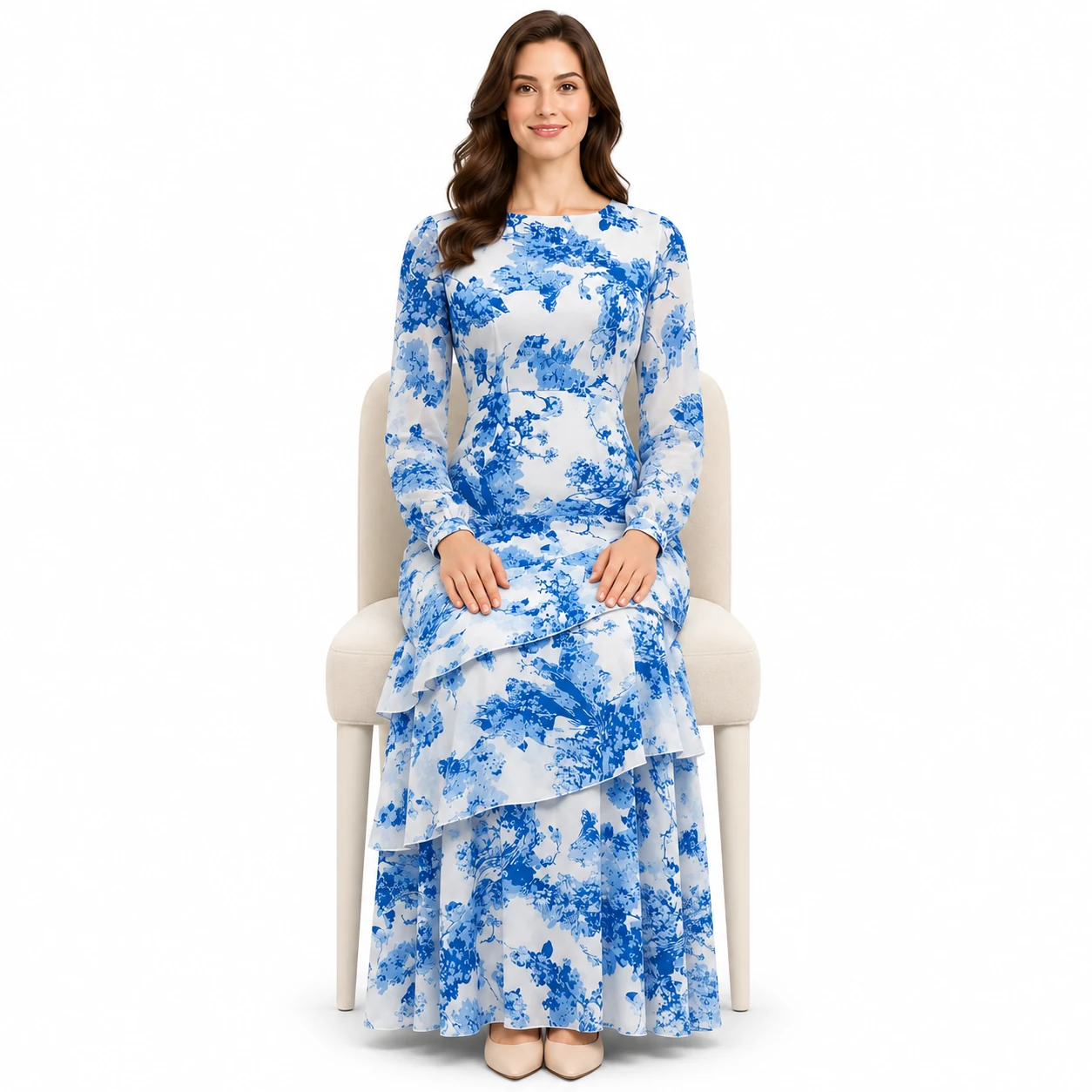
Use a similar maxi dress you can try on at home to judge the listed length. Try it with your planned shoes and take a few steps. When sitting, let the layers fall over the front of the skirt rather than pulling them tight across the lap; this keeps the overlapping edges easy to see.
The essentials
- Fabric and layering
- The supplier lists polyester. A lightweight slip is optional for a smoother layer; choose a low neckline and a hem shorter than the dress so both edges stay out of sight when you move.
- Neckline and sleeves
- A shallow round neckline frames the upper body. The slightly loose long sleeves narrow into matching wrist cuffs, leaving the fingertips free rather than covering the hand.
- Waist and fastening
- A defined waist seam sits above the layered skirt. The back photo shows a centered zip and narrow matching waist ties; the print runs continuously across the front.
- Skirt and hem
- Two staggered layers fall over one long skirt. The upper edges add shape without creating a high opening; compare the total length to a similar maxi you already wear.
- Garment measurements
- The supplier lists bust, waist, dress length and sleeve length separately. Compare the bust and waist together, then use the other two measurements to check where the cuffs and hem may sit.
Start with the waist and bust
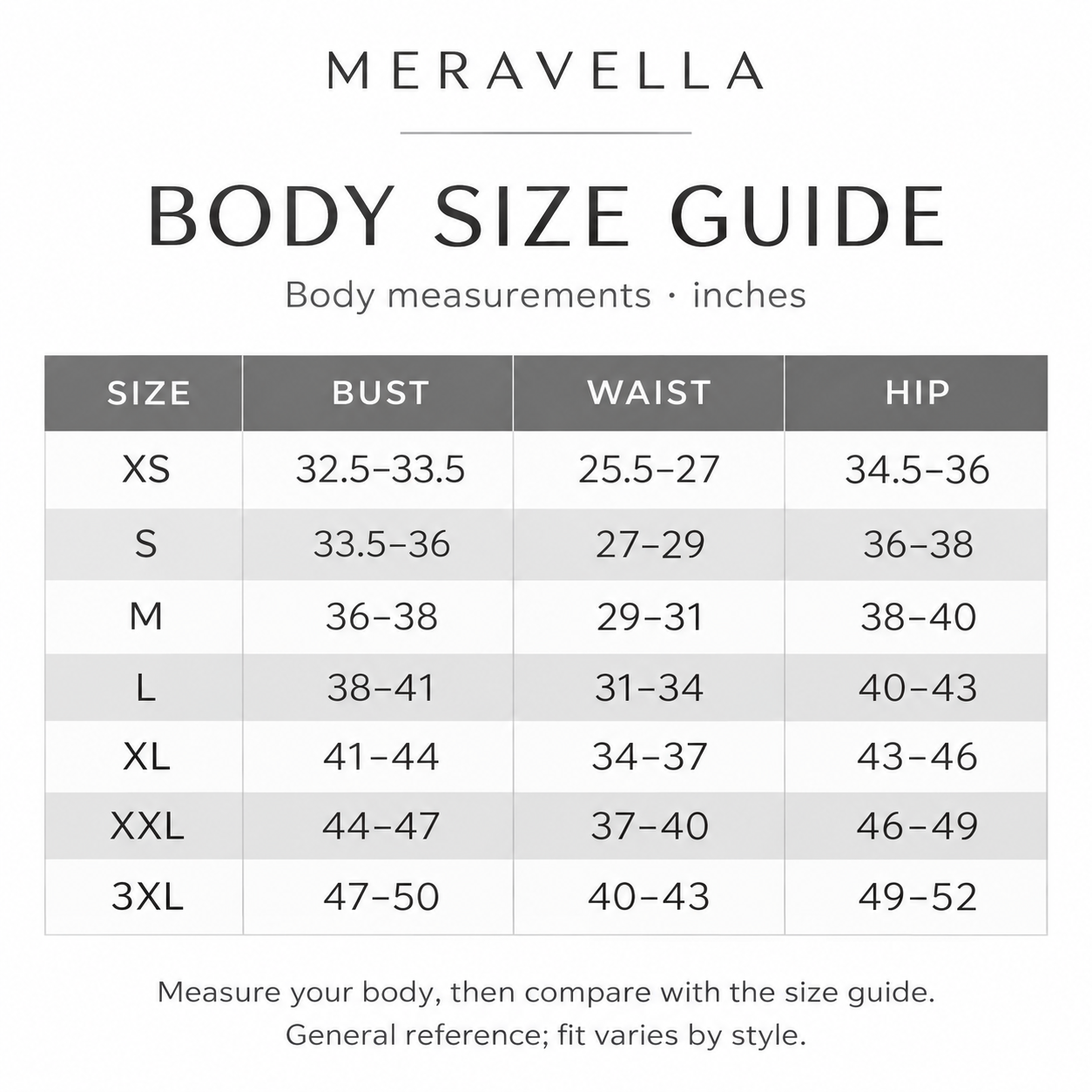
Use the body chart as a starting reference and keep those ranges separate from the dress chart. Compare bust and waist with a similar dress that fits through the bodice before looking at skirt length. If a number is close, consider whether you like the front fitted or would rather have room when sitting through a long meal or gathering.
Let the skirt panels hang freely
Follow the sewn-in care label rather than choosing heat by the appearance of the fabric. Hang the dress with enough space for the angled panels to fall naturally. If the label permits steaming, test a small hidden area and let the skirt relax instead of pulling at the narrow hems or pressing the layers flat against one another.