

Fine lace with a soft side drape
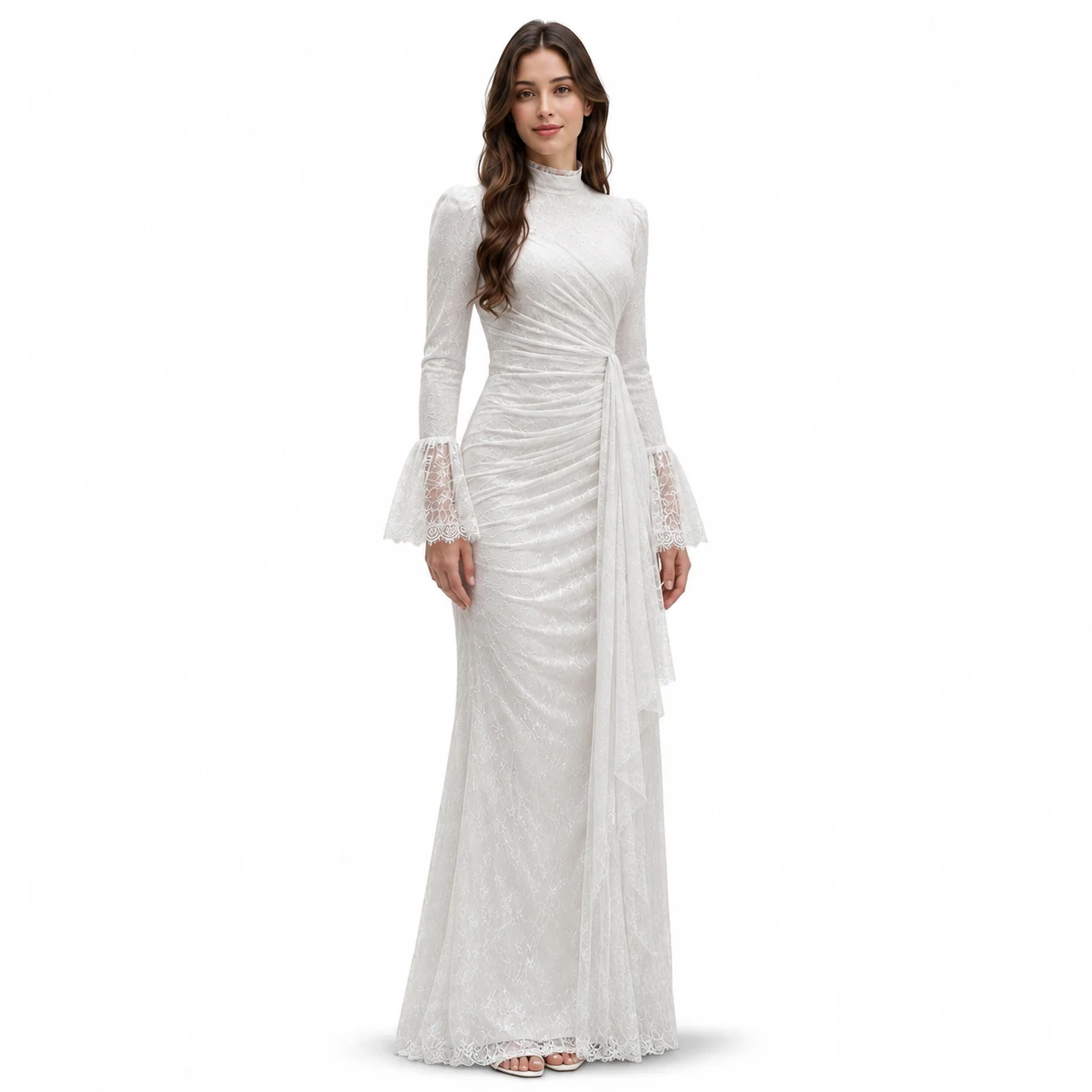
This long dress brings its details together around the fitted middle. Fine lace follows the high neckline and long sleeves, which open into soft flared cuffs. Diagonal gathers cross the front and give way to a floating panel at one side. Below them, a long skirt keeps the line quiet so the folds at the waist and the open cuffs stay in view. The result does not need a patterned accessory.
Keep the neckline covered
The high neckline and covered shoulders let you wear the dress without needing another layer around the neck.
Make room at the wrists
The long sleeves open into flared lace cuffs, leaving room around the wrists and showing the pattern in the fabric.
Let the side drape stand out
The waterfall panel adds texture to a solid color without the need for a belt or other detail at the middle.
Neckline and lace
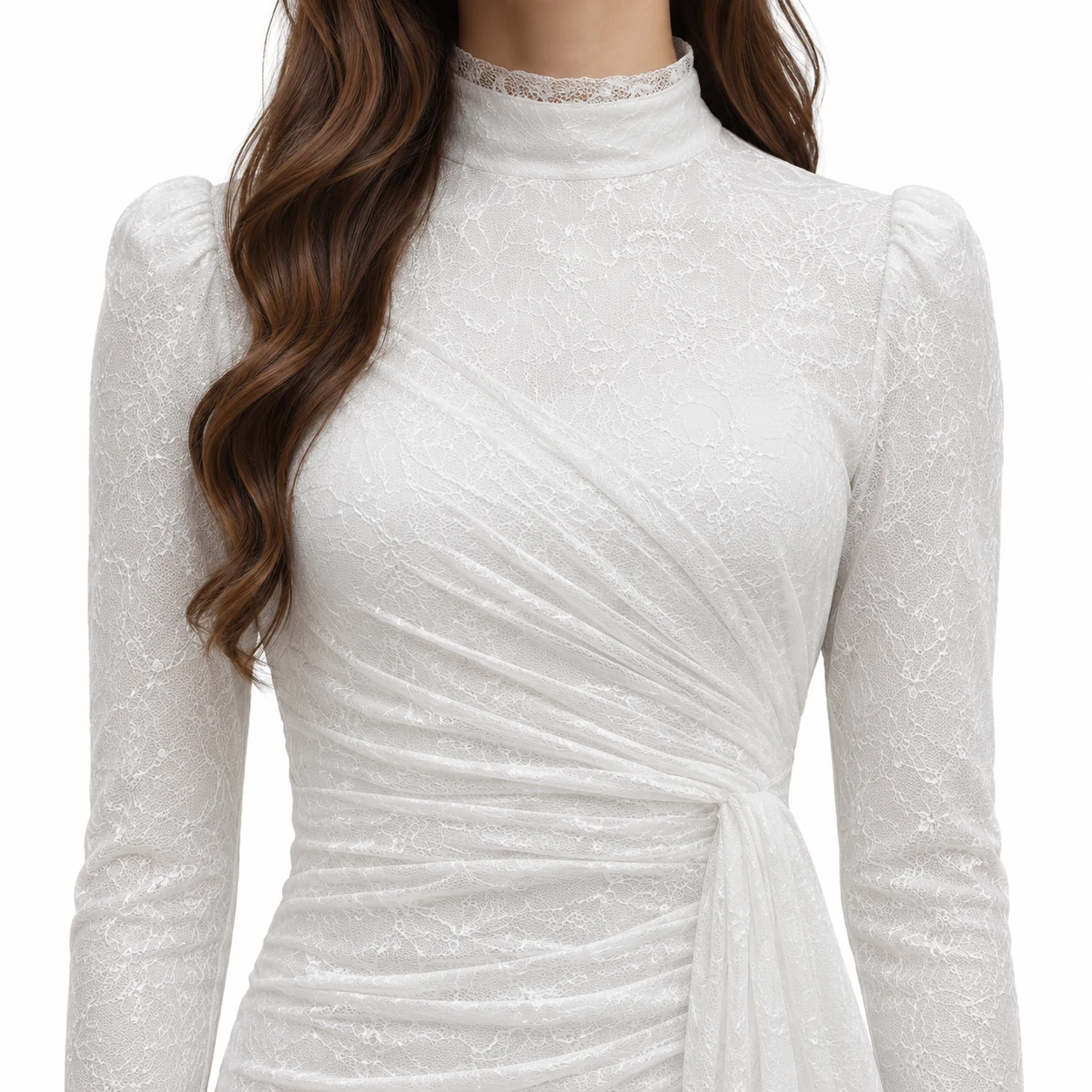
1. A high neck in fine lace
The shallow standing collar follows the base of the neck, and the lace carries from the shoulder across the front. The edge is narrow rather than bulky, so small earrings can sit near the neckline without competing with a large collar edge or trim.
The sleeves fit more closely through the upper arm before opening into wide lace cuffs. The floral pattern shows best when the cuff falls away from the wrist. A thin ring is easier to wear with the open edge than a bracelet that catches the lace.
Skirt and hem
2. A side drape over a long skirt
Soft gathers cross the front and meet the waterfall panel at the side. Below the gathers, the skirt keeps an uninterrupted long line. The lace near the hem catches the light without asking for another accent in the shoes or bag.
Length changes from 56.3 to 57.9 inches across S through XXL. Choose for the bust and waist rather than sizing up just to alter the hem. Check the dress length against a similar floor-skimming dress in the shoes you plan to bring to the occasion.

Waist and profile
3. Folds at the waist
Where the gathers meet
A three-quarter front view shows where the diagonal folds meet at the waist. The side panel falls away from that point rather than dividing the main skirt. Keep that line clear by choosing a small bag that does not need a strap across the bodice.
How the panel falls in profile
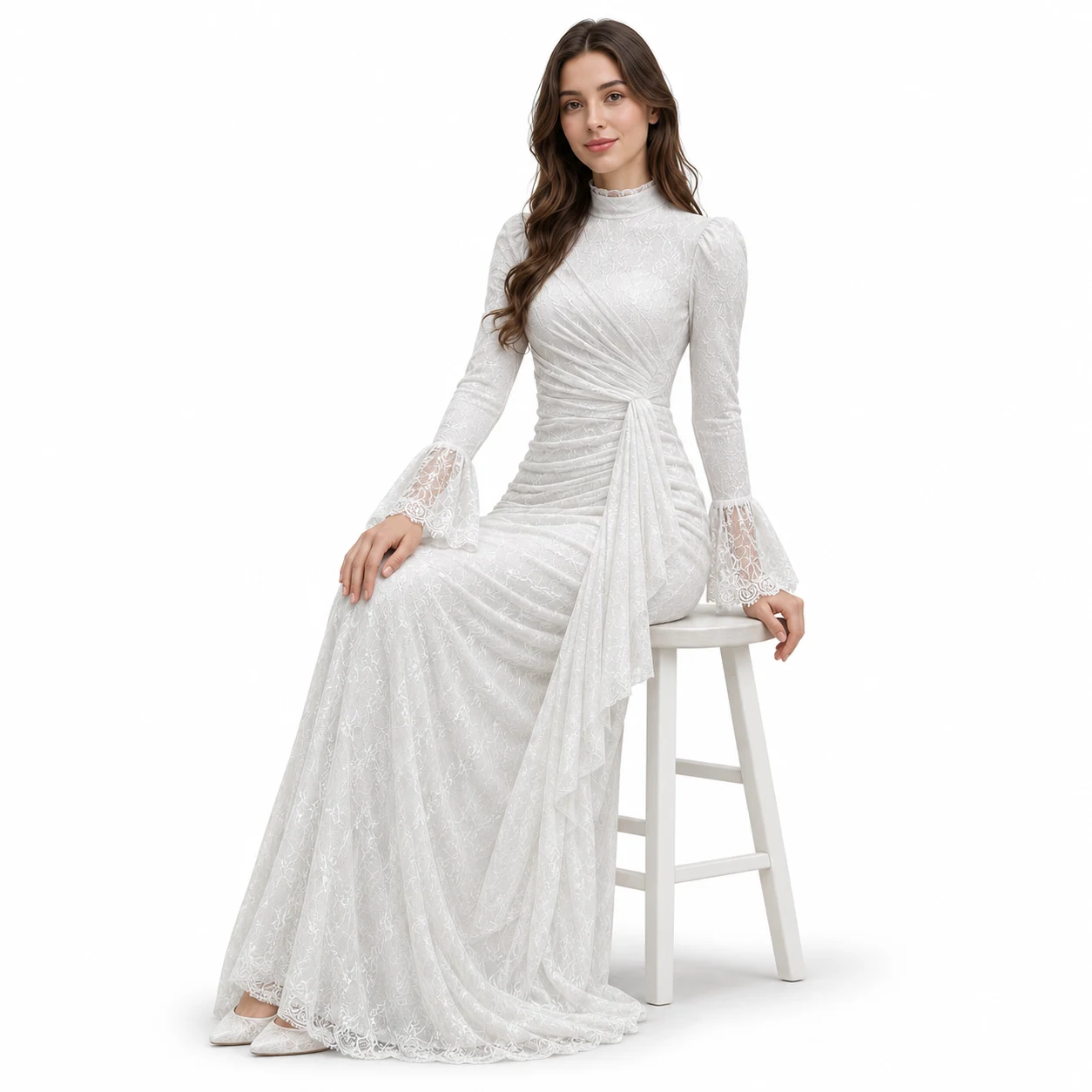
The panel sits close at the waist and hangs freely lower down. Seen from the side, it adds a soft edge without turning the skirt into a wide flare. The sleeves repeat that contrast, staying slim up the arm before opening into lace at the wrist.

Wear it out
4. Let the lace do the styling
Try a simple pump and small earrings for an evening reception, or pick a low heel and compact clutch for a daytime ceremony. Soft metallics work with white or light blue, while black suits an understated evening shoe. The high neckline already frames the face, so skip a large necklace if you want the pattern at the collar and cuffs to stand out. Let one accessory carry any extra shine as you move.
Check the hem with your shoes
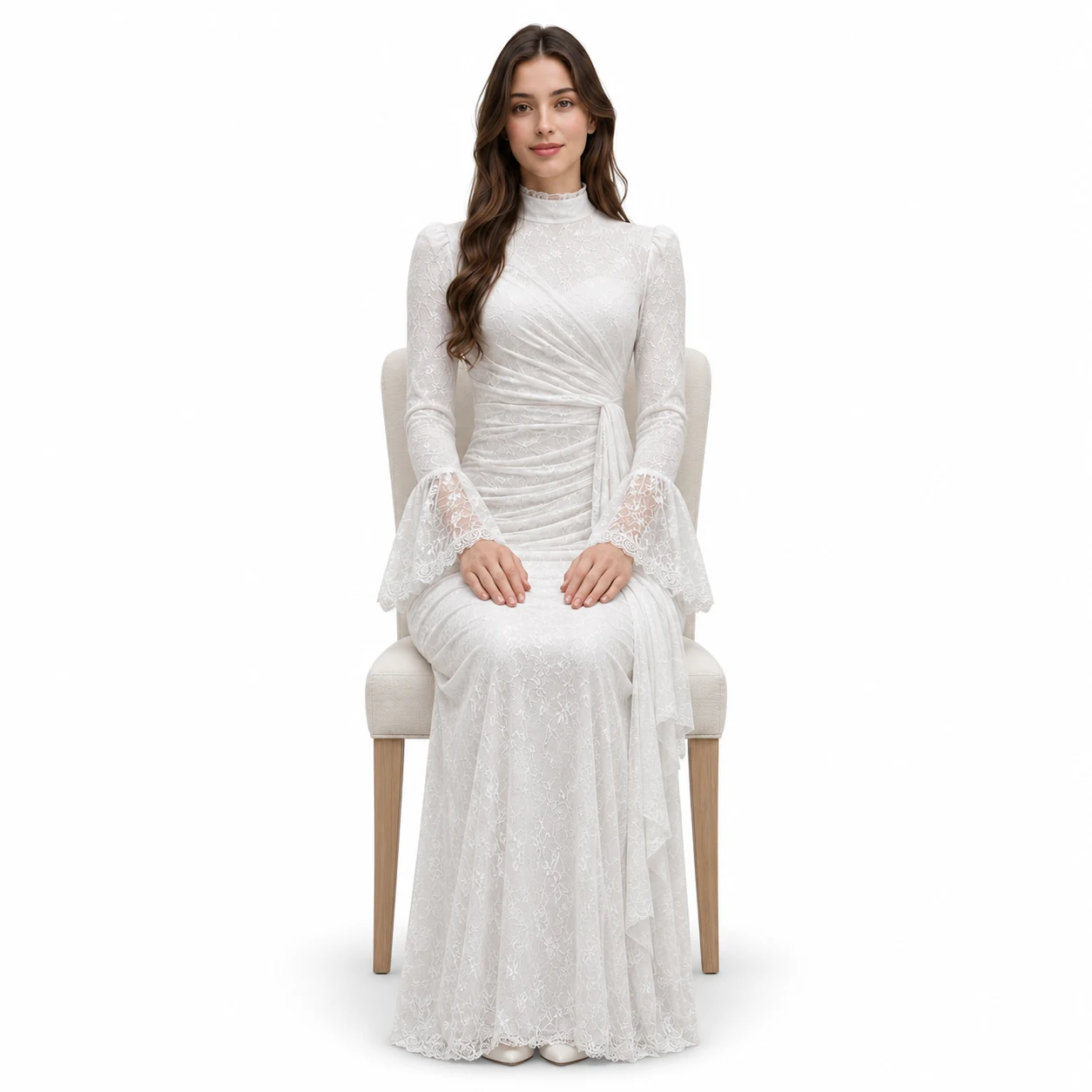
Check the listed length with the shoes you plan to wear, especially if you expect to change into flats. When you sit, bring the loose panel forward rather than letting it catch against the chair. Before standing, make sure the long skirt and cuff have fallen away from your heels and jewelry.
The essentials
- Colors and layering
- Choose White, Light Blue, muted pink or Black. A lightweight slip is optional for a smoother drape, especially with the lighter shades; select one a little shorter than the dress.
- Neck and bodice
- A softly standing neckline sits high at the front and keeps the shoulders covered. Fine lace and angled gathers draw attention below the collar rather than along its edge.
- Sleeves and cuffs
- Long slim sleeves open into wide floral lace cuffs. Keep rings and bracelets simple near the cuff if you want to avoid catching the fabric as you slip the dress on or off.
- Waist and skirt
- Diagonal front folds meet a hanging side panel. The long skirt follows a close line past the waist before relaxing slightly near the hem, without opening into a wide skirt.
- Garment measurements
- Listed dress length is 56.3 to 57.9 inches across S through XXL. The garment chart also gives bust, waist and sleeve length. Compare all four with a similar dress you own.
Compare the waist first
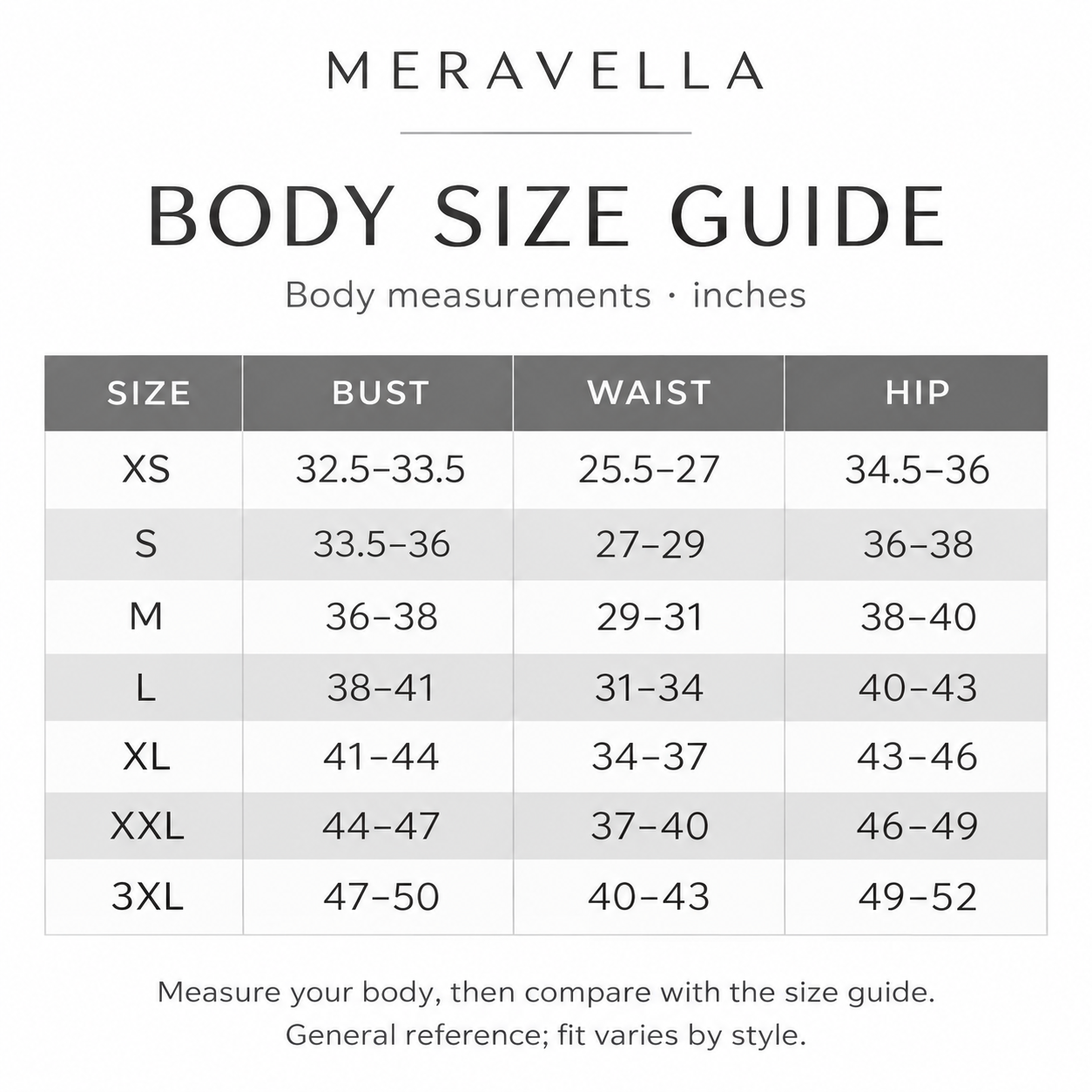
The garment measurements describe the dress; the body chart is a separate reference. Measure a similar dress that fits you and compare both bust and waist against the figures. If those measurements point to different sizes, pay attention to the fitted area where you usually need more space, then check sleeve and dress length on their own.
Give the lace room to hang
Follow the sewn-in care label. Hang the dress with room around the cuffs and avoid catching the lace on rough hardware when changing. Let the hanging panel fall naturally rather than clipping the folds into place. If using a steamer or iron, follow the label and keep heat away from any area for which it is not recommended.