


Texture and silver-tone detail, in a short silhouette.
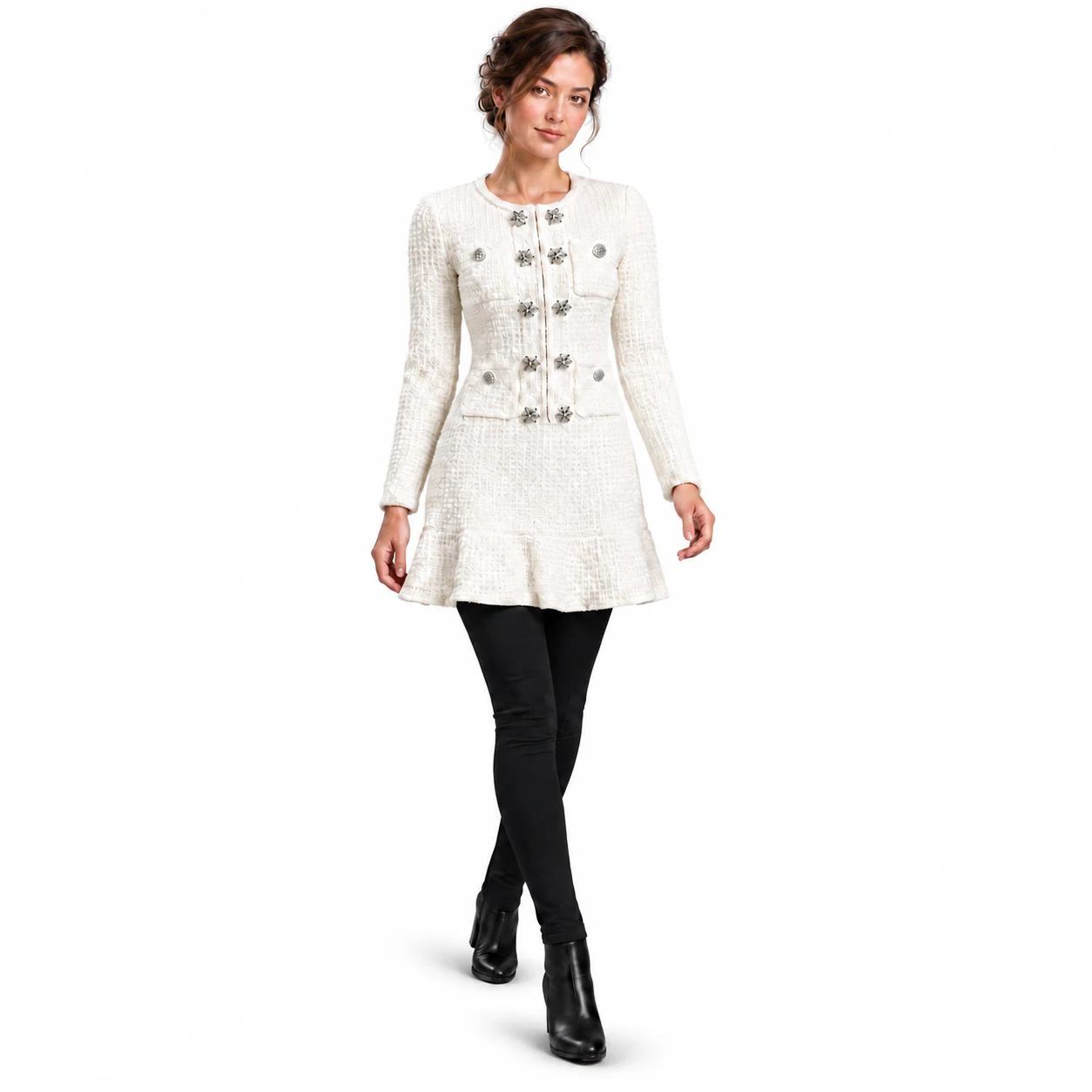
A white dress can make an outfit feel considered without a bold print. Here, a textured surface and paired silver-tone ornaments bring detail to the front, while a gently flared lower band softens the fitted-looking outline. For lunch, a gallery visit or an informal dinner, try the pictured combination with opaque black fitted trousers and ankle boots. The contrast keeps the short shape visible and gives the decorative front room to stand out.
Start with the detail already in place
The paired silver-tone ornaments draw attention to the front, so a plain bag and small earrings can be enough to finish the outfit.
Balance a short, flared shape
A narrow lower layer contrasts with the wider hem. The pictured opaque black trousers offer a useful starting point for that proportion.
Add interest without another print
The white textured surface gives a simple outfit dimension, leaving room for a smooth coat or bag rather than competing patterns.

The decorative front
1. Let the front detail lead.
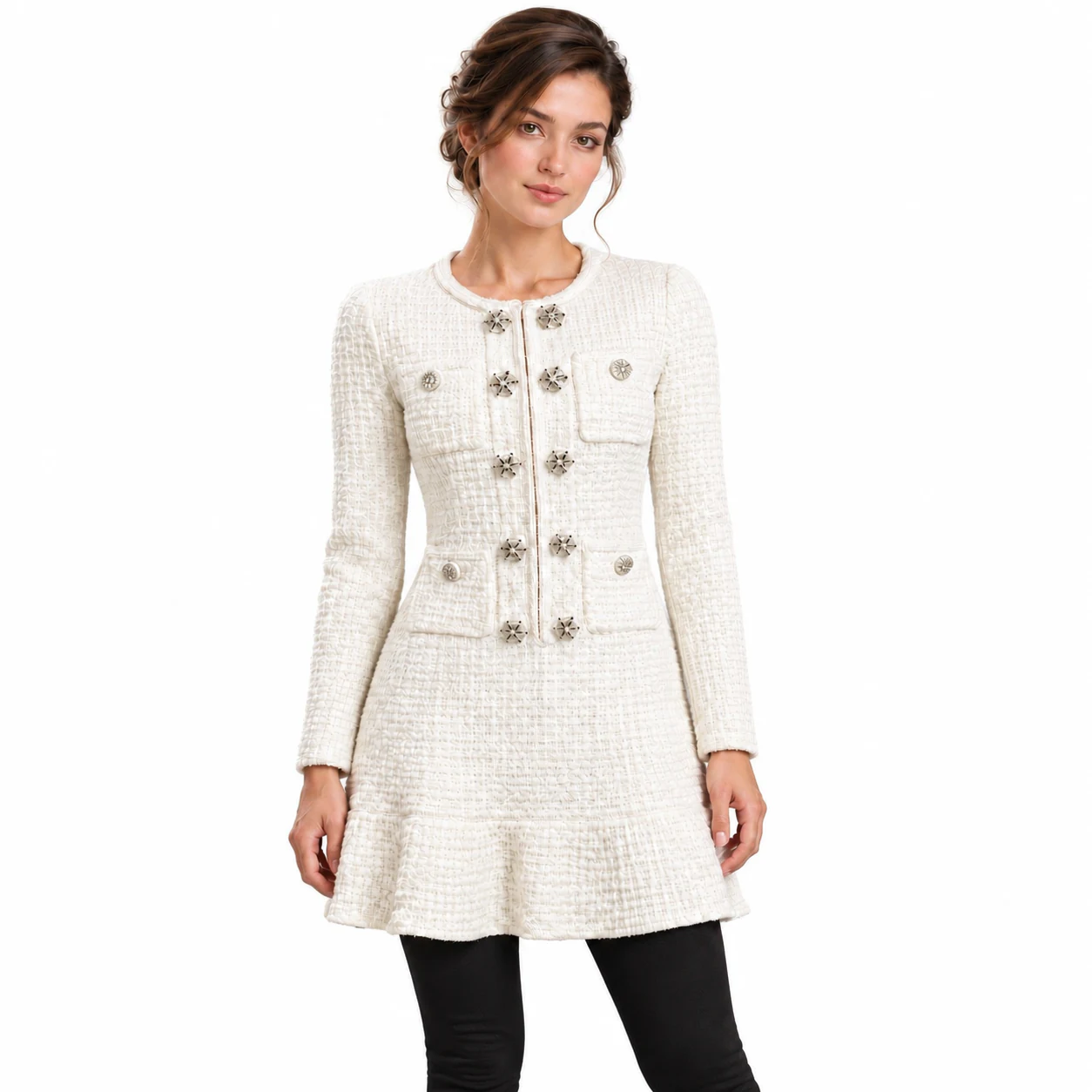
A round neckline, long sleeves and two vertical rows of silver-tone ornaments give the upper half a jacket-inspired look. Four flap-shaped details add to the arrangement, with a smaller round ornament on each.
For a lunch or dinner outfit, a small silver-tone earring can echo the front detail. A long necklace may sit across it. These are decorative features in the available listing: usable pockets and the fastening method are not confirmed, so do not rely on them for storage or an open-cardigan fit.
The short flared hem
2. Balance the short flared hem.
The body narrows through the middle before opening into a short flared band. That change in width is easiest to see against a slim lower layer, as shown with black fitted trousers and closed ankle boots.
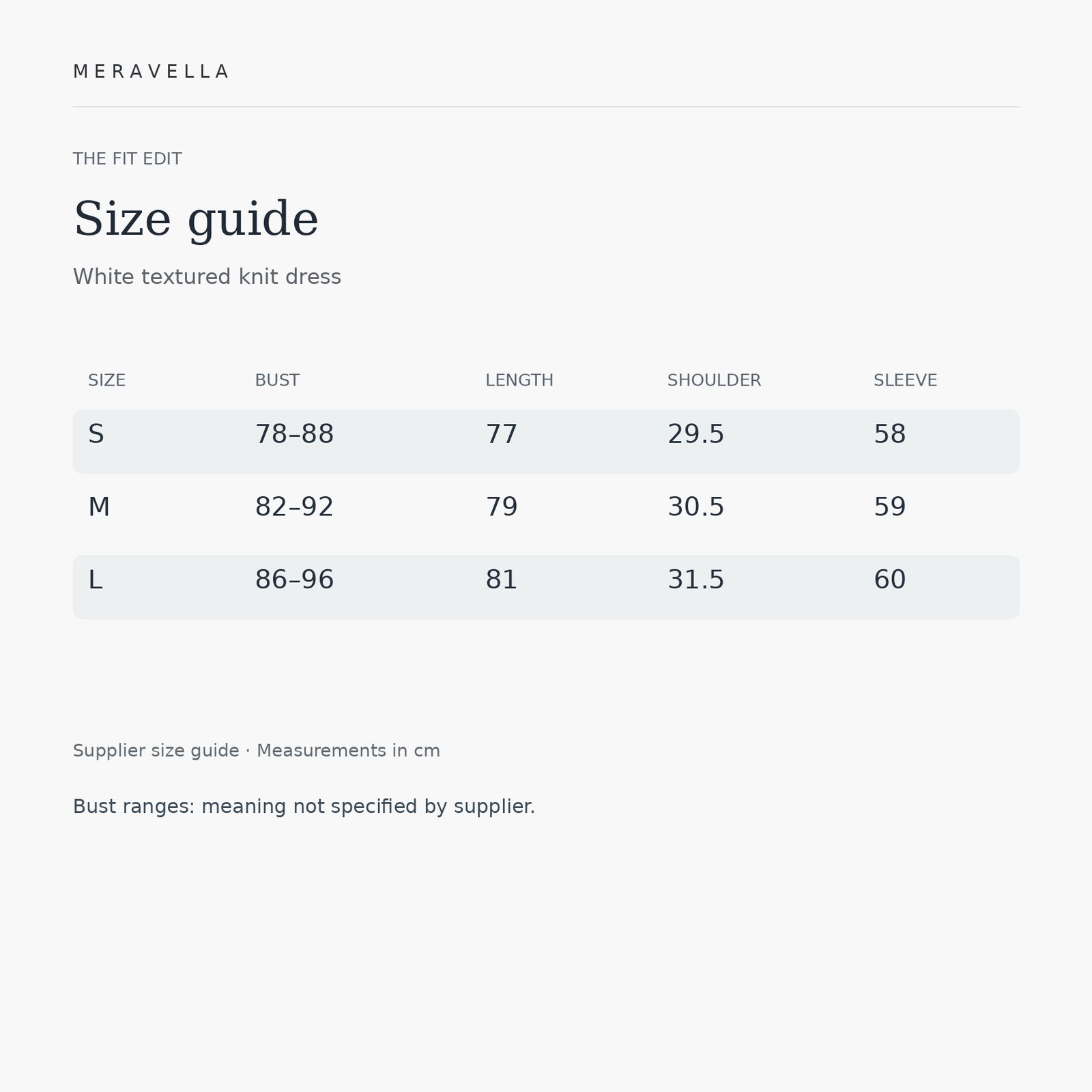
The source lists lengths of 77, 79 and 81 cm across S, M and L. Your height and proportions will change where the hem falls. If you prefer more coverage, plan a separate opaque lower layer and check the combination while standing, sitting and reaching before deciding how to wear it.

The shape from front to back
3. Choose an outer layer with the whole outline in mind.
Leave space for the decorated front
The three-quarter view shows the close-looking body and the outward flare at the hem. Try an open, unpatterned coat if you want the front detail to remain visible. Give the long sleeves enough room inside it, and check that the coat does not catch on the raised ornaments.

Keep the rear line considered
The back has the same white textured surface without the front ornaments, ending in a gently flared lower band. A longer coat covers that shape; a shorter jacket leaves it visible. Compare both layers from behind so their edges sit where you want them without an awkward overlap.

Two seated views
4. Check the short hem in a seated position.
The two seated views show how the flared band rests over an opaque lower layer. On the round stool, the knees angle together and both hands rest on the legs. On the chair, one hand rests on the lap and the other touches the seat beside the body. The trousers provide separate coverage as the white hem rises above the knees.


Try the complete outfit before your plans
Sit, stand and reach in the dress with your chosen lower layer. Check the hem, sleeves and neckline in each position rather than judging coverage from a standing photograph alone. The supplier does not confirm stretch or lining, and the photographs cannot establish how a particular size will feel on you.
The essentials
- Fabric listing
- Wool blend, as stated by the supplier. Fibre percentages, other blend fibres, verified stretch and lining details are unspecified.
- Colour
- White, with a textured surface and silver-tone decorative front details.
- Sizes
- S, M and L
- Included
- Dress only. The black fitted trousers or leggings, ankle boots, jewellery and furniture shown are separate styling items.
Read all four size measurements.
The Size Guide gives Length, Bust, Shoulder and Sleeve in inches with original centimetres below. Bust is supplied as a range, but its meaning is not defined. The source does not specify body-versus-garment measurements or measuring endpoints, so do not treat the ranges as proven stretch or a guaranteed body-size fit.
Protect the texture and ornaments.
Follow the sewn-in care label for washing, drying and pressing; the supplier gives no product-specific settings. Keep bag hardware and jewellery from catching the raised texture or front ornaments. Check those details before wearing, and support the garment when storing it rather than assuming a wool-blend label establishes how it should be cleaned.